
Last updated November 15, 2026
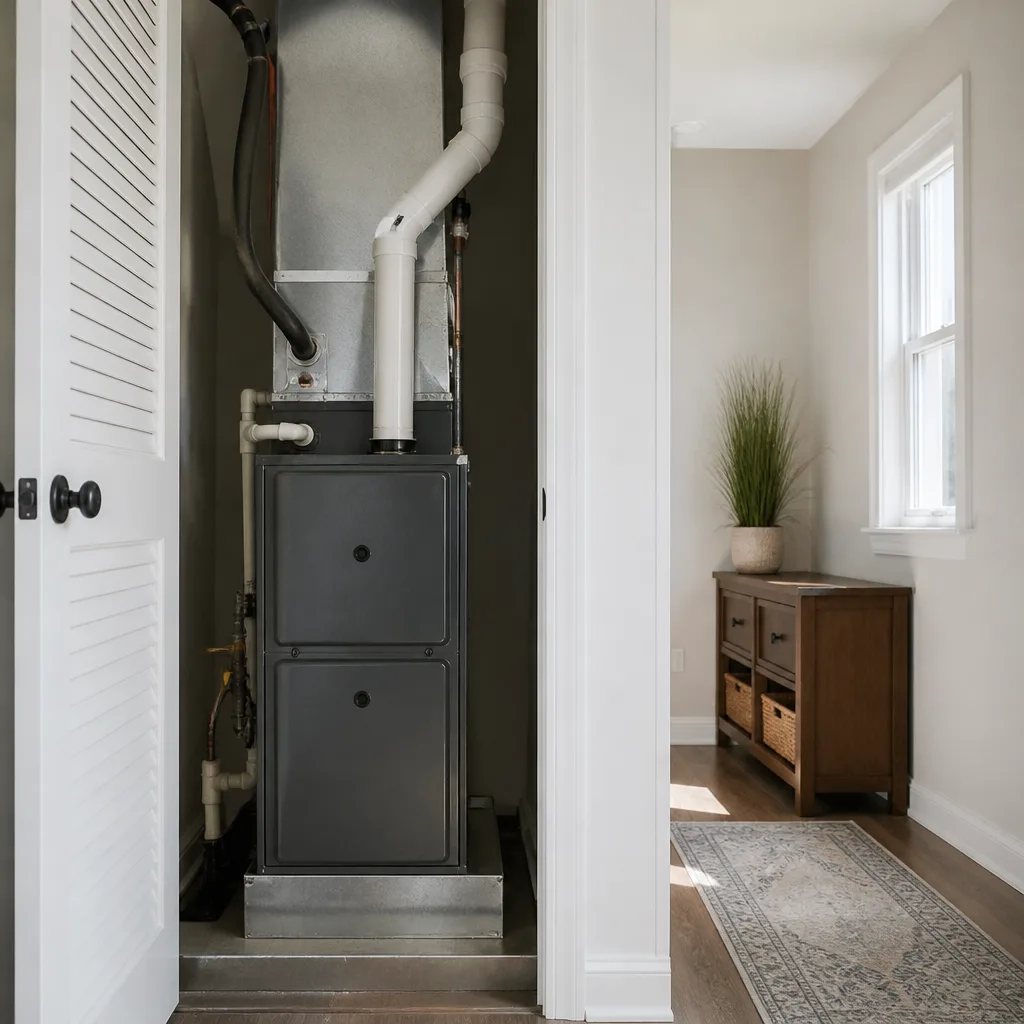 Furnace & heating
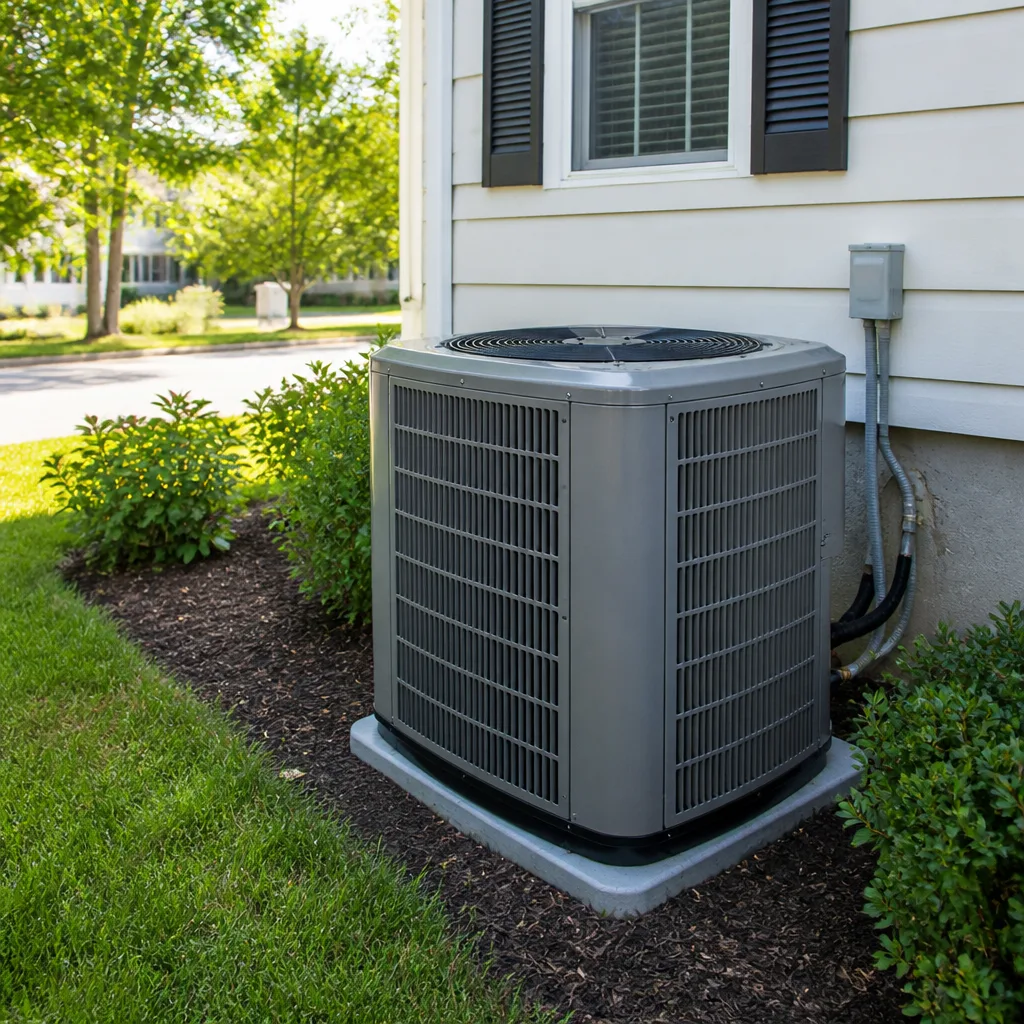 AC repair
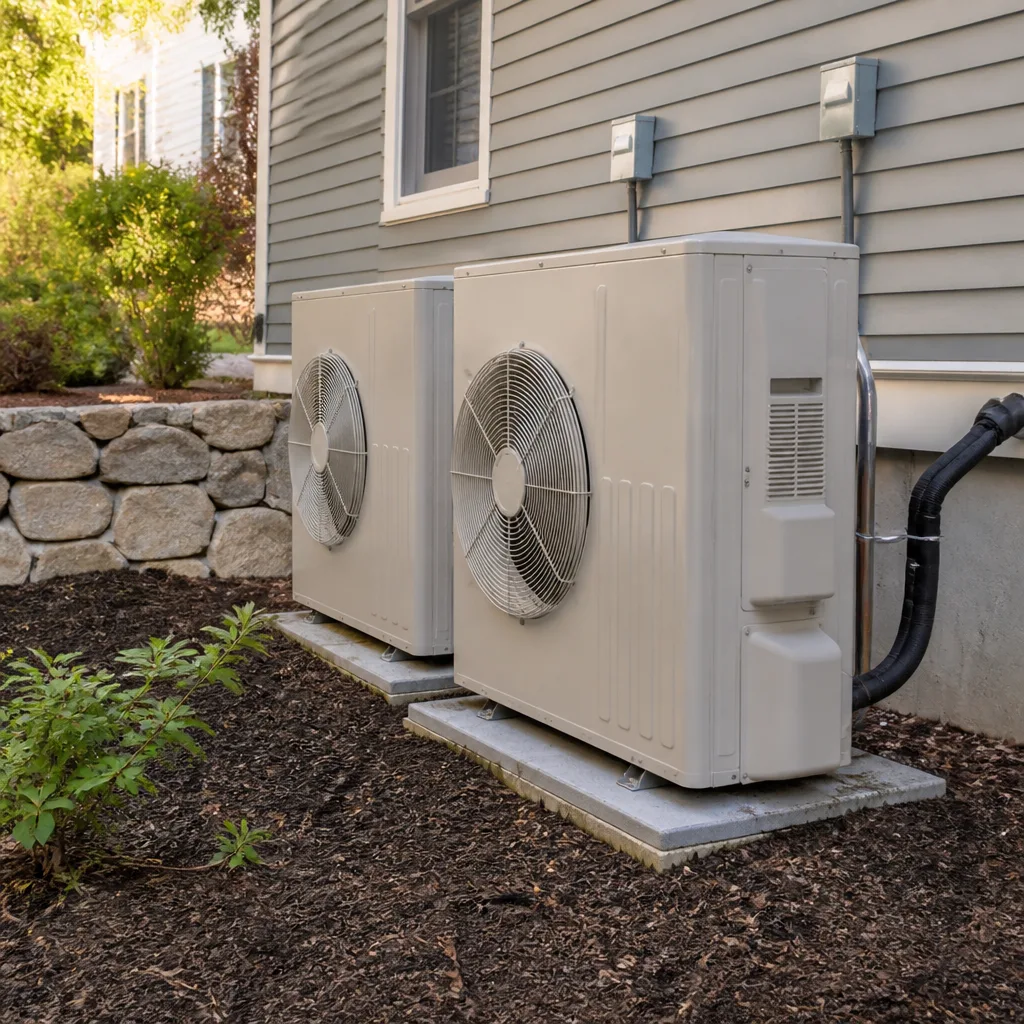 Heat pumps
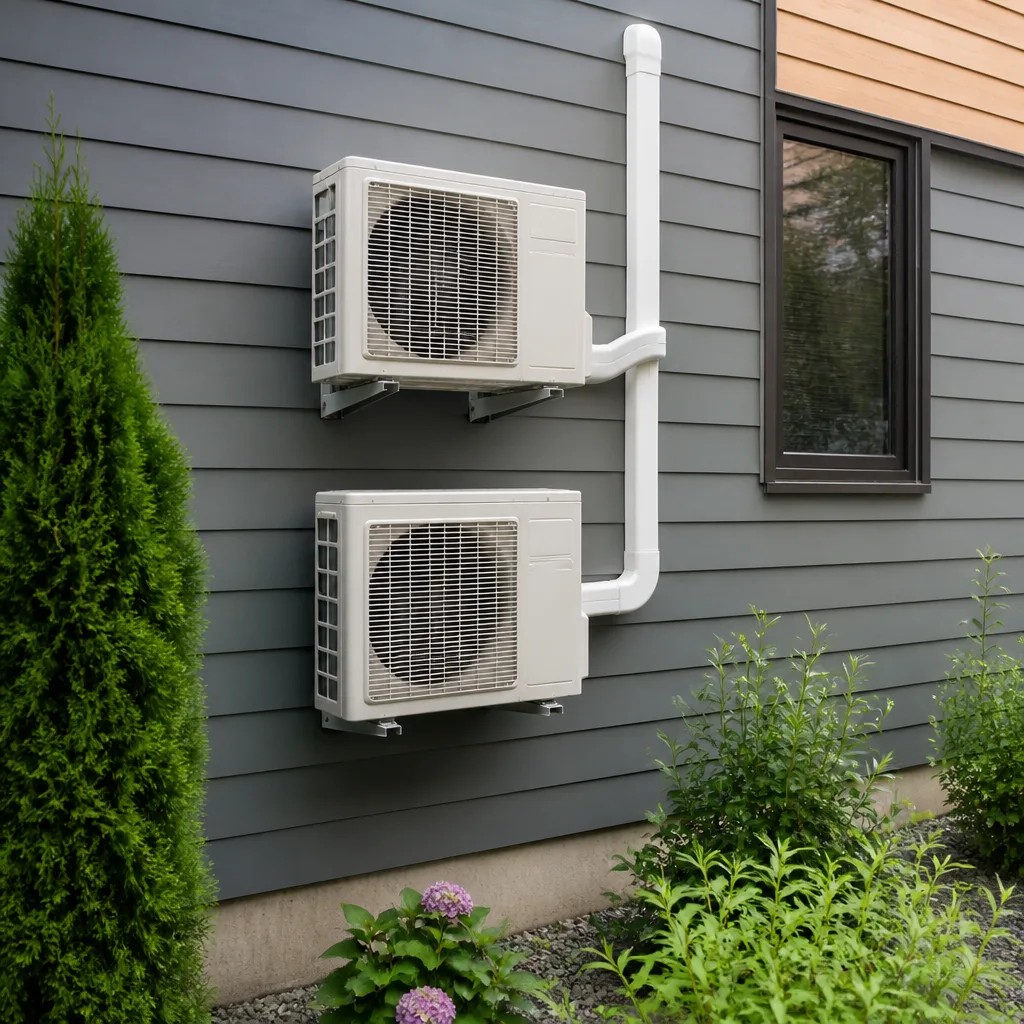 Ductless mini splits
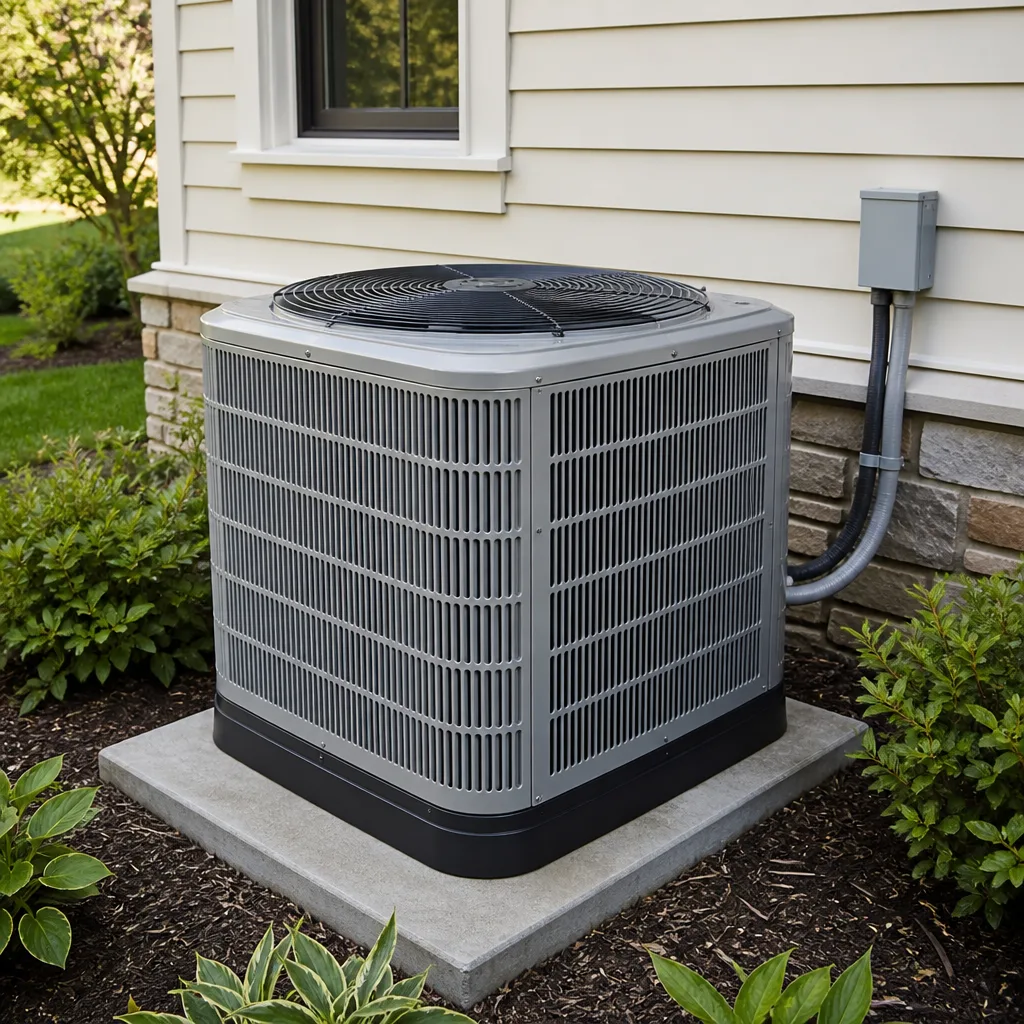 Carrier
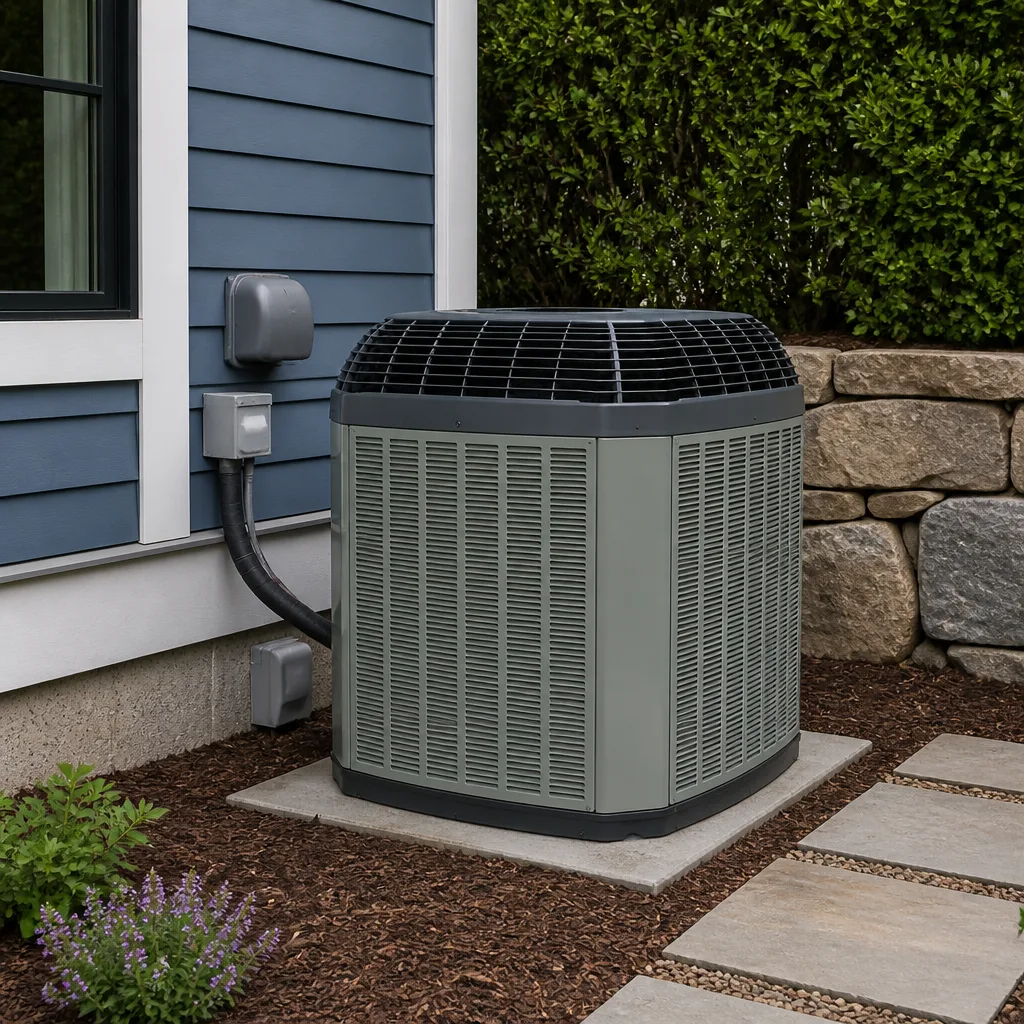 Trane
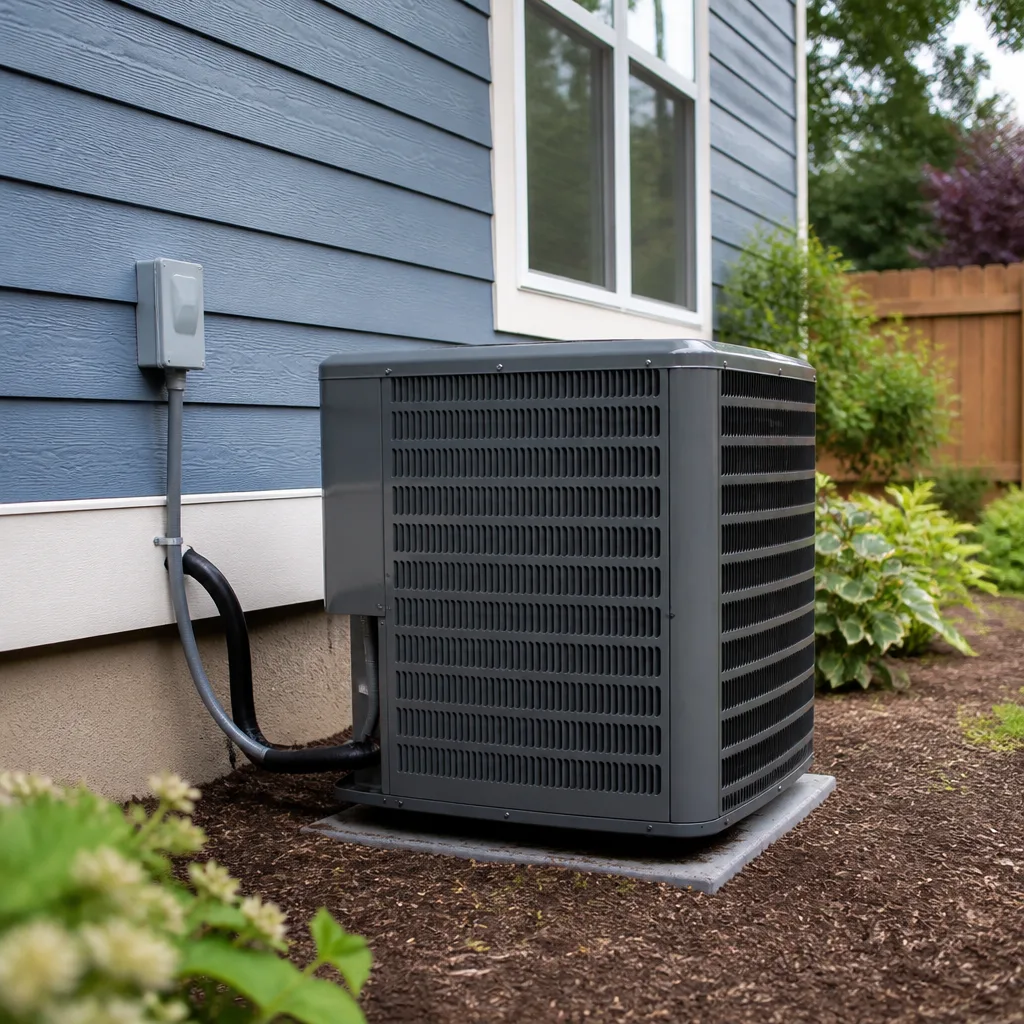 Goodman
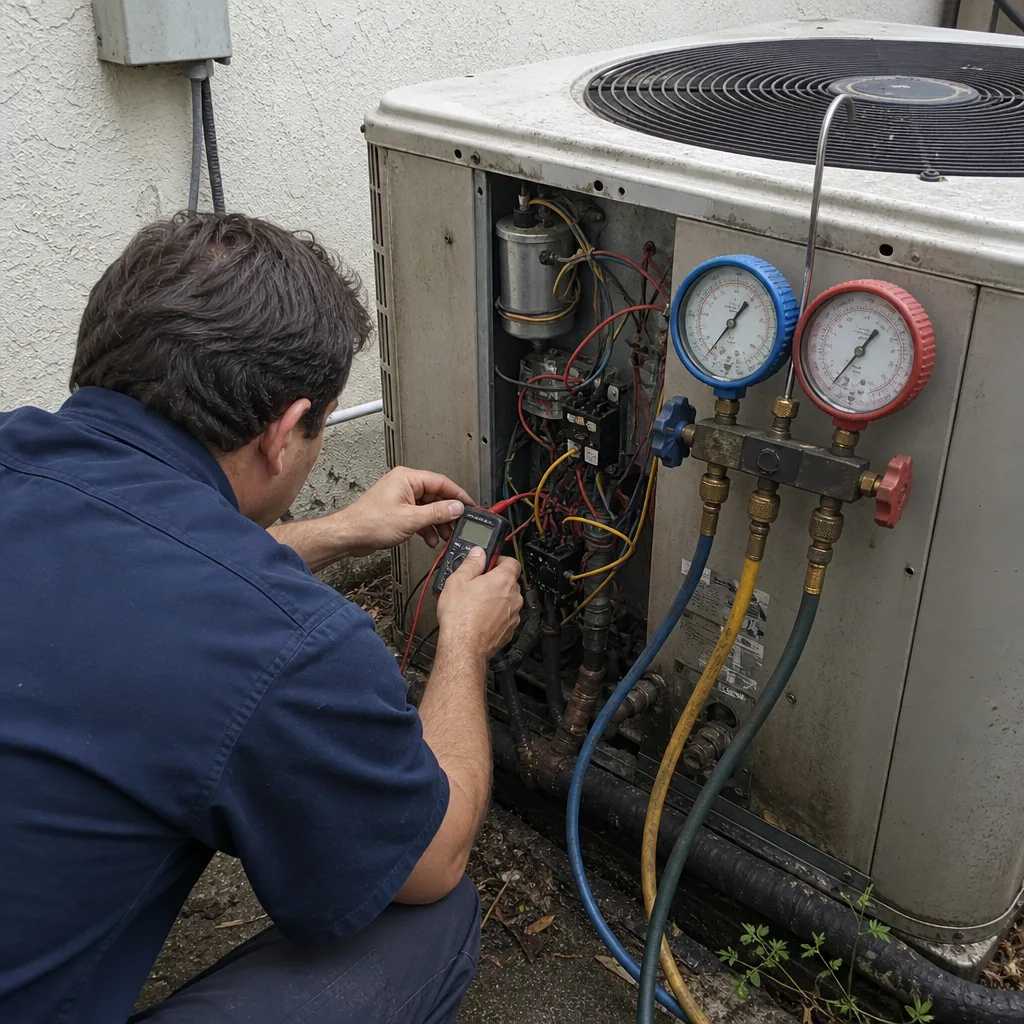
Seasonal tune-up and full diagnostic on your Carrier, Trane, or Goodman system - readings shown to you before any repair is proposed
Diagnosis first, numbers second - you approve the repair price before a single part goes in.
Get your free estimateFurnace Replacement Troubleshooting in Palm Bay: Common Problems and How to Fix Them
Here’s the counterintuitive part: a furnace that runs maybe 60 days a year in Palm Bay fails for reasons that have almost nothing to do with the wear most people picture. Technicians trained in cold climates look for the same failure patterns they’d see in Ohio or Michigan, where a furnace runs half the year and mechanical wear drives everything. That logic doesn’t fit here. In Palm Bay, the real culprits tend to be moisture, long idle stretches, and the thermal shock of a system that sits dormant for months and then fires on a cool January morning. This guide walks through the actual failure patterns of low-use, high-humidity furnace operation, how to tell a genuine replacement trigger from a repairable fault, and how to run the numbers on repair versus replace when your heating season is short. If you need a Palm Bay team that works on your brand, we can help.
Quick Answer
Most furnace problems in Palm Bay that look like replacement situations are actually repairable faults: flame sensor corrosion, control board moisture damage, and inducer motor failures, all of which are common in a humid climate and cheaper to fix than to replace. A cracked heat exchanger is the one true safety trigger that justifies replacement on the spot. Everything else comes down to a break-even calculation: if a repair costs more than roughly a third of a new system and the furnace is near the end of its service life, replacement starts to make financial sense.
Styles & brands we work with
- AC repair
- Furnace & heating
- Heat pumps
- Ductless mini splits
- Carrier
- Trane
- Goodman
Table of Contents
- Why Furnaces Fail Differently in Palm Bay’s Climate
- Heat Exchanger Crack vs. Flue or Draft Problem: How to Tell Them Apart
- The Humidity Failures: Control Boards, Flame Sensors, and Inducer Motors
- Carrier, Lennox, and Rheem Error Codes: Repair vs. Replace
- New Furnace Still Short-Cycling or Won’t Ignite? Common Post-Installation Errors
- The Break-Even Calculation: Repair Cost vs. Replacement Cost
- Carrier, Trane, Lennox, York, Daikin, Bryant, Goodman, Rheem, American Standard: What Brand Actually Changes
- When to Replace Your Furnace in Palm Bay
Why Furnaces Fail Differently in Palm Bay’s Climate
A Palm Bay furnace might run for a total of 60 to 90 days a year. That sounds easy on the equipment, and mechanically it is. But the season off is where the damage happens. A furnace sitting idle in a Palm Bay garage or attic through a humid summer is a furnace whose internal components are exposed to months of warm, moisture-laden air. When that furnace fires up for the first time in months on a cool morning, it does so with components that have been slowly degrading in ways that don’t show up until the system runs.
This is the core difference from a cold-climate furnace. In Ohio, a furnace runs constantly through winter, which burns off ambient moisture and keeps components cycling regularly. That constant cycling actually pushes moisture out of the cabinet, keeps the flame sensor reasonably clean, and exercises the control board. In Palm Bay, the furnace sits, and the idle time is the enemy.
Here’s what that means in practice:
- Moisture drives more failures than wear. Control boards corrode, flame sensors build up an oxide layer, and electrical connections degrade in humid air.
- Thermal shock is real. The first cold-morning startup after months of dormancy is when a flame sensor that’s been quietly oxidizing fails to prove flame, or a control board that has absorbed moisture shorts out. Manufacturers design for this, but a furnace that’s on the edge of a control board failure will fail on the first cold day. Cold-climate techs don’t see this pattern consistently because their furnaces run daily.
- Attic-mounted units take the worst of it. Many Palm Bay homes have furnace and air handler equipment in the attic, where summer heat and humidity are both highest. If solar orientation and layering are fairly consistent from neighborhood to neighborhood – Florida has regional sunlight, not city-level sunlight differences – attic units see the brunt of it.
- Mechanical wear is secondary. A furnace in Palm Bay sees far fewer fan motor hours, inducer run hours, and ignition cycles than a northern furnace of the same age. That means fewer mechanical wear problems, but it also means problems that might take years to surface in a cold climate can sit hidden for a long time in a lightly used Palm Bay furnace.
Why this matters for your replacement decision: a technician who assumes a cold-climate diagnostic logic will often jump to “replace” when the real issue is corrosion or moisture. We’ve seen Furnace troubleshooting questions come in where the repair turns out to be a flame sensor, not a heat exchanger. “One call covers it” was never just a slogan, and that’s the difference between a rushed replacement decision and one that actually makes sense for your home. That’s why we approach every diagnosis as a diagnostic first, not a sales conversation.
Heat Exchanger Crack vs. Flue or Draft Problem: How to Tell Them Apart
A cracked heat exchanger is the one furnace problem that justifies stopping everything and replacing the system. It’s a genuine carbon monoxide (CO) risk, and the crack, once it forms, will not seal itself. But not every combustion problem is a cracked heat exchanger. This is where a lot of homeowners get sold a whole new furnace when a flue or draft issue would have been the actual fix. Here’s how to tell them apart.
Signs that point toward a cracked heat exchanger
- A CO detector alarm in the home with no other obvious source. This is the most important signal: if a CO detector sounds, evacuate and call for emergency service before anything else. Do not keep running the furnace to investigate.
- A visible crack, hole, or warped section in the heat exchanger found by a technician during a combustion inspection. Most cracks form in the primary cell near the burners, or at the bend where the secondary cell meets the primary.
- The smell of combustion byproducts or a yellow, lazy flame where it should be blue and steady.
Signs that point toward a flue or draft problem
- Spillage at the draft hood (flue gases escaping into the space instead of going up the flue) that resolves when the flue is cleaned or the vent path is corrected.
- A blocked flue or vent termination from a bird nest, debris, or snow (not likely in Palm Bay) or from a reversing pressure situation in the attic, which is the more common Palm Bay scenario.
- Backdrafting tied to negative pressure inside the home – from exhaust fans, other air handlers, or a tight building envelope – which a combustion analysis can isolate.
The distinction matters because a flue problem is often fixable with cleaning, repiping, or correcting the venting. A heat exchanger crack is not. A heat exchanger crack is not a repair job. No amount of sealant, patch, or mechanical workaround makes a cracked heat exchanger safe, and any technician who offers to patch one is telling you something important about how they work.
What to do when you’re not sure: ask for a combustion analysis. A technician with a combustion analyzer will measure CO in the flue gases, CO in the supply air, and draft pressure. That data distinguishes a heat exchanger crack from a flue or draft problem far more reliably than a visual inspection alone, because some cracks are small and hidden. If a technician tells you the heat exchanger is cracked, they should be able to show you the evidence or point to the combustion readings that support it. If the answer is just “it looks cracked,” get a second opinion.
Safety note: this is not a do-it-yourself diagnostic. Combustion analysis involves CO exposure, a potentially lethal gas, and requires trained handling of a gas-fired appliance. No homeowner should be opening the cabinet or inspecting a heat exchanger directly. If you suspect a heat exchanger problem in your Palm Bay home, shut the furnace off and call a professional. We answer 24/7 at (888) 374-9181, and our technicians have up to 10 years of experience working on equipment from Carrier, Trane, Lennox, Goodman, Rheem, York, Daikin, Bryant, and American Standard.
The Humidity Failures: Control Boards, Flame Sensors, and Inducer Motors
If you asked a Palm Bay homeowner to name the part most likely to fail on their furnace, most would guess the blower motor or some big mechanical component. In our experience, the parts we see fail first are the ones that don’t move: the control board, the flame sensor, and the inducer motor. Those are the components most exposed to humidity and idle time, and they’re the ones that show up as “the furnace won’t light” or “the furnace runs for a minute and shuts off.”
Flame sensor corrosion
The flame sensor is a small metal rod that sits in the burner flame and tells the control board that ignition succeeded. In a humid climate, it builds up an oxide layer during the months the furnace sits idle. When the heating season starts, the sensor can’t detect flame properly, so the furnace lights and then shuts down seconds later as a safety measure. This is one of the most common “furnace won’t stay lit” calls we get, and cleaning or replacing the flame sensor is an inexpensive fix.
Control board moisture damage
The control board is the furnace’s brain, and it’s sensitive to moisture. In an attic-mounted system through a Palm Bay summer, condensation and humid air can cause corrosion on the board’s contacts and traces. Symptoms include intermittent operation, a furnace that won’t respond at all, or a board that throws error codes that don’t match what the furnace is actually doing. Control board replacement is more expensive than a flame sensor but still a fraction of a new system in most cases.
Inducer motor failure
The inducer motor pulls combustion gases through the heat exchanger and out the flue. It’s another component that can seize or drag after sitting idle through a humid season. A failing inducer motor often shows up as a pressure switch error code or a furnace that won’t enter its ignition sequence because the pressure switch never senses the airflow it expects. Inducer motor failures can be caused by the motor itself or by the pressure switch or tubing that connects to it, which makes diagnosis important.
What makes these failures repairable rather than replacement-worthy: they’re component failures, not structural failures. If the heat exchanger is sound and the cabinet is intact, a control board, flame sensor, or inducer motor is a repair. That’s the diagnostic logic a cold-climate technician misses. In a cold climate, a furnace that runs 180 days a year has so much run time that a control board failure often happens on a system with significant mechanical wear already. In Palm Bay, the same failure can happen on a furnace with very little mechanical run time, which means the rest of the system may have plenty of life left.
This is also why we ask so many questions before we give an estimate. The age of the furnace, the number of heating seasons it has actually run, what’s failed before, and whether the failure came once or is part of a pattern all shape the repair-or-replace decision. furnace repair for a single component failure on a young system is almost always the right call, and it’s not just cheaper – it keeps a furnace with good bones out of the landfill.
Carrier, Lennox, and Rheem Error Codes: Repair vs. Replace
Error codes are a starting point, not a verdict. A code tells you what the control board saw, and the same code can mean a cheap repair or a replacement depending on what’s actually causing it. Here’s how common codes on three of the most widely installed furnace brands tend to break down in practice.
Carrier furnace codes
A common Carrier pattern is a flame-proving error after ignition, which most often points to flame sensor corrosion in a humid climate. That’s a repair. A pressure switch error that persists after cleaning the pressure switch tubing and the inducer path can indicate a failing inducer motor – repairable, though at a higher parts cost. A control board error or lockout that repeats after a reset on a board with visible corrosion usually means the board itself needs replacing. What matters is whether the failure is isolated to one component or whether multiple codes are showing up across the system.
Lennox furnace codes
Lennox systems often throw codes tied to the ignition sequence and the pressure switch circuit. A flame sensor or hot surface igniter failure is a repair. What raises the replacement question is a Lennox furnace that shows a heat exchanger-related fault, or a series of codes that all point to the same aging control board and its wiring harness. On those, the repair cost can climb enough that a straight replacement calculation is honest to bring up.
Rheem furnace codes
Rheem equipment shares the same humid-climate failure patterns: flame sensors and control boards first. A Rheem pressure switch fault that clears after the inducer housing is cleaned is usually a repair. A Rheem furnace showing cascading codes faster than they can be cleared, especially on a system that’s already had one control board replacement, is one where the pattern itself is the diagnosis.
The cascade is what you’re watching for. One code, one repair, one fix is normal. What makes a furnace look like it’s “cascading toward full replacement” is when one repair reveals another, and the second repair reveals a third, all within a short span. That pattern – not any single code – is the real argument for replacement. If a technician can fix the current fault, verify the fix, and the system runs clean, keep it. If you’re calling for the third fix in a season and the parts total keeps climbing, the math starts to shift.
Our technicians are trained across Carrier, Trane, Lennox, Goodman, Rheem, York, Daikin, Bryant, and American Standard equipment, which means we’re not reading any of those code charts cold. We’ve seen the same patterns repeatedly, and we don’t make our own parts or take a distributor rebate on any brand, so the repair-or-replace call isn’t pointed at a specific manufacturer’s equipment.
New Furnace Still Short-Cycling or Won’t Ignite? Common Post-Installation Errors
A furnace that was recently replaced shouldn’t short-cycle, and it shouldn’t ignore a call for heat. When a new system does either, the cause is usually an installation problem, not a manufacturing defect. In Palm Bay specifically, attic-mounted systems have a set of installation issues that show up again and again. Here are the ones to have checked first.
- Undersized or poorly sized venting. The installer must match the flue to the furnace’s requirements, and a vent run that’s too long or has too many elbows can trip a pressure switch. In attic installations, the vent routing can be tight, and it’s a common source of intermittent lockouts.
- Condensate line issues. High-efficiency furnaces produce condensate, and in a Palm Bay attic the drain line has to be pitched and trapped correctly. A clogged or improperly trapped condensate line can trip a safety switch and shut the system down.
- Incorrect gas pressure. A new furnace has to be set up with the correct manifold pressure for the altitude and gas supply. A system that was never checked on a manometer can short-cycle or lose ignition.
- Flame sensor or igniter handling. A flame sensor that picked up oil from bare hands or a hot surface igniter that was bumped during install can fail prematurely. It’s a small thing with an outsized effect.
- Attic heat and inadequate combustion air. An attic-mounted unit in Palm Bay sits in an environment that gets very hot in summer. If the installer didn’t confirm the furnace has adequate combustion and ventilation air, the system can behave badly on hot days.
- Leftover transport damage or a loose connection. It happens. A connector that wasn’t seated, a wire that’s pinched, or a shipment-damaged component can look like a system fault when it’s really a build issue.
What to do: call the installer first, because a new furnace is under warranty and the installer is accountable for a system that doesn’t work. If you’re not getting traction, or you’d rather have a second set of eyes, a diagnostic estimate from a team that works on your brand will tell you what’s actually wrong.
This is also where a brand-agnostic approach pays off. A dealer who only installs one manufacturer’s equipment tends to diagnose every post-install problem as something their equipment can do. A company that works on Carrier, Trane, Lennox, York, Daikin, Bryant, Goodman, Rheem, and American Standard has seen how each platform handles attic installation and can tell you the difference between a brand issue and an install issue. Flagship AC Repair works on your brand, not a brand we’re obligated to push.
The Break-Even Calculation: Repair Cost vs. Replacement Cost
Palm Bay’s short heating season changes the repair-versus-replace math in a way that’s easy to miss. If your furnace runs 60 days a year instead of 180, a new furnace has fewer heating hours in its service life, and the payback on a replacement takes longer to materialize in energy savings. But the failure risk doesn’t disappear just because the season is short – a failed furnace on the coldest night of the year still means a cold house and an emergency call. The honest calculation factors in both.
Here’s the practical framework we use:
Step 1: Get the repair number in writing
Whatever the fault, get a written estimate for the repair. No range, no “about.” A fixed number you can compare.
Step 2: Weigh repair cost against replacement cost
A common rule of thumb in the industry is that if a single repair costs more than roughly a third of what a new system would cost, replacement is worth serious consideration – especially if the furnace is older or has had previous repairs. That’s a rule of thumb, not a law, but it gives you a starting point.
Step 3: Adjust for heating-season length
Because Palm Bay furnaces run fewer hours, the remaining service life of a young furnace is worth more than it would be in a cold climate. A 10-year-old furnace in Palm Bay may have far fewer run hours than a 10-year-old furnace in Michigan. That argues for repair when the heat exchanger is sound and the repair is a single component.
Step 4: Factor in cascading failure risk
If you’re looking at one repair, repair. If you’re looking at the third repair in a couple of seasons, that’s a cascade. The cascade isn’t just a parts-and-labor problem – it’s a reliability problem. A furnace that fails on the coldest night of the year when you’re not expecting it is a problem no amount of short heating season prevents.
Step 5: Factor in the safety verdict
Any heat exchanger crack overrides the math. Replace, period. Safety reasons don’t negotiate.
What a new furnace costs in Palm Bay depends on the system size, the efficiency, the venting situation, and whether it’s attic-mounted. We don’t publish a range because the honest answer is that we need to see your system to give you a real number. What we do commit to is a written fixed estimate before any work starts, and a final price that matches the estimate.
Carrier, Trane, Lennox, York, Daikin, Bryant, Goodman, Rheem, American Standard: What Brand Actually Changes
Brand matters less than most homeowners expect, and more than some technicians admit. What brand changes most of all is parts availability and the way error codes are documented. The failure patterns – flame sensor, control board, inducer motor, heat exchanger – are largely the same across the major brands because the physics of a gas furnace in a humid climate doesn’t care what name is on the cabinet.
What’s actually brand-specific
- Where the error codes are documented and how specific they are. Carrier and Lennox both have thorough code tables; some brands are thinner.
- Parts availability and pricing. A control board for one brand may be easier to source than another.
- Installation-specific quirks like venting requirements, condensate arrangement, and how the blower and board communicate.
What’s not brand-specific
- Flame sensor corrosion in a humid climate.
- Control board moisture damage after a long idle summer.
- Heat exchanger cracks from thermal cycling stress.
- Attic installation errors that show up after replacement.
This is where the brand-agnostic approach matters. Our technicians are trained across Carrier, Trane, Lennox, Goodman, Rheem, York, Daikin, Bryant, and American Standard, so we aren’t diagnosing your furnace by guessing. When a York or Daikin system throws a code, we know the code chart and the known failure pattern. We don’t get a distributor rebate for steering you to a specific brand, and we don’t have to talk down another brand to make a sale. The right system for your home, not for our margins. That’s the standard we hold.
When to Replace Your Furnace in Palm Bay
Replacement is the right call when one or more of these is true:
- The heat exchanger is cracked. This is the only true automatic replacement trigger. Combustion safety overrides everything else.
- A cascade of repairs has hit the third failure in a short window. One fix is normal. Three fixes in a few seasons is a system that’s telling you something.
- The repair cost exceeds roughly a third of replacement cost on a furnace that’s already been through previous repairs. Not a hard rule, but a good signal.
- Parts are becoming hard to source for an older or discontinued model. If every repair turns into a weekslong parts hunt, reliability is compromised.
- A control board and a motor fail close together on an older system. Multiple high-cost component failures in the same season shift the math toward replacement.
What’s not automatically a replacement reason: a single component failure, even a control board, on a furnace with a sound heat exchanger. That’s an expensive repair, not necessarily a replacement. A cold-climate diagnostic habit often jumps to “replace” on the first board failure, and that’s not always the right call. It’s a repair on a furnace that still has useful life.
A word on system replacement
Replacement is scheduled work, not same-day work. A furnace replacement is sized and specified for your home and ordered, so it’s planned rather than fit in around emergency calls. We give you a written fixed price and a set install date, and we handle the system paperwork that goes with it. For the cooling side of your home, AC installation is the same story: it’s scheduled, sized, and priced in writing.
Common Mistakes to Avoid
- Accepting a “cracked heat exchanger” verdict without evidence. A cracked heat exchanger is the most expensive diagnosis a technician can give, and it should be backed by a combustion analysis or a visible, provable crack. A vague “it looks cracked” is not enough. Ask to see the evidence, especially in a humid climate where years-old corrosion and actual cracks can look similar to an untrained eye.
- Replacing a furnace because of a single control board failure. Control board failures are common in Palm Bay’s humidity, and a control board is a repair, not a structural failure. On a furnace with a sound heat exchanger, replace the board and keep the system unless the cascade pattern says otherwise.
- Skipping a combustion analysis on every combustion-related call. It’s the only way to separate a flue or draft problem from a heat exchanger crack, and it’s not something a visual inspection can substitute for.
- Blaming a brand for a post-installation problem. Short cycling and no-ignition on a recently replaced furnace usually trace to venting, gas pressure, or condensate handling in an attic install – not to the brand on the cabinet.
- Ignoring the heating season math. Palm Bay’s mild winters mean a new furnace has fewer run hours in its life, so the energy-savings payback stretches out. Repair wins more often than a cold-climate rule of thumb would suggest on a young system.
- Running a furnace with the CO alarm sounding to “see if it’s really the problem.” If a CO detector goes off, turn the furnace off, get out, and call for professional help. Do not keep running the appliance to investigate.
- Not getting the repair number in writing before deciding. Repair-versus-replace is an arithmetic exercise. You can only run it with a written repair estimate and a written replacement estimate, and that’s a conversation that needs both numbers on the table.
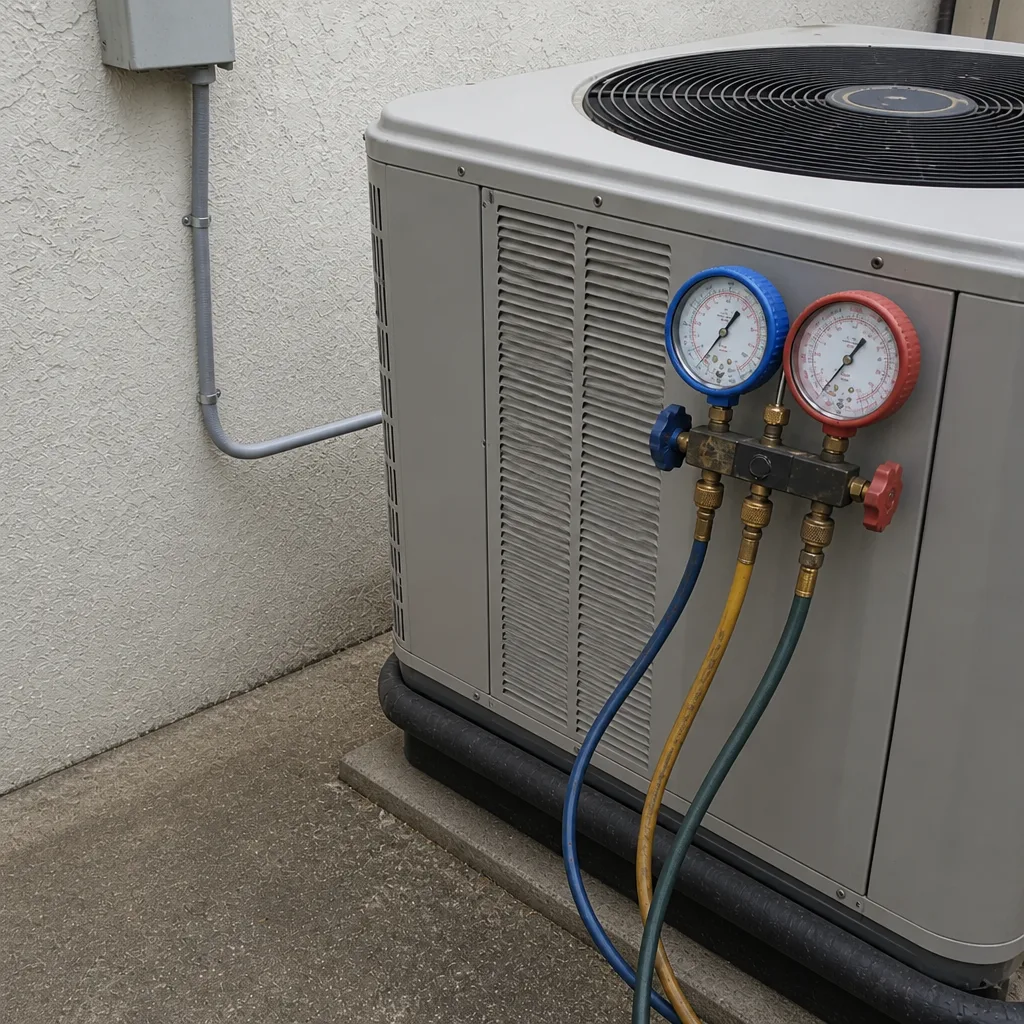
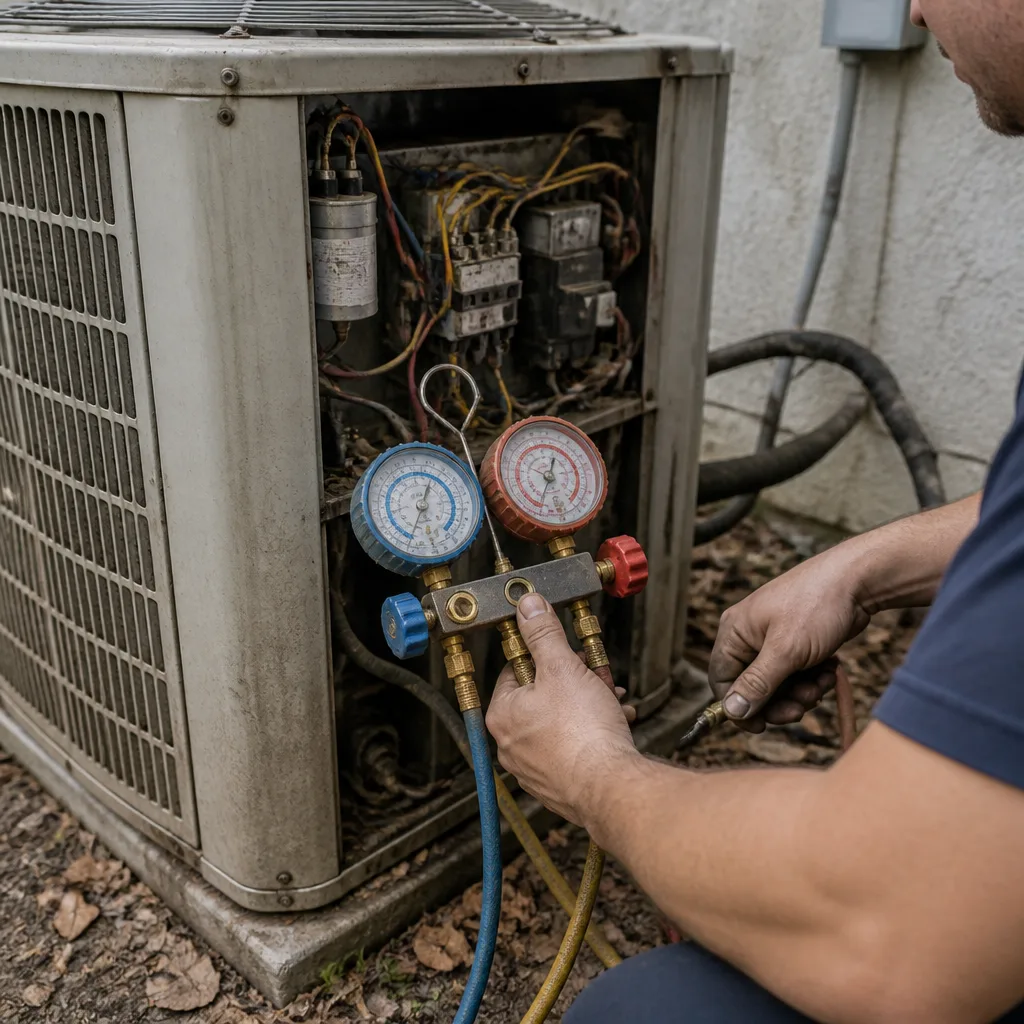
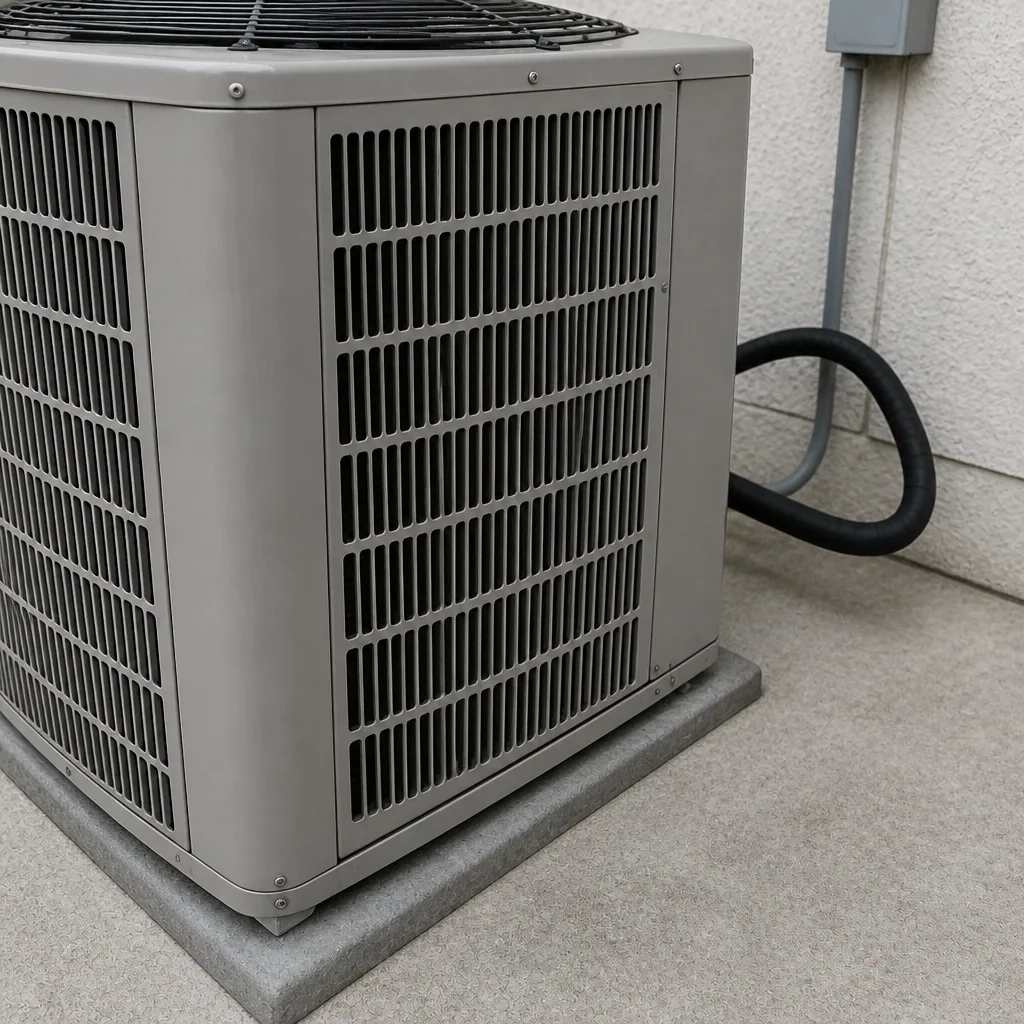
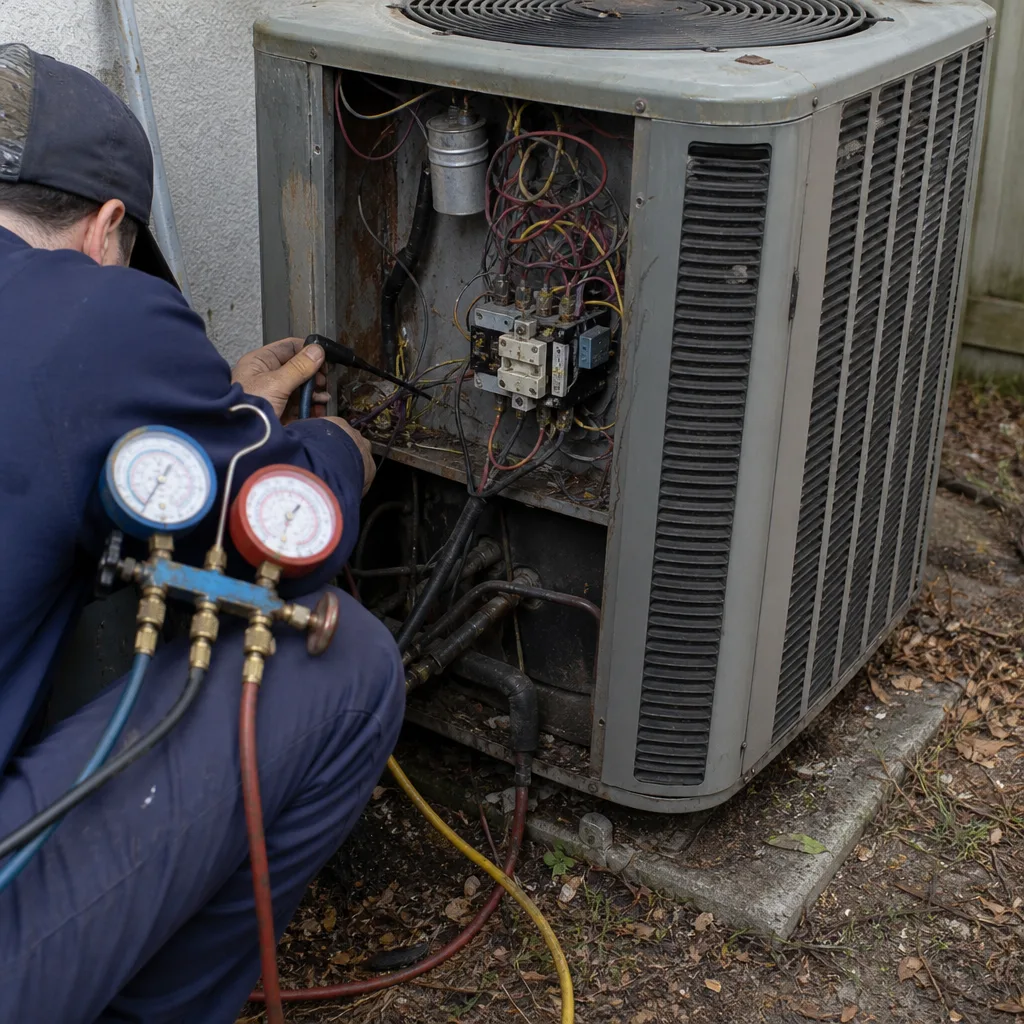
See the difference
 Before
 After
 Before
 After
 Before
 After
When to Call a Professional
Call a professional if your furnace won’t ignite, won’t stay lit, short-cycles, or throws an error code. Call immediately if a CO detector alarms, if you smell combustion byproducts (not gas – a distinct exhaust smell), or if the furnace has visible burns or warping at the cabinet. Call if you’ve had three repairs in one or two seasons, or if you’re facing a heat exchanger diagnosis and want a second opinion before a replacement decision. Call if your newly installed furnace is short-cycling or won’t ignite and the installer isn’t resolving it.
Furnace work involves gas, combustion, and electrical components. The diagnostics and repairs in this guide are not do-it-yourself work; they are what a trained technician should be doing on your system. Flagship AC Repair offers free estimates in Palm Bay – call (888) 374-9181. We answer 24/7. Fast dispatch from 7am to 7pm, Sunday through Friday.
Frequently Asked Questions
A combustion analysis is the most reliable way, and a CO detector alarm in the home is the most urgent sign. A cracked heat exchanger can also show up as a yellow lazy flame, an exhaust smell, or a visible crack during inspection. If a CO detector alarms, shut the furnace off and call for professional help immediately. Call (888) 374-9181 for an exact quote – estimates are free.
The most common cause in Palm Bay is a corroded flame sensor that can’t prove the flame after ignition. The furnace lights, the sensor fails to detect flame, and the control board shuts it down as a safety measure. A failing inducer motor or pressure switch can produce similar symptoms. A technician can tell the difference quickly. Call (888) 374-9181 for an exact quote – estimates are free.
Repair unless the heat exchanger is cracked or the repair cost exceeds roughly a third of replacement cost on a furnace that’s had previous repairs. A single flame sensor or control board failure on a sound system is a repair. A cascade of three or more repairs in one or two seasons is a signal to replace. Call (888) 374-9181 for an exact quote – estimates are free.
Post-installation short cycling is almost always an installation problem, not a manufacturing defect. The most common causes are undersized or poorly routed venting, a clogged or improperly trapped condensate line, incorrect manifold gas pressure, and inadequate combustion air in an attic install. Call the installer first; if you need a second opinion, call (888) 374-9181 – estimates are free.
Rebates and financing programs change, so we don’t quote them from memory. We work through the paperwork with you and tell you what’s currently available when we give you a written estimate, rather than promising a program that may have changed. Call (888) 374-9181 for an exact quote – estimates are free.
It depends on system size, efficiency, venting, and whether the furnace is attic-mounted, so we don’t publish a range that would be wrong for your home. We give you a written fixed estimate before any work starts, and the final price matches the estimate. Call (888) 374-9181 for an exact quote – estimates are free.
The Bottom Line
Most furnace problems in Palm Bay that look like replacement situations are repairable faults – flame sensor corrosion, control board moisture damage, and inducer motor failures driven by long idle seasons in a humid climate, not mechanical wear. A cracked heat exchanger is the one true, urgent replacement trigger. Everything else is an arithmetic decision: get the repair number in writing, compare it to the replacement number, adjust for how few hours your furnace actually runs here, and watch for a cascade of repairs as your real signal to replace. If you need a second opinion, a combustion analysis, or a written estimate, call Flagship AC Repair. Heating and cooling, handled. Call (888) 374-9181. We answer 24/7. Fast dispatch from 7am to 7pm, Sunday through Friday.
Written by the team at Flagship AC Repair.