
Last updated November 15, 2026
 AC repair
 Furnace & heating
 Heat pumps
 Ductless mini splits
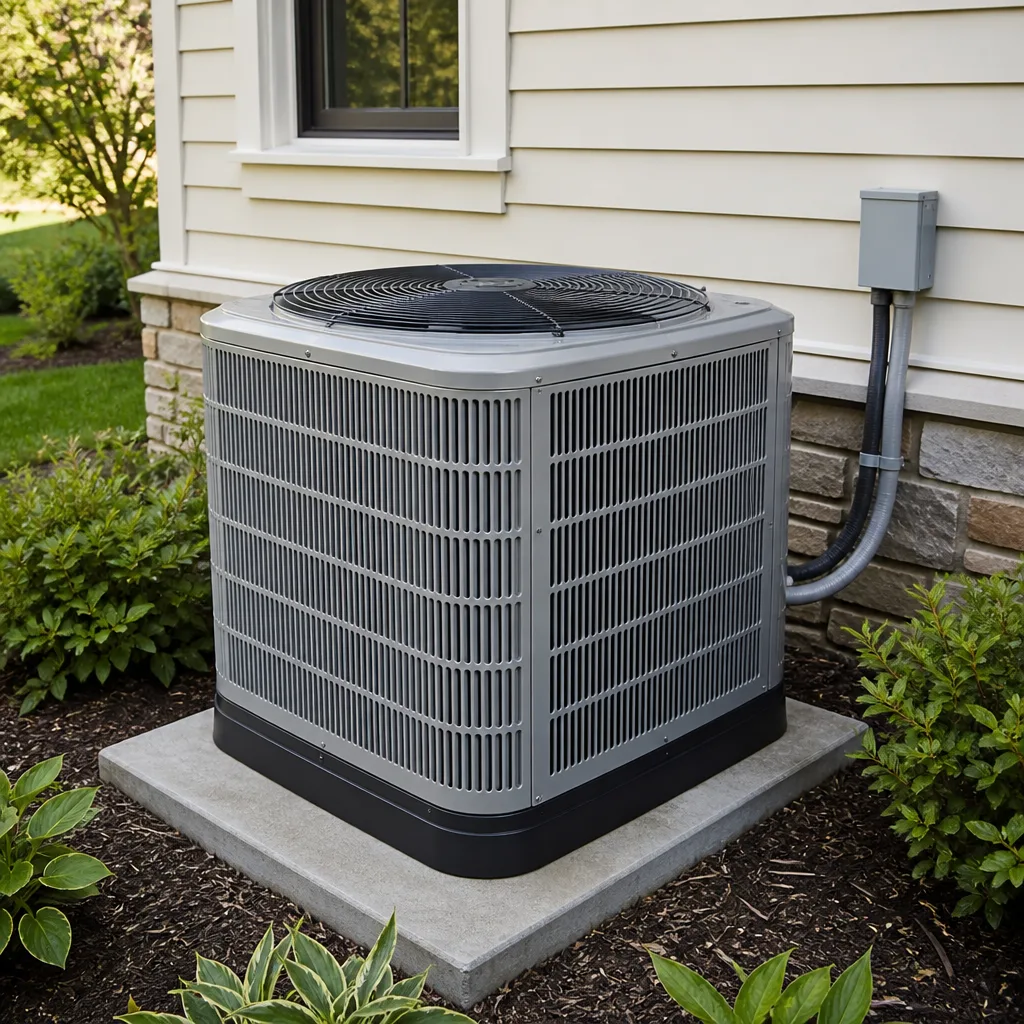 Carrier
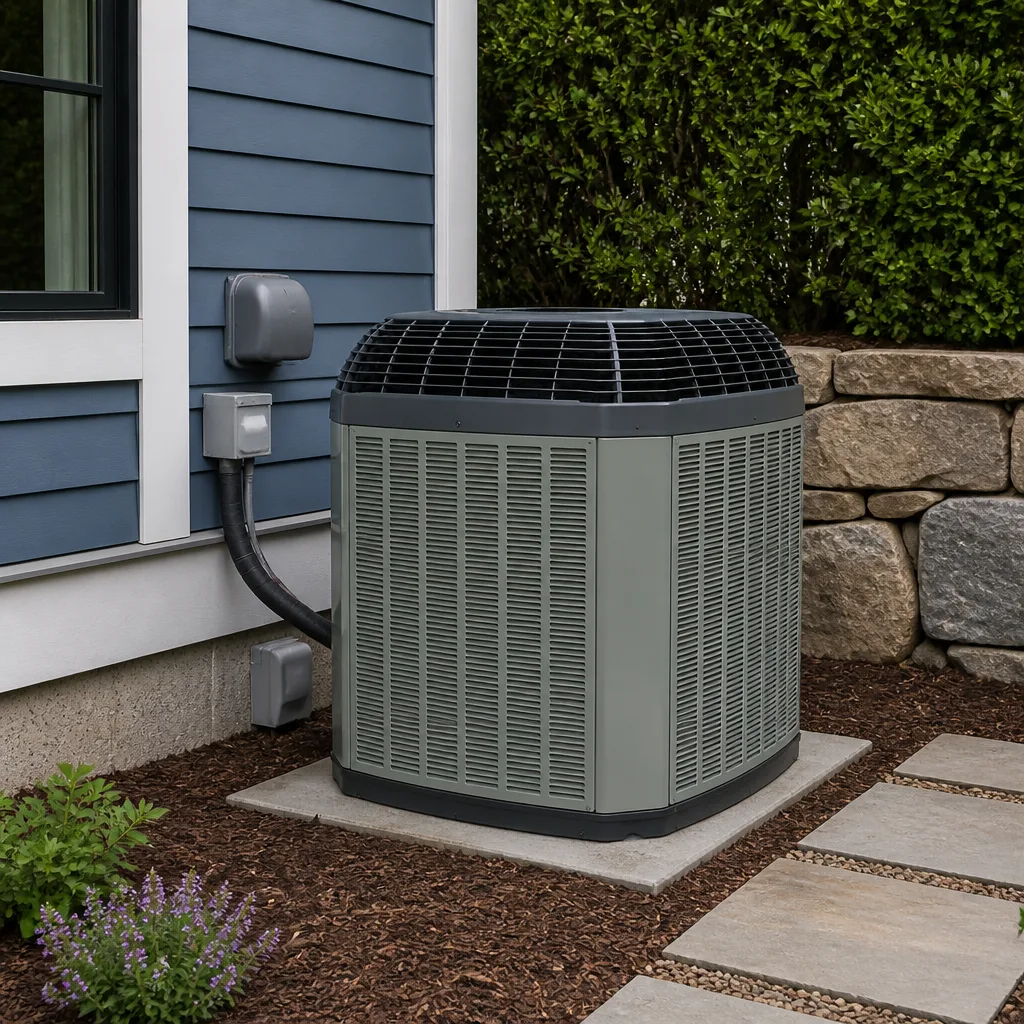 Trane
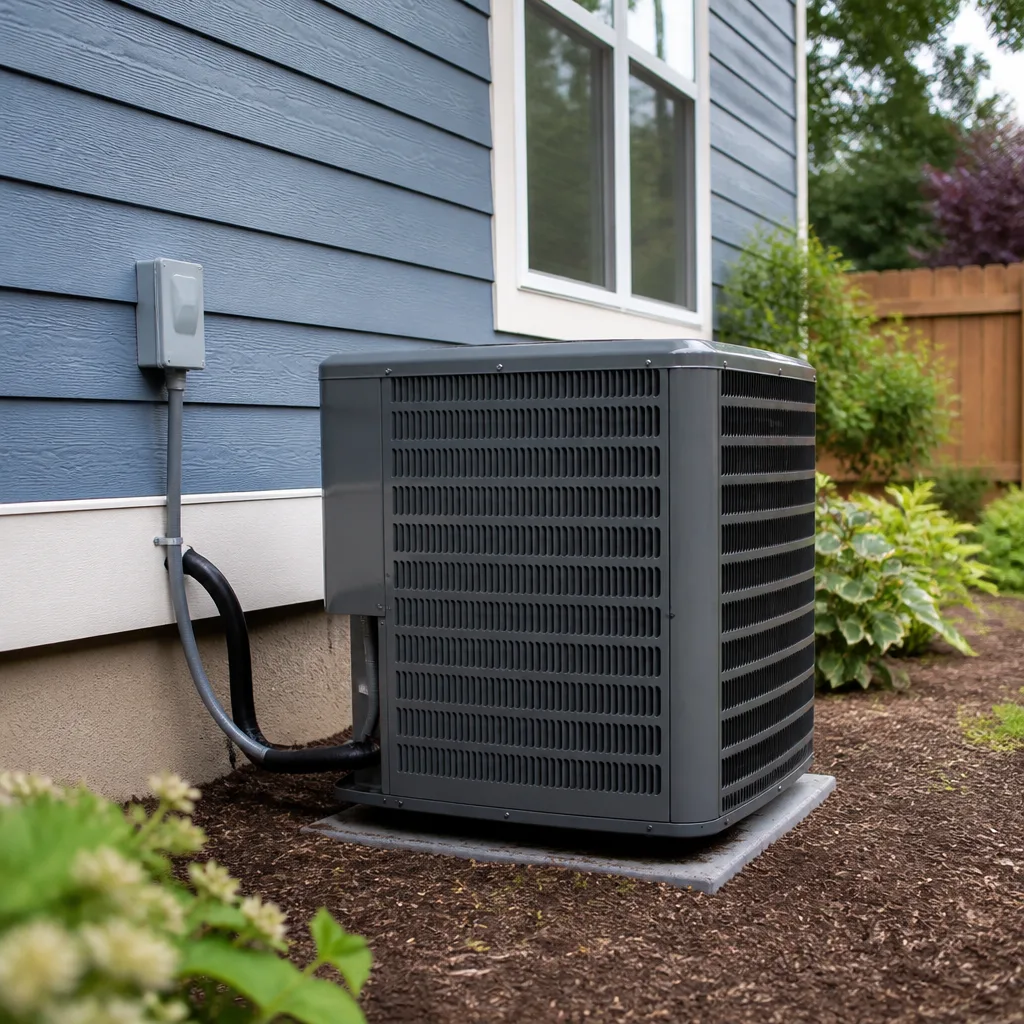 Goodman
Seasonal tune-up and full diagnostic on your Carrier, Trane, or Goodman system - readings shown to you before any repair is proposed
Diagnosis first, numbers second - you approve the repair price before a single part goes in.
Get your free estimateHVAC Permits, Codes & Inspections in Palm Bay, FL: What You Need to Know
Most homeowners treat the permit as paperwork that happens after the real decision. In Brevard County, it’s the opposite. The permit is what turns a new air conditioner into a legally recorded asset on your property – and its absence surfaces at the exact moment you can least afford it: during a title search, a buyer’s inspection, or an insurance claim for equipment damage. This guide walks through which HVAC jobs in Palm Bay legally need a permit, how the Brevard County Building Division inspection process actually works, what the Florida Energy Code requires of replacement equipment, and how to check whether a permit on your home was ever closed out.
Quick Answer
A permitted HVAC replacement in Brevard County requires a licensed contractor to pull the permit, an inspection after the work is done, and a final sign-off recorded with the county. Sizing changes, new installs, and refrigerant line modifications all trigger the requirement. Thermostat swaps and like-for-like filter changes don’t. An unpermitted system can complicate a home sale, flag your property during a title search, and give your insurer grounds to question equipment-related damage claims.
Styles & brands we work with
- AC repair
- Furnace & heating
- Heat pumps
- Ductless mini splits
- Carrier
- Trane
- Goodman
Table of Contents
- Why an HVAC Permit in Palm Bay Matters More Than You’d Think
- Which HVAC Jobs Require a Permit in Brevard County
- How the Brevard County Inspection Process Works in Practice
- Florida Energy Code and SEER2 Requirements for Palm Bay Replacements
- What “Pulling the Permit Yourself” Actually Means in Florida
- How to Verify a Permit Was Properly Closed
- What to Do If You Bought a Home With an Open HVAC Permit
- What a Compliant HVAC Job Looks Like From Start to Finish
Why an HVAC Permit in Palm Bay Matters More Than You’d Think
An HVAC permit does three things at once. It records that the equipment was installed according to code, it creates a paper trail that title companies and insurers can actually find, and it shifts liability to a licensed professional who is accountable for the work. When any of those three disappear, the exposures show up later and in the wrong order.
Here’s how the consequences tend to surface in Palm Bay:
- At the home sale. Title searches and buyer inspections routinely pull permit history. An unpermitted AC replacement doesn’t always kill a deal, but it almost always delays one – and it gives the buyer negotiating leverage.
- During an insurance claim. Homeowner policies typically contain language about code compliance and permitted work. If equipment-related damage traces back to an unpermitted install, the claim conversation gets harder and slower.
- At the warranty desk. Manufacturer warranties are generally tied to proper installation by a licensed contractor. A homeowner-builder install can complicate a warranty claim even when the equipment itself is fine.
- During a code complaint. Brevard County can require correction or removal of unpermitted work, and the cost of correcting an unpermitted install is always higher than the cost of doing it right the first time.
None of this is meant to alarm. It’s meant to explain why the permit line on a written estimate belongs there, and why a bid that skips it isn’t actually cheaper – it’s just shifted. We work on your brand whether that’s Rheem, York, Bryant, or something else, and the permit process is the same regardless of the nameplate on the condenser.
Which HVAC Jobs Require a Permit in Brevard County
The dividing line is straightforward: if the job changes equipment, capacity, refrigerant circuits, or the electrical and structural connections that support them, expect a permit. If it’s a swap of a component that doesn’t touch the system’s refrigerant charge or its electrical supply, it usually doesn’t. When in doubt, the answer is to call the Brevard County Building Division directly and ask – the question costs nothing and the answer settles the job.
Jobs that require a permit
- Full system replacement. Swapping an air conditioner or air handler for a new unit of any capacity.
- New installations. Adding a system to a home that didn’t have one, or adding a second zone.
- Refrigerant line changes. New line sets, rerouted lines, or line modifications tied to a replacement.
- Capacity changes. Moving from one tonnage to another, which triggers load-calculation and ductwork review.
- Duct system changes. New duct runs, significant reconfiguration, or ductwork associated with a new install.
- Electrical supply changes. New circuits, disconnect changes, or breaker work tied to the HVAC equipment.
- Furnace replacements. Gas or electric furnace swaps need permitting and inspection, and gas furnace work also involves combustion and venting review.
Jobs that typically don’t require a permit
- Thermostat replacement, including smart thermostat upgrades.
- Filter changes and filter housing swaps.
- Routine maintenance, cleaning, and tune-ups.
- Like-for-like replacement of non-structural components such as a capacitor, contactor, or blower motor, where no refrigerant or electrical supply changes are involved.
The most common mistake in Palm Bay is treating a replacement as a component repair. Replacing a compressor is a repair. Replacing the condenser and air handler together is a new system, and that’s a permitted job. If you’re not sure which category your project falls into, a licensed contractor can tell you before anyone touches the equipment – and any contractor who tells you a replacement “doesn’t need a permit” is worth a second look. Our AC installation work always includes the permit pull, and we can walk you through what’s needed for furnace work as well.
How the Brevard County Inspection Process Works in Practice
The permit itself is only half the process. The inspection is what closes it out, and that’s the part homeowners tend to underestimate. In busy seasons across Brevard County, residential HVAC inspection slots fill quickly, and the wait between a contractor’s request and an inspector’s arrival can run several business days – longer during the peak summer replacement months when every contractor in the county is booking inspections at once.
Here’s what a typical permitted replacement sequence looks like on a calendar:
- Contractor pulls the permit. This happens before the work begins, not after. The permit application includes equipment specs, capacity, and often the load calculation for the home.
- Equipment is installed. Installation follows the permitted scope. If the on-site conditions require a change from the permit – say, a different line routing or a different air handler location – the contractor files the change before or alongside the inspection.
- Inspection is requested. The contractor schedules the inspection through Brevard County’s online permitting system. Inspection requests typically need to be submitted by a cutoff time to be eligible for the next available window.
- Inspector visits the site. The inspector reviews the equipment install, electrical connections, refrigerant line routing, condensate drain, and in furnace work the venting and combustion details. Correctable issues are noted and addressed.
- Final sign-off is recorded. The permit is closed and the record is filed with Brevard County. That final status is what matters for title, insurance, and warranty purposes.
The realistic timeline for a residential HVAC replacement in Palm Bay runs from the day the work is finished to a few business days later if the schedule allows. Building that window into your timeline matters if you’re coordinating a sale, an appraisal, or a closing. Our technicians have up to 10 years of experience with this exact process, and we schedule inspections as part of the job – not as an afterthought. A furnace install on the gas side can add a step because the inspection covers venting and combustion air alongside the equipment.
Florida Energy Code and SEER2 Requirements for Palm Bay Replacements
Replacement equipment in Florida has to meet minimum efficiency standards set by the Florida Energy Code and by federal rules that changed in 2023. The most visible shift is the SEER2 metric, which replaced SEER as the standard efficiency rating for residential air conditioners and heat pumps. SEER2 numbers are measured under tighter test conditions, so a SEER2 rating isn’t directly comparable to the older SEER number – a 14 SEER2 unit is not the same as a 14 SEER unit. Any replacement proposal you receive in Palm Bay should list SEER2 ratings, not SEER, for clarity.
What the code means for a Palm Bay replacement in practice:
- Minimum efficiency thresholds apply. Equipment installed as a replacement must meet the minimum SEER2 standard required for the region. A contractor quoting you equipment below that threshold isn’t quoting a compliant install.
- Sizing matters. The code requires equipment to be sized correctly for the home. Oversized systems are a common reason a replacement runs poorly, and a load calculation should be part of any permit application.
- Ductwork is part of the picture. Duct leakage, insulation, and sealing have to be addressed when they’re part of the permitted scope. A high-efficiency condenser on leaky ducts is an investment that doesn’t deliver.
- Refrigerant phase-outs affect equipment choice. Refrigerant types have shifted, and new equipment generally uses refrigerants that meet current federal standards. Contractors should be clear about which refrigerant your new system uses and how that affects service and warranty.
If you’re replacing a furnace on the heating side, the energy code also touches equipment efficiency and venting. This is where brand familiarity earns its keep. A Rheem or Bryant furnace has different venting and efficiency options than a Daikin system, and choosing the right one for your home isn’t about the name – it’s about matching the equipment to your ductwork, your home’s layout, and your budget. We work on virtually any major system so we can recommend based on fit, not on distributor relationships. Our furnace repair work handles the same evaluation before we recommend a replacement rather than a repair.
What “Pulling the Permit Yourself” Actually Means in Florida
Florida law does allow a homeowner to pull certain permits as an owner-builder, but the restriction is stricter than most people assume. The owner-builder exemption applies when the homeowner is doing the work on their own primary residence, personally, without hiring a contractor to perform it. It is not a loophole you can use to hire an unlicensed installer and sign the paperwork yourself.
The practical details:
- The exemption is for the homeowner’s own residence. It doesn’t apply to rental properties, investment homes, or homes you plan to sell quickly.
- The work must be done by the homeowner personally. If a contractor performs the install, the contractor pulls the permit. This is what keeps the licensed-contractor requirements intact.
- The homeowner becomes responsible for compliance. That means code compliance, inspections, and any corrections. If the inspection fails, the homeowner is the one accountable.
- Some HVAC work legally requires a licensed professional. Refrigerant handling is a federally regulated activity, and connecting equipment to electrical and gas supplies has its own requirements. An owner-builder permit doesn’t change those federal and safety rules.
- Disclosure obligations follow the home. Owner-builder work may need to be disclosed in a future sale, and title companies look harder at owner-builder permits for exactly this reason.
For furnace work, the safety picture gets more serious. Gas lines, combustion venting, and carbon monoxide risk are not things to learn on the fly. A trained professional handles those connections for a reason. The same logic applies to the electrical side of an HVAC install – the disconnect and the circuit feeding the equipment carry real current, and getting that wrong is a fire risk, not a paperwork issue.
In our experience, the owner-builder route almost never makes financial sense for a full HVAC replacement. The permit fees saved are small next to the liability, and the home sale complications later can outweigh them entirely.
How to Verify a Permit Was Properly Closed
Whether you’re checking on a job you just had done or looking at a home you’re about to buy, the process is the same. Brevard County’s online permitting system lets you search by address or by permit number, and the record shows the permit’s current status – open, failed inspection, or finaled. “Finaled” is the status you want. An open permit means the process started. A finaled permit means it finished.
Here’s a short checklist for verifying a Palm Bay HVAC permit:
- Search the Brevard County permit portal by property address. All HVAC permits associated with that address should appear.
- Read the status on each record. Open permits on a property are a red flag, even if the work was done years ago.
- Check the permitted scope against the actual equipment. If the permit was for a 2-ton system and the home has a 3-ton condenser, the permit doesn’t cover what’s actually there.
- Confirm the final inspection is recorded. A permit that was inspected but never finaled is still open, and that status is what title companies flag.
- Ask for the permit number on any HVAC work you have done going forward. Keep it with your home records alongside the equipment documentation.
If you’re buying a home in Palm Bay and the permit history looks incomplete, get a written status report from the county before closing. It’s cheap, it’s fast, and it puts the buyer in a stronger position. If you’re the seller, having the finaled permit in hand shortens the transaction.
What to Do If You Bought a Home With an Open HVAC Permit
An open permit on a home you now own is fixable. The process depends on the permit’s status: an open permit that never received an inspection can usually be inspected and closed by a licensed contractor, while a permit that failed inspection needs the noted corrections addressed before re-inspection. A permit that expired typically requires a new application, and the scope may need to be reviewed against what’s actually installed.
The steps to resolve it:
- Pull the permit record. Confirm the permit number, the scope, the inspector notes, and the expiration date.
- Have a licensed contractor review the install. The equipment on site has to match what the permit says, or the permit needs to be amended. Matching equipment also matters for the manufacturer warranty.
- Correct what the inspector noted. Common items are condensate drain routing, electrical disconnect placement, refrigerant line protection, and duct sealing.
- Schedule the inspection and get the final sign-off. Once finaled, your record is clean and the home’s permit history is intact.
- Keep the finaled permit with your closing documents. It’s proof-of-work that becomes relevant again when you sell.
Our technicians have up to 10 years of experience with these resolutions, and we can review what’s on site, tell you what’s needed to close the permit, and handle the paperwork with the county. It’s not a job to ignore – an open permit can follow the property through multiple owners.
What a Compliant HVAC Job Looks Like From Start to Finish
A properly done HVAC replacement in Palm Bay follows a predictable rhythm, and homeowners who know the rhythm can spot a shortcut before it happens. Here’s what to expect when everything is done right:
- Load calculation and equipment selection. Before a permit is pulled, the contractor estimates the home’s heating and cooling load and picks equipment that matches. This is where brand choice comes in – a Rheem, York, or Daikin system that’s the right size for your home beats a bigger system chosen for the nameplate.
- Permit application filed. The contractor pulls the permit with the county, listing equipment details and the permit scope.
- Installation. The equipment goes in to the permitted scope. Line sets, electrical, and condensate drain are handled in a way that will pass inspection the first time.
- Inspection scheduled and completed. The inspector reviews the install. Corrections, if any, are minor and specific.
- Final permit closed and documentation provided. You receive the permit number, the finaled status, and equipment documentation including the manufacturer warranty details.
- System commissioned. Refrigerant charge is verified, airflow is checked, and the system is run to confirm it’s operating as designed.
There are no shortcuts here that save money. Each step either pays for itself in warranty protection, insurability, or a clean resale, or it costs more later when the step is missing. Heating and cooling, handled – the whole point is that it’s handled once, correctly, and the paperwork is closed. Learn more about how we approach service in Palm Bay and how we operate as Flagship AC Repair.
Common Mistakes to Avoid
- Accepting a bid with no permit line. A quote without a permit line isn’t cheaper, it just moves the compliance cost onto you. Confirm in writing that the contractor will pull the permit and schedule the inspection.
- Skipping the final inspection because the install “looks fine.” An install without a finaled permit is still open, and that shows up at resale. Always confirm the final status on the county portal yourself, not just from the contractor.
- Assuming a repair-sized change doesn’t need a permit. Moving from one tonnage to another, adding a zone, or rerouting refrigerant lines is a permitted scope even when it’s part of a repair call.
- Hiring a contractor who offers to “leave the permit out” to save time. That’s not a faster job, it’s a liability transfer. Walk away from that offer.
- Not checking permit history before buying a Palm Bay home. A title search can surface an open permit, and you’d rather know before closing. Pull the record yourself early.
- Forgetting to keep the permit number and equipment documents. They’re part of your home record. Buyers, insurers, and warranty departments all ask for them eventually.
- Assuming code violations are always the contractor’s fault. The homeowner bears obligations too – disclosure at sale, and resolution of open permits. Understanding the process is protection.
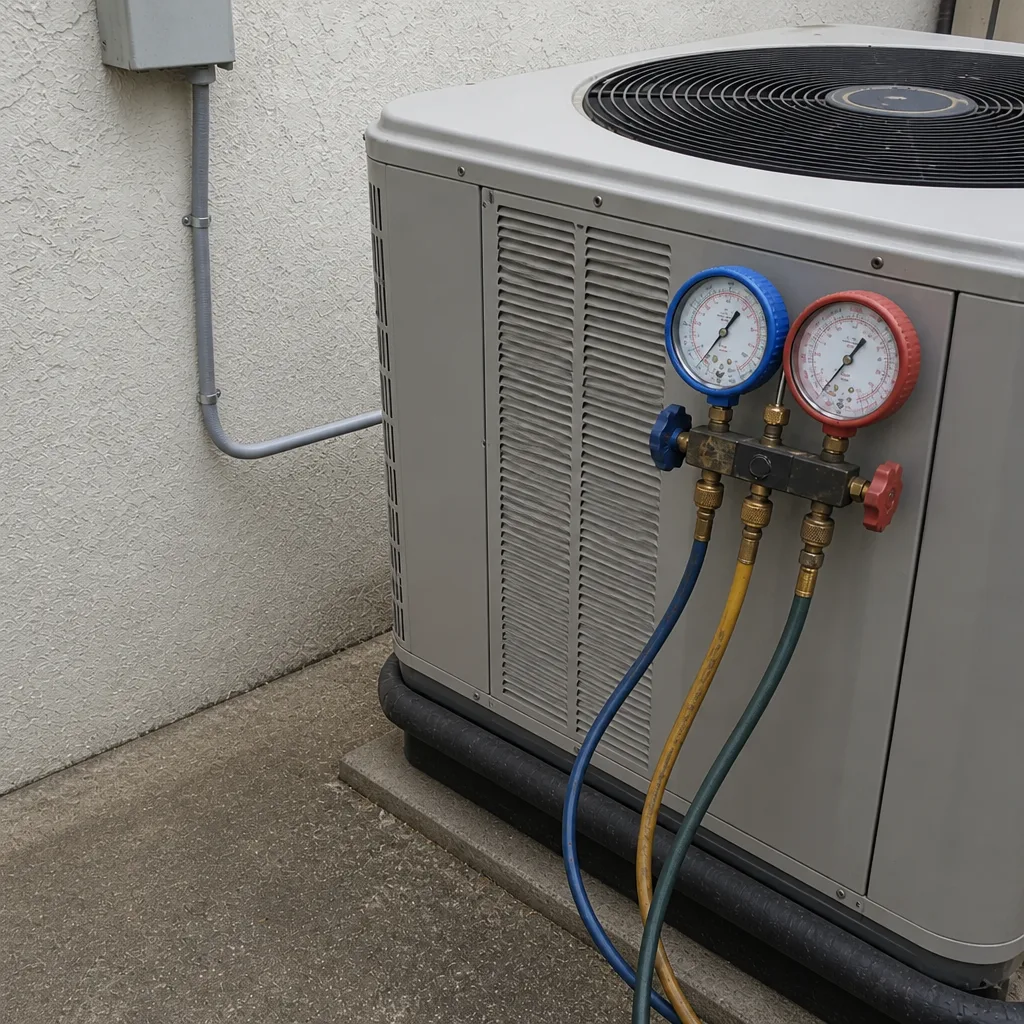
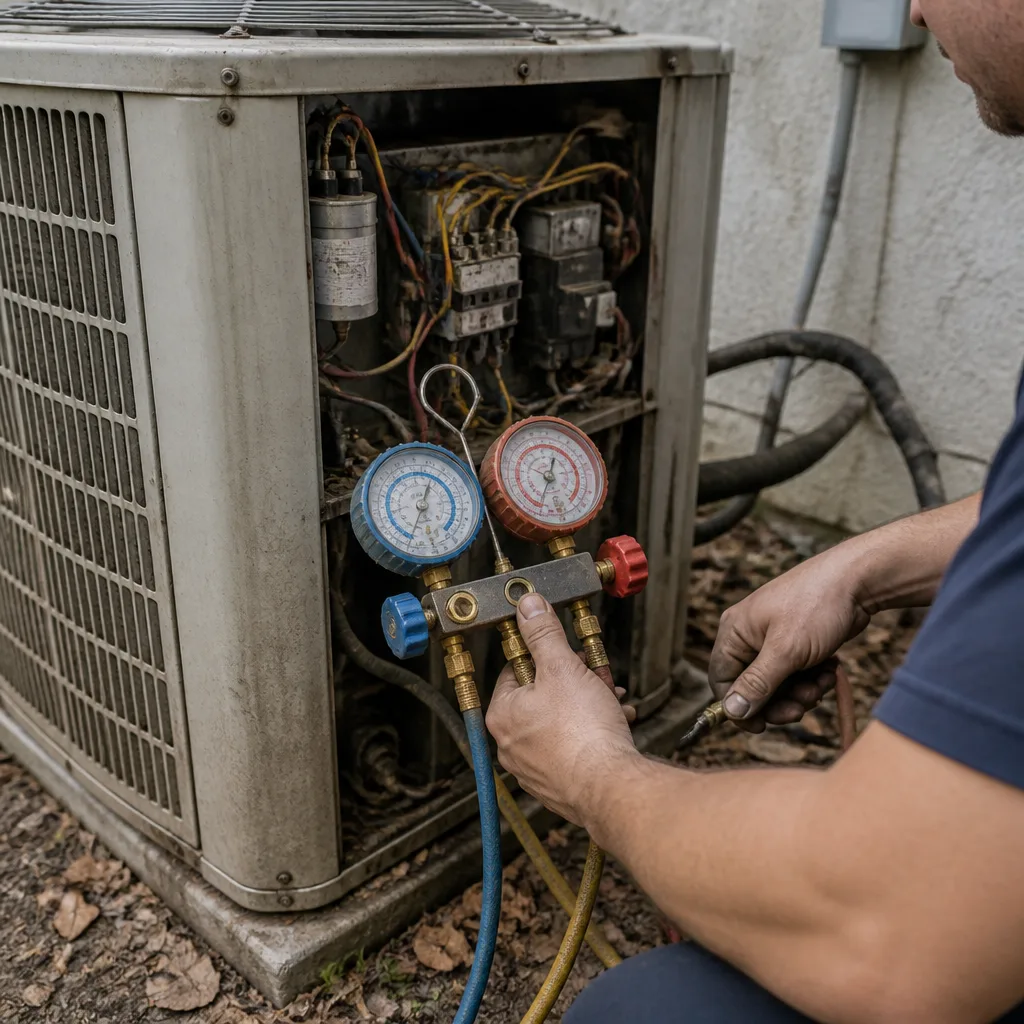
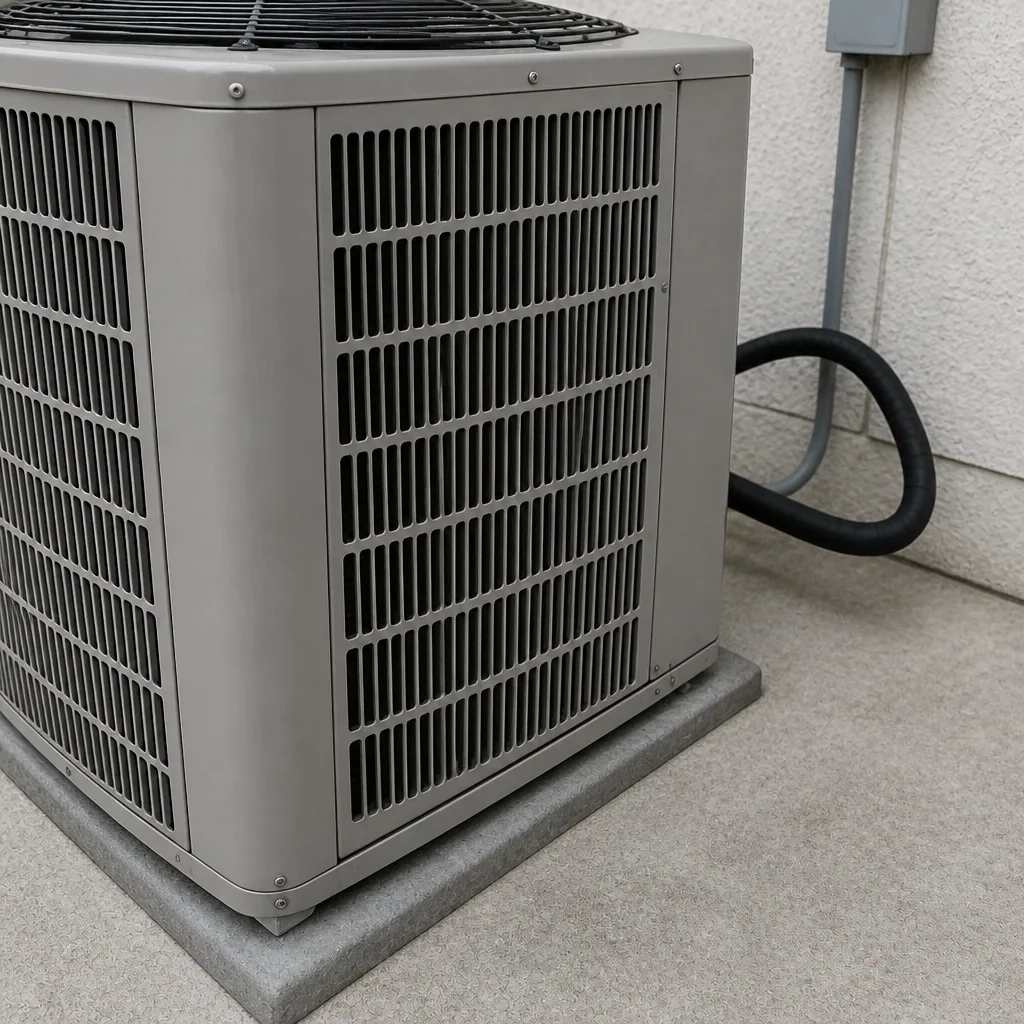
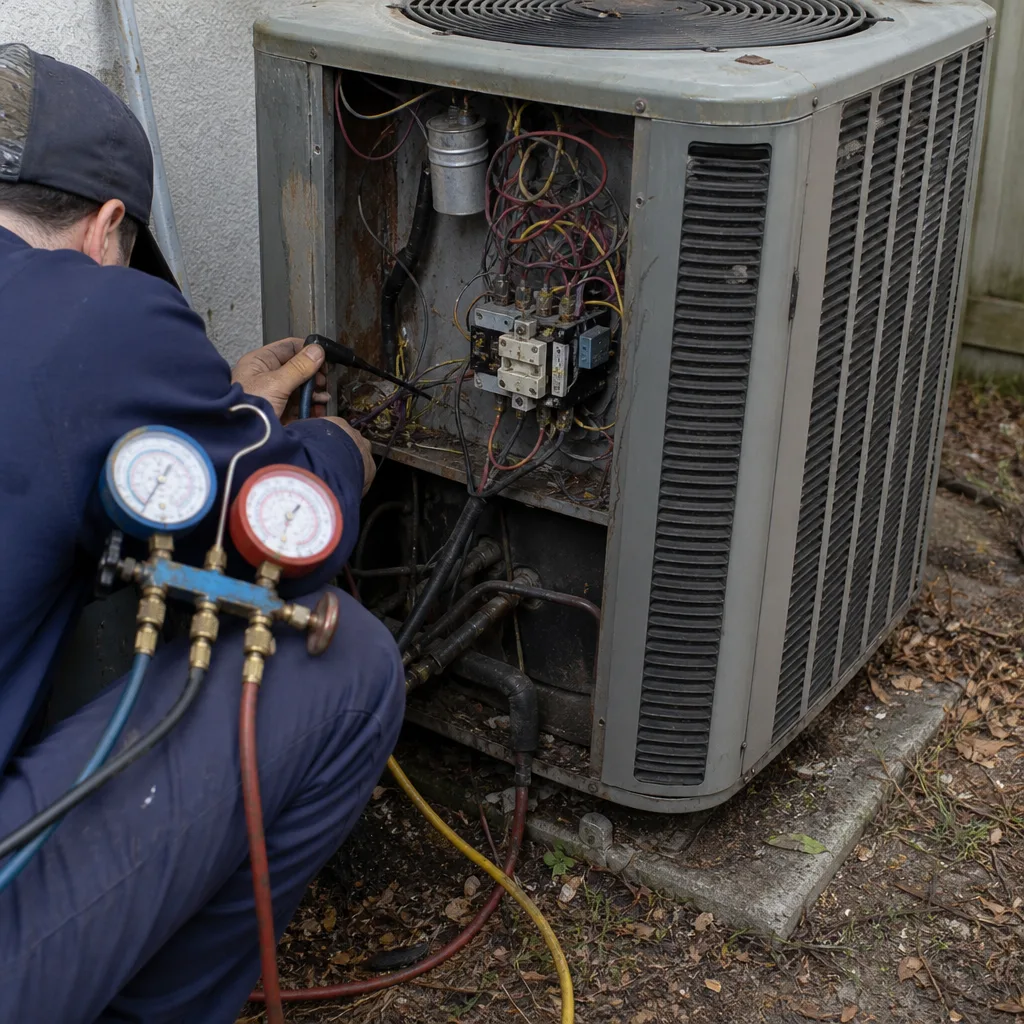
See the difference
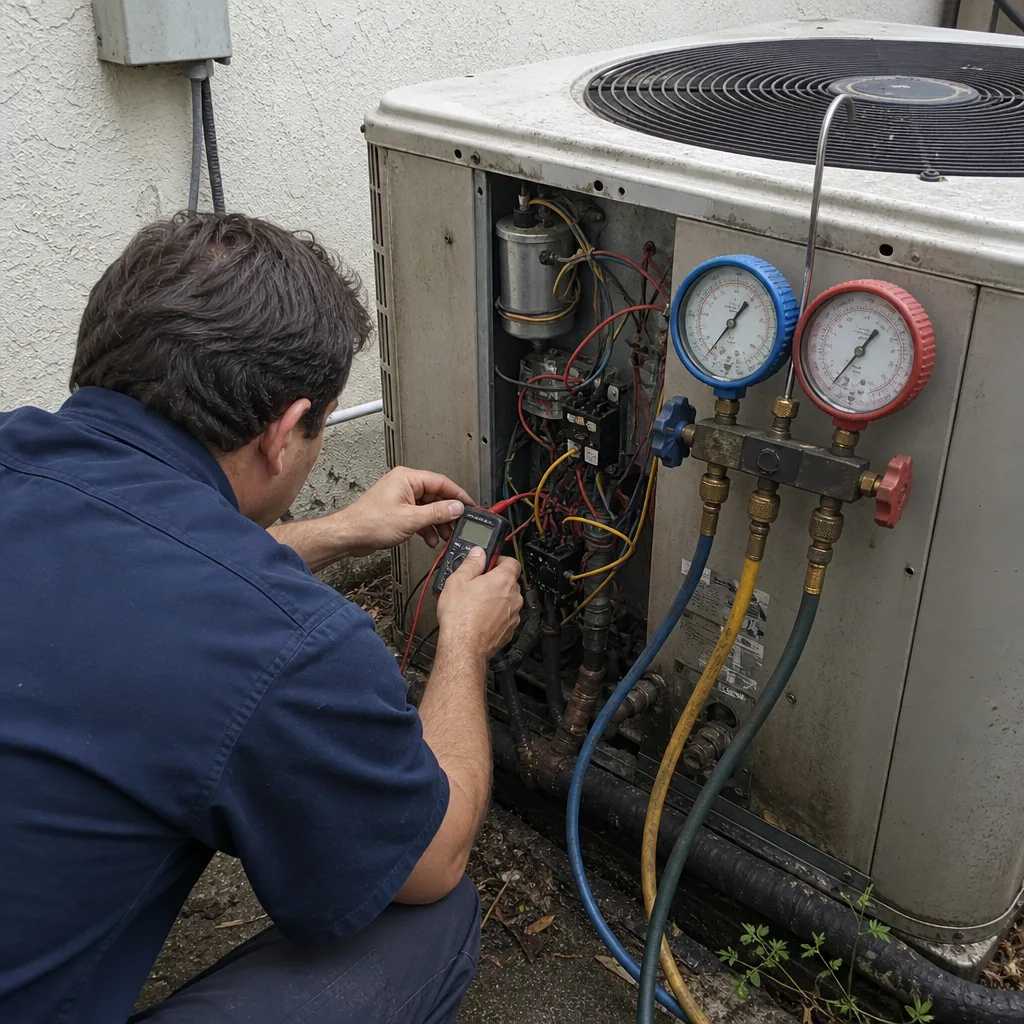 Before
 After
 Before
 After
 Before
 After
When to Call a Professional
Call a licensed HVAC contractor in Palm Bay whenever the job involves equipment replacement, refrigerant line changes, new installs, duct reconfiguration, or electrical supply work – and especially when you’re facing an open permit you didn’t create. Those are the cases where the permit, inspection, and final sign-off move money, compliance, and resale risk around. A licensed contractor pulls the permit, schedules the inspection, and hands you the finaled record. If you’re unsure whether your project needs a permit, calling is faster than guessing. We answer 24/7, and a contractor can confirm in minutes whether the scope requires one. For a home you’re buying, get a written status check on any HVAC permits before closing. Flagship AC Repair offers free estimates in Palm Bay – call (888) 374-9181. Our technicians have up to 10 years of experience working with the Brevard County process, and we can pull, close, or resolve a permit as part of the job.
Frequently Asked Questions
Yes, a new AC installation in Palm Bay requires a permit through Brevard County, and the job isn’t complete until a final inspection is recorded. The permit covers the equipment, the electrical connections, the refrigerant line routing, and the condensate drain, and the finaled permit is the document that proves the job was done to code. Any contractor who tells you a new install doesn’t need a permit is telling you something Brevard County would disagree with. Call (888) 374-9181 for a free estimate – we pull the permit as part of the job.
A residential HVAC inspection usually takes well under an hour on site, but the scheduling window from request to inspector visit can run several business days and grows longer in peak summer. Plan the timeline around the inspection slot before you commit to a closing date or a move-in. Coordinating the schedule is part of the contractor’s job, and a written job plan should show the inspection window clearly.
SEER2 is the current efficiency rating used for residential air conditioners and heat pumps, and it replaced SEER as the standard as of 2023. The measurement conditions are tighter under SEER2, so a SEER2 number isn’t interchangeable with an older SEER number. Florida Energy Code minimum efficiency requirements apply to replacement equipment in Palm Bay, and any proposal you receive should list SEER2 ratings so you can compare systems accurately. Call (888) 374-9181 for a quote that spells out SEER2 ratings on the equipment we recommend.
Florida law allows an owner-builder permit only when the homeowner is doing the work personally on their own primary residence – not when they’re hiring an unlicensed installer and signing the paperwork. On top of that, some HVAC work legally requires a licensed professional, particularly refrigerant handling and the electrical and gas connections. In most cases the owner-builder route creates liability without saving meaningful cost. A licensed contractor can explain the options for your specific job.
An open HVAC permit can usually be resolved by having a licensed contractor review the equipment, correct whatever the inspector flagged, and schedule the inspection to close the permit. If the permit expired, a new application may be required, and the scope may need to be updated to match what’s actually installed. Getting it finaled restores your property record and clears the issue for future sales. Call (888) 374-9181 and we’ll walk you through what closing the permit involves.
Yes, a furnace replacement requires a permit in Brevard County. The inspection covers the equipment install along with the gas connections and venting, and those are the parts of the job where safety matters most. A gas furnace that vents incorrectly is a carbon monoxide risk, not a paperwork item, which is why the inspection process exists. We handle the permit and inspection as part of furnace replacement work. Call (888) 374-9181 for a free estimate.
The Bottom Line
An HVAC permit in Palm Bay isn’t a formality – it’s the document that proves a replacement was done to code, keeps your insurance position intact, and keeps your home sale on track. The dividing line is simple: equipment replacements, new installs, refrigerant line changes, capacity changes, and duct or electrical changes are permitted work. Thermostat swaps and filter changes aren’t. Getting the process right means a contractor pulls the permit before the work, the install matches the permitted scope, the inspection is scheduled and passed, and the final sign-off is recorded with Brevard County. If you’re checking on work already done or buying a home with an open permit, verify it on the county portal and get a licensed contractor to review. The permit is the part of the job that protects you after the truck leaves.
Written by the team at Flagship AC Repair.