
Last updated November 15, 2026
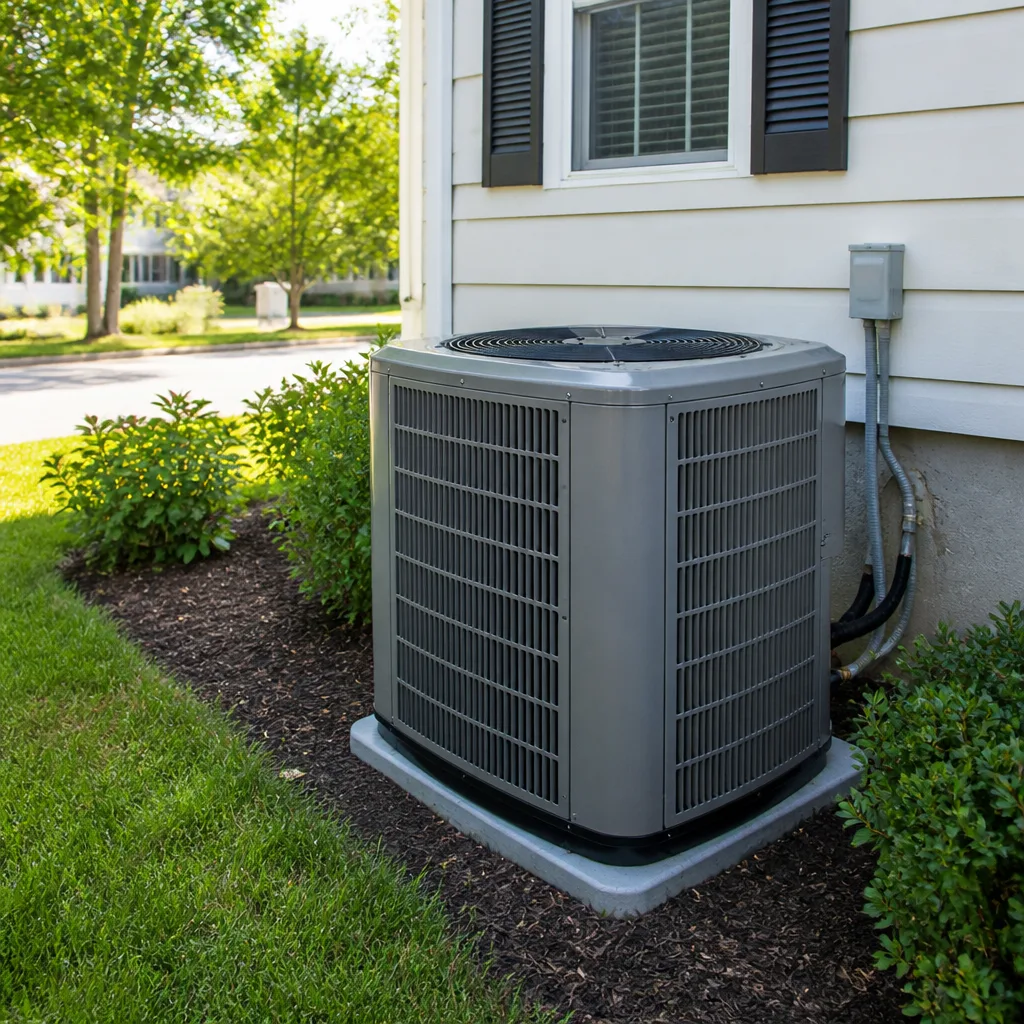 AC repair
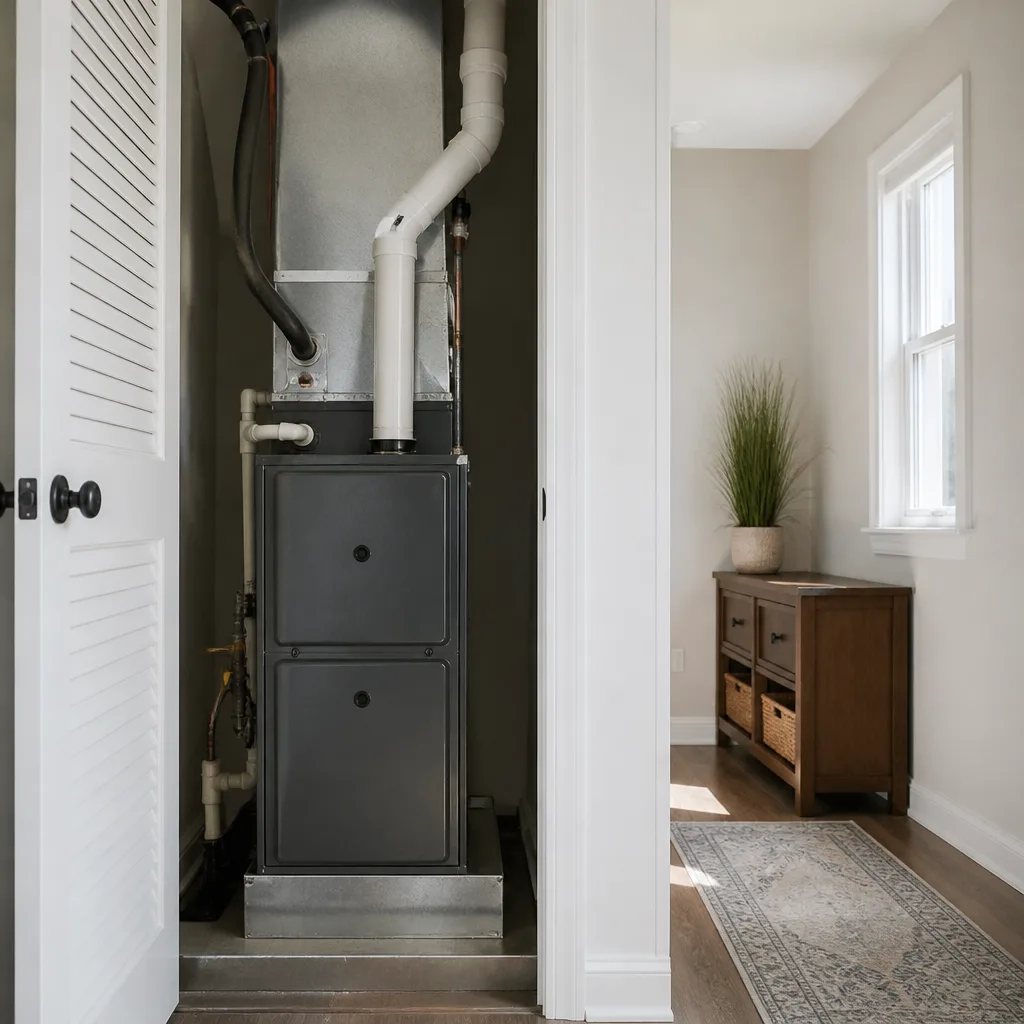 Furnace & heating
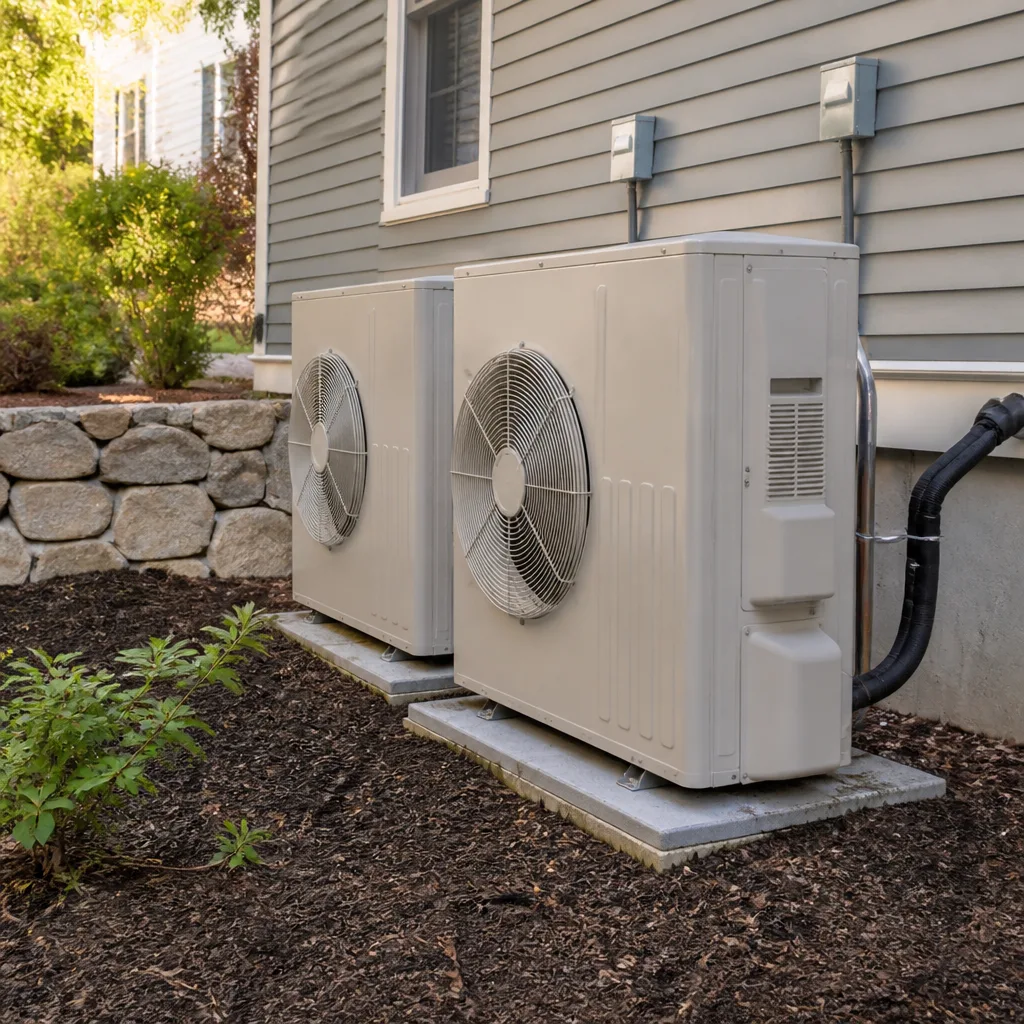 Heat pumps
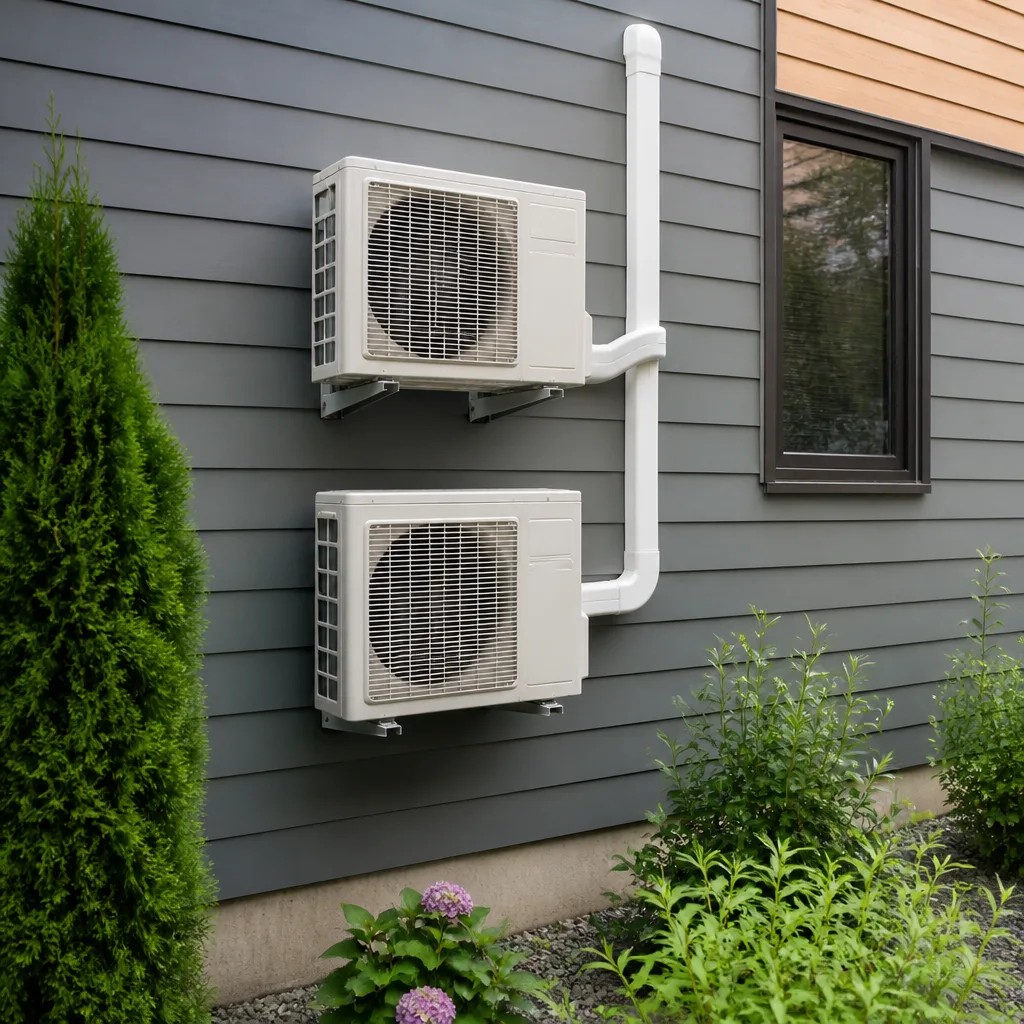 Ductless mini splits
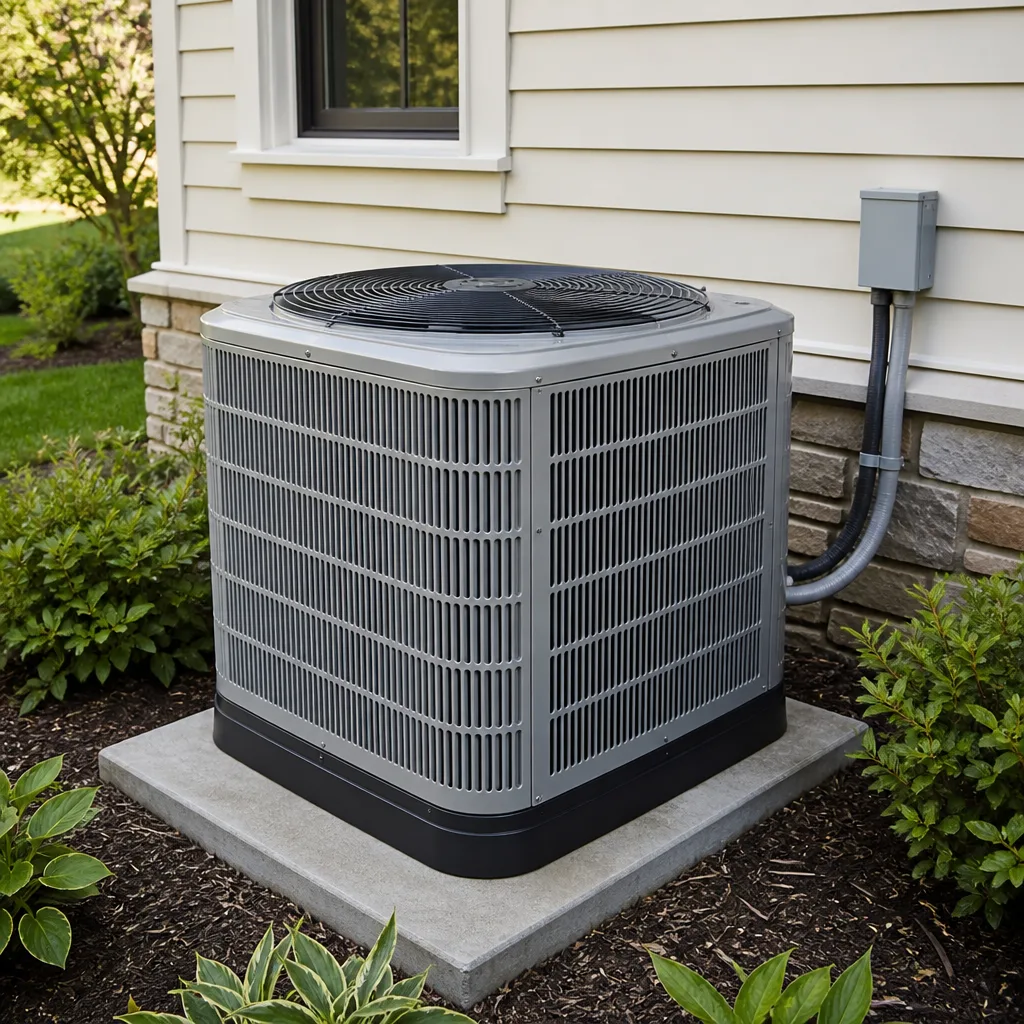 Carrier
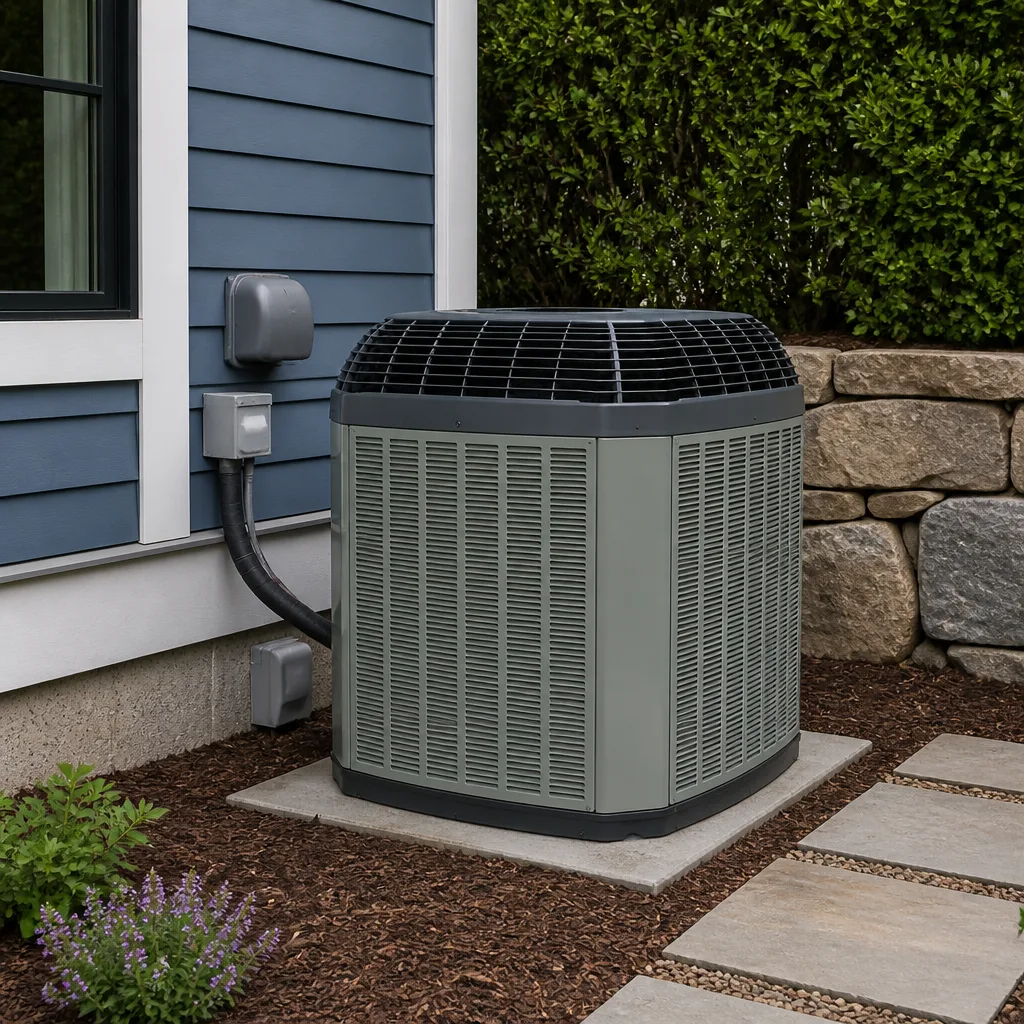 Trane
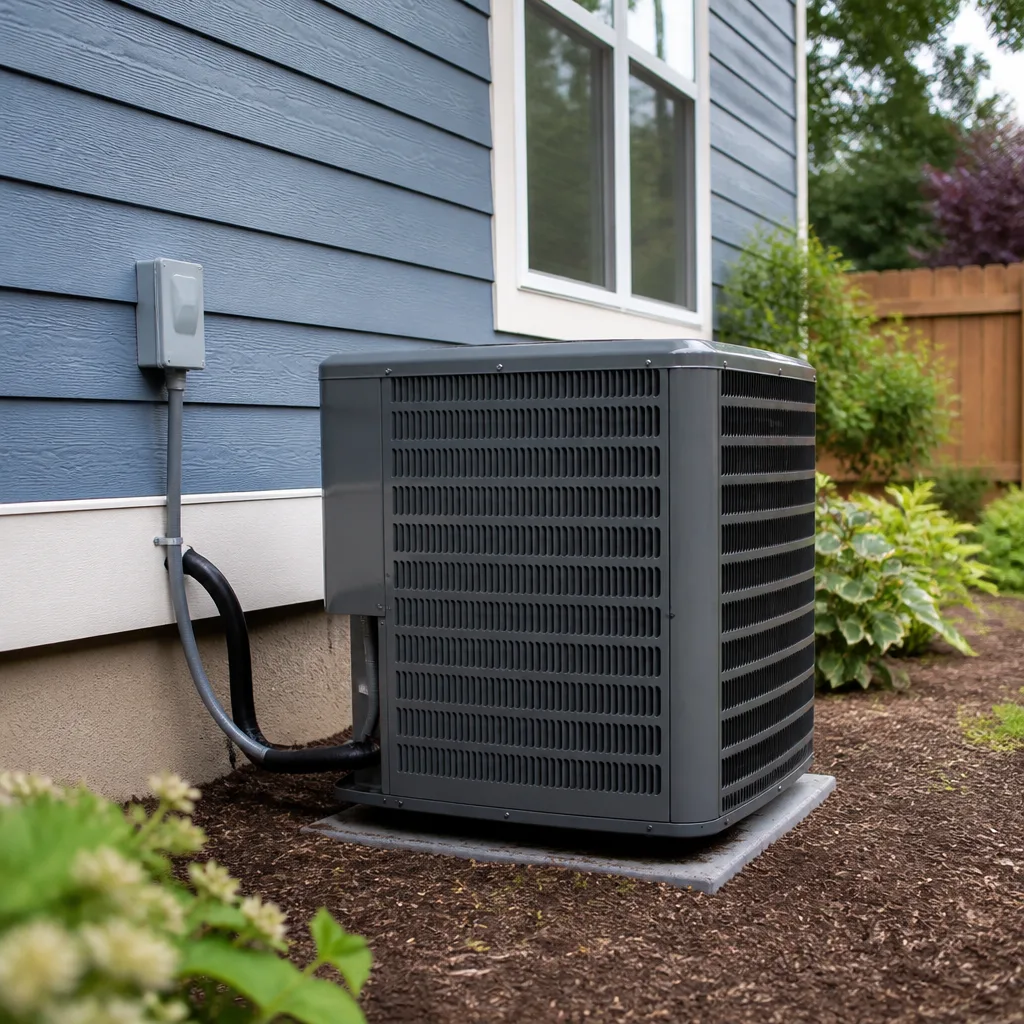 Goodman
Seasonal tune-up and full diagnostic on your Carrier, Trane, or Goodman system - readings shown to you before any repair is proposed
Diagnosis first, numbers second - you approve the repair price before a single part goes in.
Get your free estimateSeasonal HVAC Care for Palm Bay: Year-Round Homeowner’s Guide
Most homeowners here treat HVAC care like a four-season routine copied from somewhere colder: spring tune-up, summer cool-down, fall furnace check, winter rest. Palm Bay doesn’t work that way. Our year is closer to an eight-month cooling grind, a short and unpredictable heating window, and two shoulder months where systems sit idle long enough to develop problems nobody notices until the first hot week. That idle stretch is where the failures hide. This guide rebuilds your maintenance calendar around how Palm Bay actually lives, so you’re servicing your equipment when it matters instead of when a generic checklist says to.
Quick Answer
Seasonal HVAC care in Palm Bay means prioritizing the April – May switch-on period and the October cool-down, flushing condensate lines and treating drain pans monthly through the humid season, running your heat pump briefly each month so it doesn’t seize during its long off-cycle, and watching your utility bill month-over-month as a free early-warning signal. A short walkthrough twice a year plus a professional check before summer catches most problems while they’re still cheap to fix.
Styles & brands we work with
- AC repair
- Furnace & heating
- Heat pumps
- Ductless mini splits
- Carrier
- Trane
- Goodman
Table of Contents
- The Palm Bay Maintenance Calendar, Month by Month
- Why April and May Matter More Than July
- Humidity Management: Drain Pans, Condensate Lines, and Dehumidifiers
- Keeping Your Heat Pump Healthy Through Eight Months of Downtime
- Using Your Utility Bill as an Early-Warning System
- Your Twice-Yearly Walkthrough, Step by Step
- What a Professional Seasonal Check Covers
- Brand-Specific Care: Trane, Lennox, Goodman, and Rheem
The Palm Bay Maintenance Calendar, Month by Month
A northern maintenance template tells you to prep for winter and clear the system in spring. In Palm Bay, the load is inverted. Your air conditioning runs hard for most of the year, your heating runs for a handful of cold snaps, and the transitions between those two modes are where equipment quietly degrades. Here’s a calendar mapped to that reality.
- January – February: Heating still gets occasional calls on cold mornings. Check the air filter, test the heat function, and note any unusual smell or weak airflow. This is also a good window to schedule a professional inspection before the cooling season books up.
- March: Pre-season prep. Replace the filter, clear debris from the outdoor condenser, and check the condensate drain for buildup. Beat the April rush.
- April: The most important month of the year. Full professional check before you lean on the system daily, plus a walkthrough of your own.
- May: Switch-on month. Watch for weak cooling, strange noises, or rising bills as the system comes back online after months of light use.
- June – September: Peak cooling. Monthly filter checks, monthly drain pan inspection and condensate flush, and a quick look at the outdoor unit for vegetation crowding the airflow.
- October: The second shoulder month. Cooler mornings mean the system starts cycling less. This is when problems that developed over the summer peak become obvious, so don’t skip it.
- November – December: Heating check before the cold snaps, plus a final filter and drain inspection. Confirm the heat pump or furnace running in heat mode is actually producing warm air.
Why April and May Matter More Than July
It’s tempting to think the busiest season for HVAC service is the middle of summer, when temperatures peak. In our experience, the transition months are where the real risk sits. A system that ran virtually nonstop from May through September gets a break in October, then another break in the winter heating season, then gets asked to run hard again in April. Each of those transitions exposes a problem that built up during the idle stretch: a clogged condensate line, a capacitor that aged quietly, refrigerant that leaked slowly, a blower that got dust-loaded.
A July failure is inconvenient. An April failure caught by a professional check in March is usually a small repair. The economics favor pre-season service every time, which is why we push Palm Bay homeowners to book their cooling check in early spring rather than waiting for the first breakdown.
There’s a second reason April matters: appointments fill up. When the first hot week hits, everyone calls at once, and the homeowner who booked a check in March gets service while the one who waited is scheduling behind a queue. Early spring scheduling has almost no downside.
Humidity Management: Drain Pans, Condensate Lines, and Dehumidifiers
The cooling side of your system does two jobs here: it lowers temperature and it removes moisture from the air. That second job is the one homeowners underestimate. A typical central air system pulls a surprising volume of water out of the air on a humid Palm Bay day, and that water has to go somewhere. When it doesn’t, you get a slow leak, a wet ceiling, or a musty smell in the house that no amount of cleaning will fix.
Here’s the care routine we recommend:
- Inspect the drain pan monthly. Look for standing water, algae growth, or rust. A pan that stays wet most of the year is a pan that will eventually fail.
- Flush the condensate line. Pour a cup of plain white vinegar down the access port once a month during the cooling season. This slows the algae that clogs lines.
- Check the drain line’s exit point. Make sure water is actually dripping outside. If not, the line is blocked and needs attention before it backs up into the pan.
- Consider a whole-home dehumidifier if your house runs clammy. In an eight-month cooling season, some homes stay damp even with the AC running because the system short-cycles or is oversized. A properly sized dehumidifier integrated with your HVAC does the moisture work the AC can’t.
- Watch the outdoor unit’s surroundings. Vegetation that grows into the condenser reduces airflow and forces the system to work harder, which affects both temperature and humidity control.
Keeping Your Heat Pump Healthy Through Eight Months of Downtime
If your Palm Bay home runs a heat pump rather than a separate furnace and AC, you’re relying on a machine that spends most of the year in one mode. That’s fine, but it’s not maintenance-free. Heat pumps have reversing valves, defrost controls, and auxiliary heat strips that only get exercised when the weather turns cold. A reversing valve that hasn’t moved in eight months can stick when you actually need heat. A furnace that hasn’t run since February can have a combustion or ignition issue you won’t discover until the first cold morning.
The fix is simple: run the system in heating mode briefly once a month during the cooling season. Ten minutes on a cool morning is enough to exercise the reversing valve, confirm the heat strip engages, and confirm the system responds. If you have a gas furnace, run it briefly in the shoulder months too, so the burners cycle and the ignition sequence stays reliable.
If the heat pump or furnace won’t respond when you turn it on, that’s a call to make before the next cold snap, not after. furnace repair handled before the season starts is a much smaller job than one handled in the middle of a cold snap, and it’s the kind of thing we can look at during a routine seasonal check.
Using Your Utility Bill as an Early-Warning System
Your electric bill is the cheapest diagnostic tool you own. Month-over-month, it tells you more about your system’s health than any gadget you can buy, because it captures efficiency drift before it becomes a breakdown. Here’s how to read it.
- Compare the same month year over year, not just month to month. Weather varies, so a single hot month doesn’t tell you much. Two consecutive months running 10 – 15% above last year’s same months, with similar weather, is a signal.
- Watch your baseline months. The shoulder months (March, April, October, November) are low-load, so a jump in those months is easier to attribute to a stuck compressor, a failing capacitor, or a system working against a clogged filter or coil.
- Track kWh, not the dollar total. Rate changes move the dollar amount even when your usage hasn’t changed. The kWh figure is the honest measure of how hard the system is working.
- Keep a note in your phone. One line per month, kicked off the bill: “Aug kWh: 2,140, setpoint 76.” Over a year you have a baseline that beats a guess.
If your bill is climbing without an explanation, the right move is a professional look, not a bigger thermostat setting. Efficiency loss usually has a physical cause: low refrigerant charge, a dirty evaporator coil, duct leakage, a failing blower motor, or a compressor that’s drifting out of spec.
Your Twice-Yearly Walkthrough, Step by Step
Nobody expects you to do a technician’s job. You shouldn’t touch refrigerant, the compressor, or anything electrical inside the cabinet. But a smart walkthrough twice a year, once in March and once in October, catches the obvious stuff before it turns into a service call.
- Replace the air filter. Use the size printed on the return grille. In Palm Bay, a 90-day filter often needs changing at 60 days during peak season. If you can’t see light through it, it’s done.
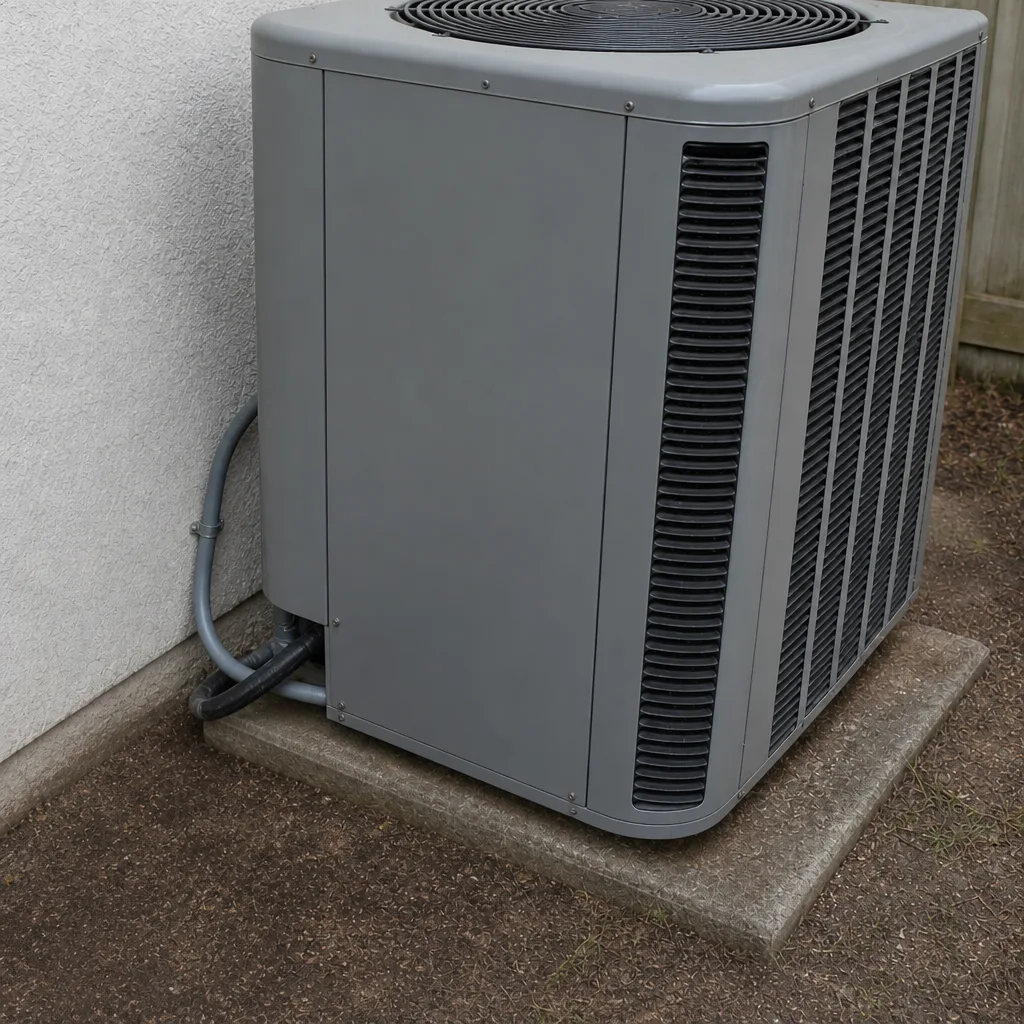
- Clear the outdoor unit. Remove leaves, grass clippings, and any vegetation within two feet. Gently rinse the condenser coil with a garden hose, not a pressure washer.
- Check the condensate pan and line. Look for standing water. Confirm the drain line is flowing.
- Test both modes in the shoulder months. Run the air conditioner for ten minutes, then run heat for ten minutes. Both should respond promptly.
- Walk the house with your hand in front of the registers. Feel for weak airflow or warm air on a cooling cycle. Uneven airflow usually means a duct problem or a balancing issue.
- Check your thermostat batteries and schedule. Confirm the schedule matches your real routine, not one set years ago.
- Write down anything unusual. Odd noise, odd smell, frequent cycling, ice on the outdoor unit. A list to give a technician is worth more than a vague description on the phone.
That’s the homeowner’s half. Every Palm Bay home benefits from a professional seasonal check once a year, and the next section is what those should cover.
What a Professional Seasonal Check Covers
A proper seasonal check isn’t a filter swap and a handshake. It’s a set of measurements on the components that quietly degrade, done with instruments, and reported to you in plain language. Here’s what should be on the list.
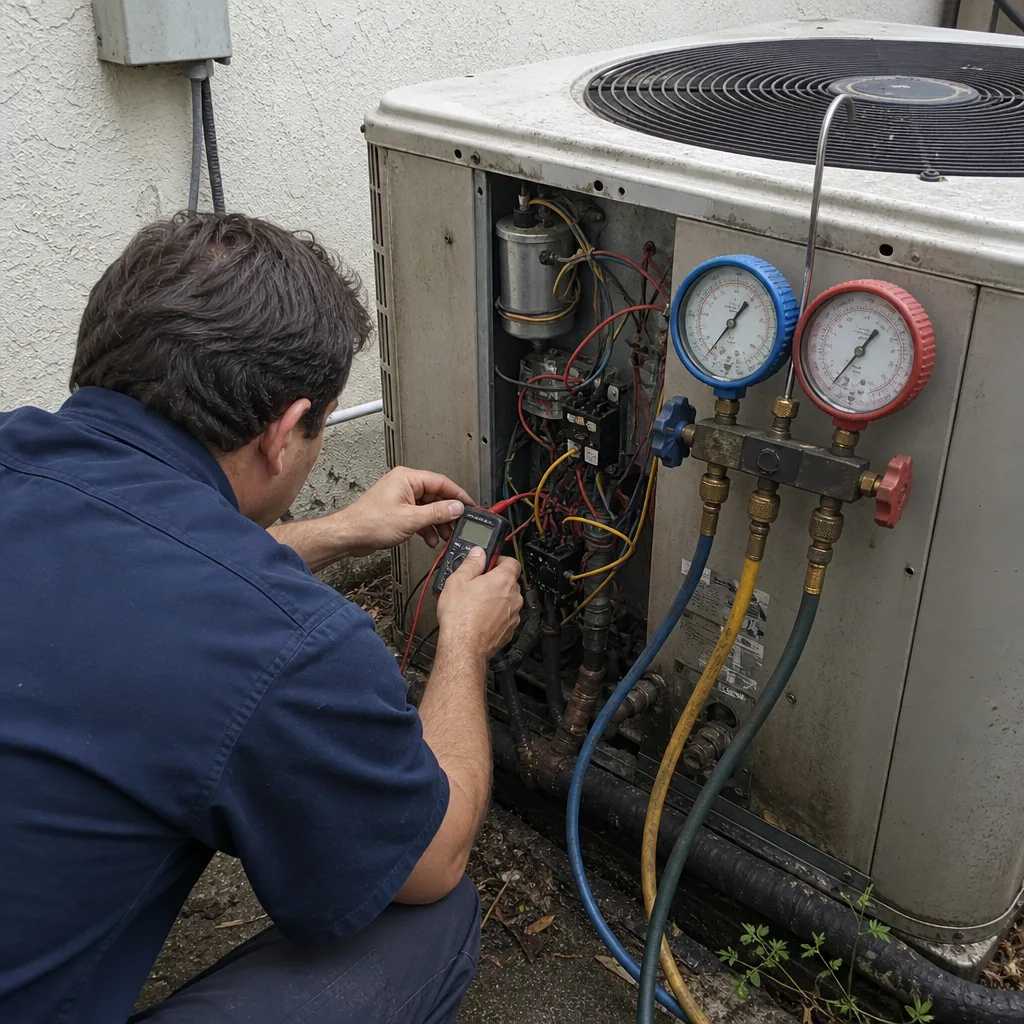
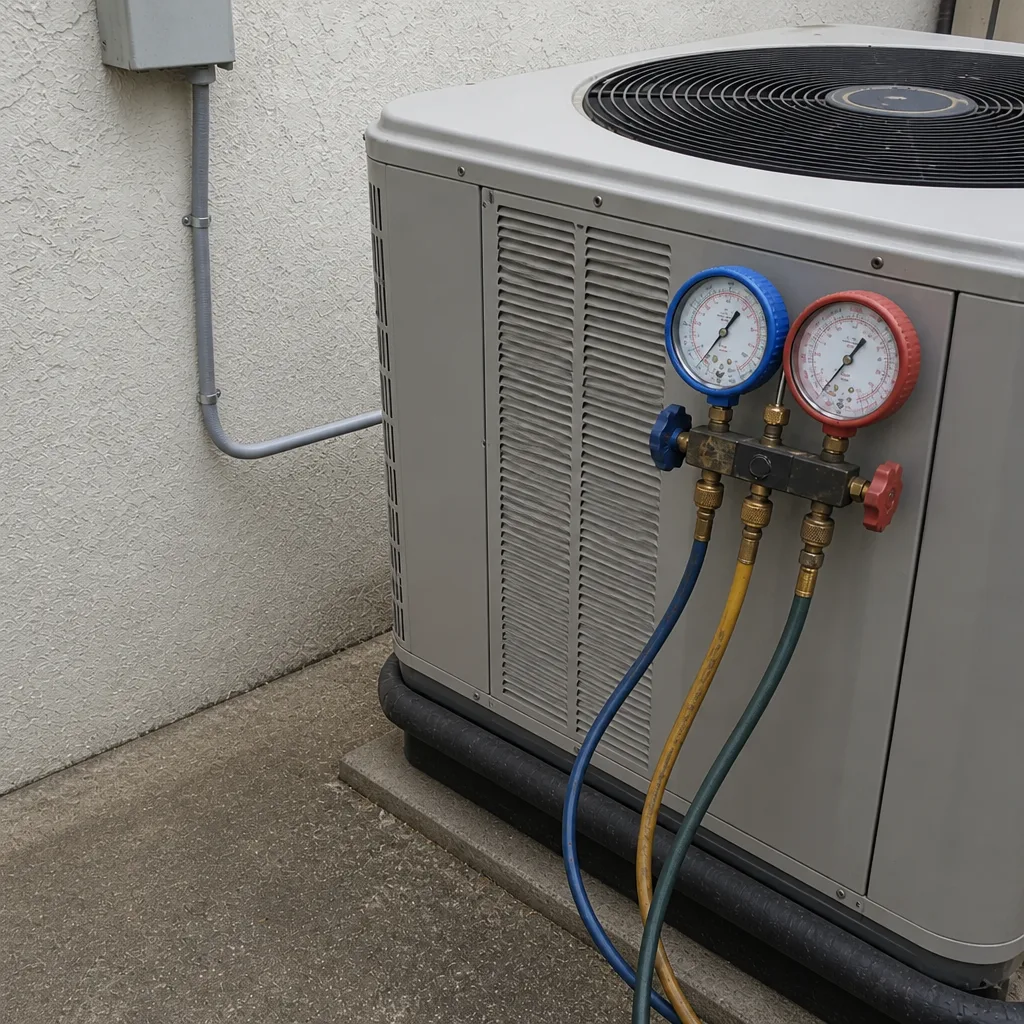
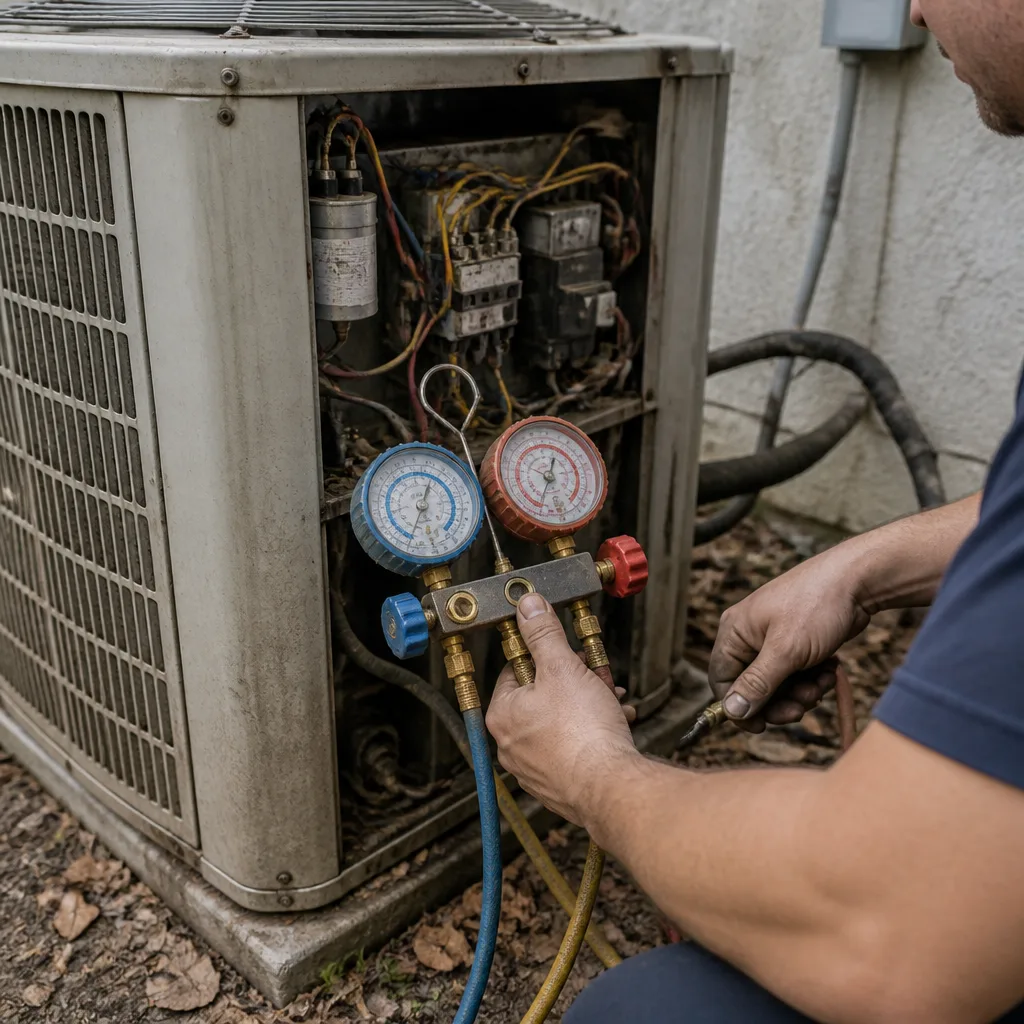
- Refrigerant charge verification with superheat and subcooling measured against the manufacturer’s spec for your system.
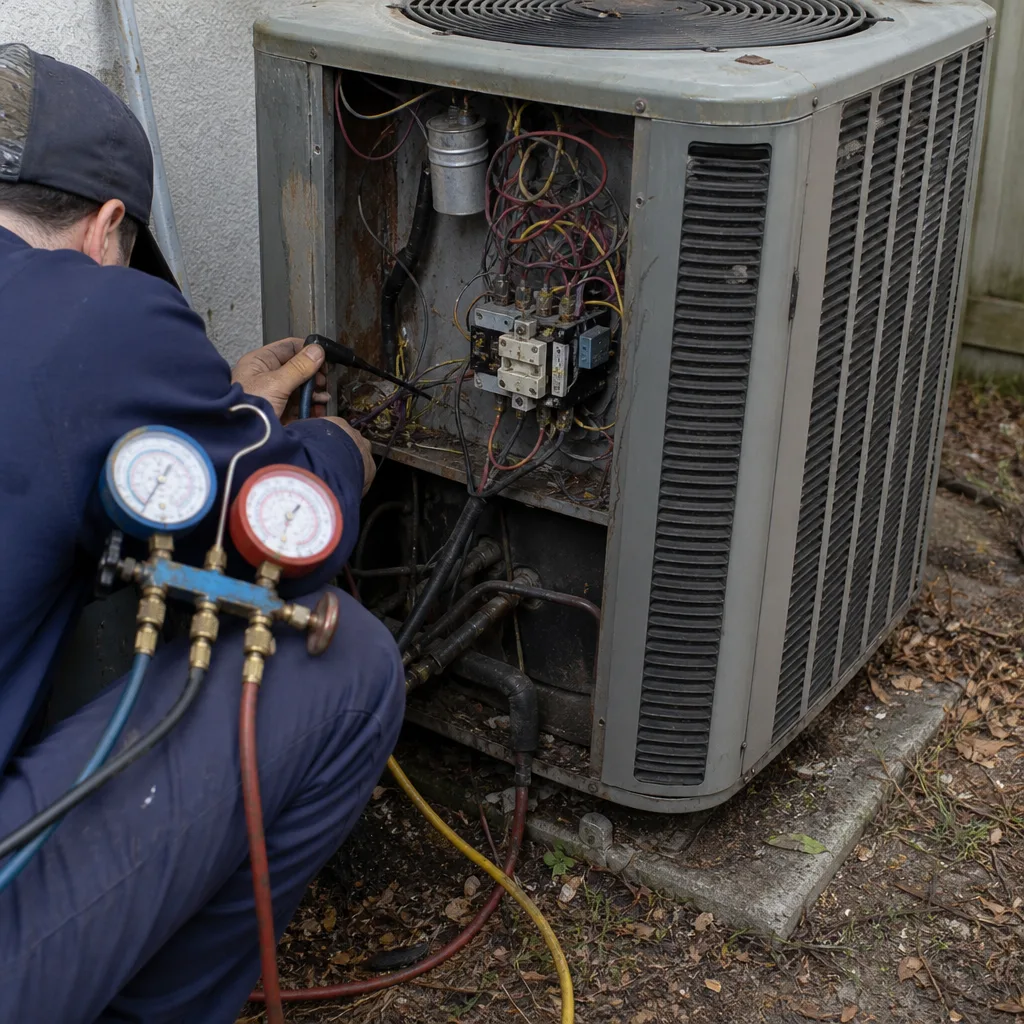
- Electrical checks on the capacitor, contactor, and compressor windings. Capacitors in a Palm Bay summer fail faster than they do in milder climates because they’re cycling more of the year.
- Coil inspection on the indoor evaporator (often the real efficiency killer) and the outdoor condenser.
- Condensate drain flush and pan inspection at the professional level, including the safety switch that should shut the system down if the line clogs.
- Blower and airflow measurement to confirm the system is moving the air it was designed for.
- Duct inspection, at least a visual, for disconnected runs or obvious leaks. A leaking duct system in a humid climate can pull in more moisture than the AC removes.
- Heat pump or furnace function test: reversing valve, aux heat, ignition sequence, and any burners.
If the check turns up a repair, you want the person telling you about it to be accountable for the work, and to have the tools to test what they fixed. On the cooling side, that’s where AC installation and repair expertise overlap: the same skills that install a system right are the ones that diagnose why a system is underperforming. On the heating side, the same logic applies to the furnace. Our technicians have up to 10 years of experience across both sides of that equipment, and we treat a seasonal check as a measurement job, not a sales call.
Brand-Specific Care: Trane, Lennox, Goodman, and Rheem
Equipment from the major manufacturers is broadly similar, but each brand has its own quirks in how it’s charged, controlled, and what tends to wear. That’s why it matters that the technician looking at your system knows the equipment, not just HVAC in general.
A Flagship AC Repair technician is certified to work on nine major HVAC brands, including Carrier, Trane, Lennox, Goodman, Rheem, York, Daikin, Bryant, and American Standard. In practice, that means:
- Trane systems often have specific charging requirements and communicating controls that change how you diagnose a performance problem.
- Lennox equipment, particularly the variable-capacity models, has different diagnostic paths for what looks like a simple cooling complaint.
- Goodman is one of the most common brands in residential installs, and knowing its common failure points saves diagnostic time.
- Rheem air handlers and heat pumps have their own service procedures, particularly on the heating side during the winter window.
We don’t steer you toward a specific brand because of a distributor relationship. The right system for your home is the one that fits your load, your ductwork, and your budget, not the one that carries the best margin. Brand-agnostic, technically specific, that’s the model. For homeowners in Palm Bay, that means you keep your preferred brand rather than switching to whatever a contractor prefers to sell.
Common Mistakes to Avoid
- Treating the shoulder months as “off” months. March and October are the highest-value inspection windows, and skipping them is why so many problems surface in the middle of a heat wave instead of at a scheduled check.
- Letting the condensate line go for the whole season. A single algae clog can back water into your ceiling. Flush it monthly with vinegar and it stays clear.
- Never running the heat. A heat pump that sits idle for eight months can develop a stuck reversing valve or a dead igniter you won’t discover until you need it. Exercise it monthly in the cooling season.
- Ignoring a bill that jumps. Efficiency loss is gradual and easy to rationalize as “the rate went up.” Check the kWh, not the dollars.
- Blocking the outdoor unit with landscaping. Palm Bay yards grow fast. Anything within two feet of the condenser is costing you efficiency and shortening equipment life.
- Running the wrong filter. A filter that’s too restrictive for your system can starve airflow and freeze the coil. Use the size and MERV rating the manufacturer specifies.
- Waiting for a breakdown to call. The most expensive service calls we handle are the ones that could have been caught at a pre-season check. Book early spring, not the first hot week.
See the difference
 Before
 After
 Before
 After
 Before
 After
When to Call a Professional
Some things are homeowner tasks: filter changes, coil rinsing, drain pan checks, thermostat batteries. Some things are not, and hands-on work with refrigerant, capacitors, compressor windings, and heat pump controls falls firmly in the “call us” column. Reach for the phone when you see or hear any of these: no cooling at all on an 85-degree day, weak airflow from every register, ice on the outdoor unit or the refrigerant lines, a heat pump or furnace that won’t respond, repeated tripping of the circuit breaker, a musty smell that returns after cleaning, or a utility bill running high month after month. Flagship AC Repair offers free estimates in Palm Bay. Call (888) 374-9181. We answer 24/7. Fast dispatch from 7am to 7pm, Sunday through Friday.
Frequently Asked Questions
Once a year at minimum, ideally in early spring before the cooling season starts. Because Palm Bay runs cooling for most of the year and heating only briefly, the April check is the more valuable one; if you also want a heating-side check, book that in October. Monthly homeowner tasks (filter, drain pan, condensate flush) fill in between professional visits.
Because the failures are usually the result of degradation during the idle or low-load stretch, not the peak season itself. A clogged condensate line, a capacitor that aged quietly, or a stuck reversing valve shows up the first time the system is asked to run hard after a break. A pre-season check in March catches those before they turn into a mid-summer emergency.
No, run it in heating mode for about ten minutes once a month during the cooling season. Heat pump reversing valves, defrost controls, and auxiliary heat strips are designed to move; parts that sit idle for months are more likely to stick or fail the first time you need them. If you have a gas furnace, exercise it briefly in the shoulder months too.
Track your monthly kWh, not the dollar total, and compare the same months year over year with similar weather. Two consecutive months running noticeably higher without a weather explanation usually points to low refrigerant, a dirty coil, duct leakage, or a failing blower motor. The other signals are longer runtimes and rooms that no longer hold temperature. When you see it, call (888) 374-9181 for a free estimate.
Refrigerant charge verification against the manufacturer’s spec, electrical checks on capacitor and contactor, coil inspection, condensate drain flush, blower and airflow measurement, a duct inspection, and a functional test of your heat pump or furnace. It’s a measurement job with a report, not a filter change. Call (888) 374-9181 to schedule.
Yes. Our technicians are certified to work on nine major HVAC brands, including Trane, Lennox, Goodman, Rheem, Carrier, York, Daikin, Bryant, and American Standard. We’re not tied to a single manufacturer, so a seasonal check on equipment you already own is routine work. Call (888) 374-9181 for a free estimate.
The Bottom Line
Palm Bay doesn’t run on a four-season HVAC schedule, and neither should your maintenance. The real calendar is an eight-month cooling season, a short heating window, and two shoulder months where the highest-priority work happens. Work with the transition months, flush your condensate line monthly, exercise your heat pump through the idle stretch, and watch your kWh like a diagnostic instrument. Then book a professional seasonal check before the cooling season starts, in March or early April, so any small repair stays a small repair. For homeowners in Palm Bay who want one call to cover both heating and cooling, that’s exactly what we do.
Call (888) 374-9181 for a free estimate. We answer 24/7. Fast dispatch from 7am to 7pm, Sunday through Friday.
Written by the team at Flagship AC Repair.