
Last updated November 15, 2026
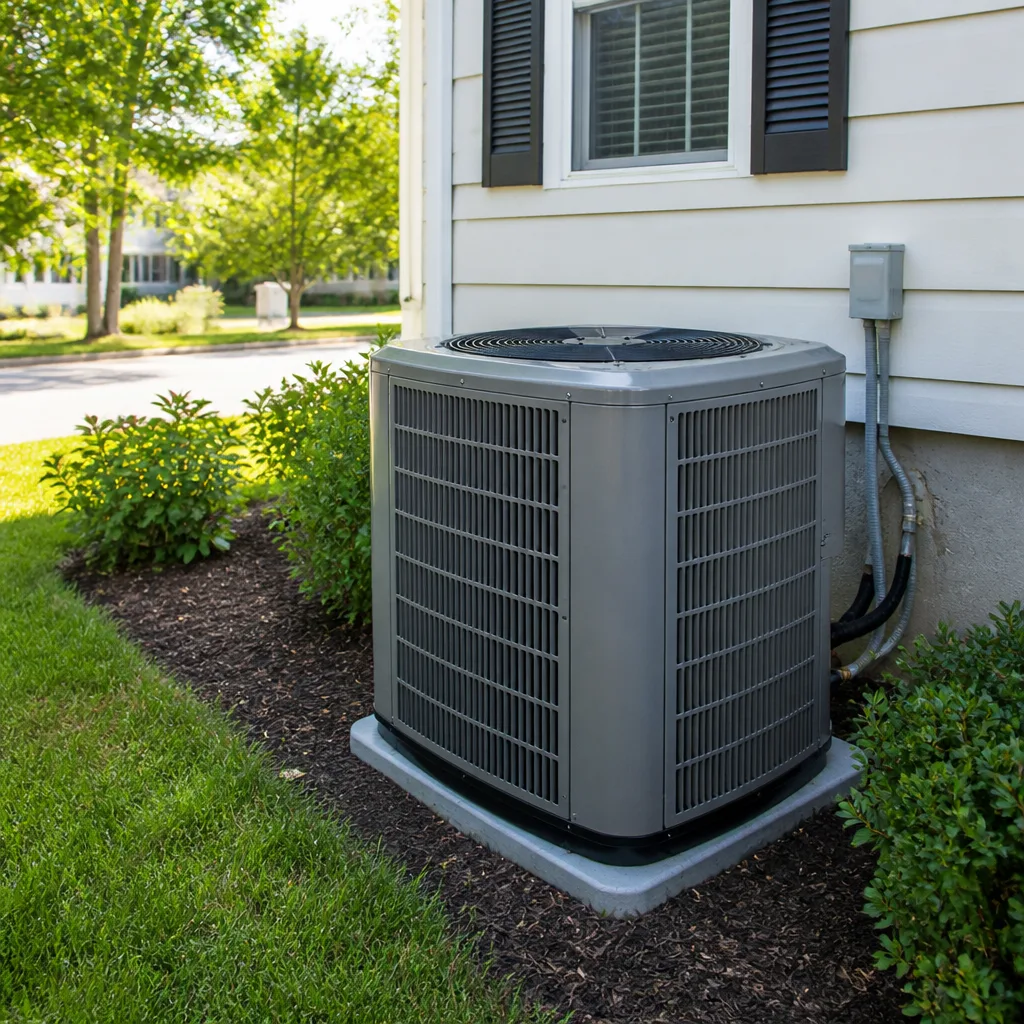 AC repair
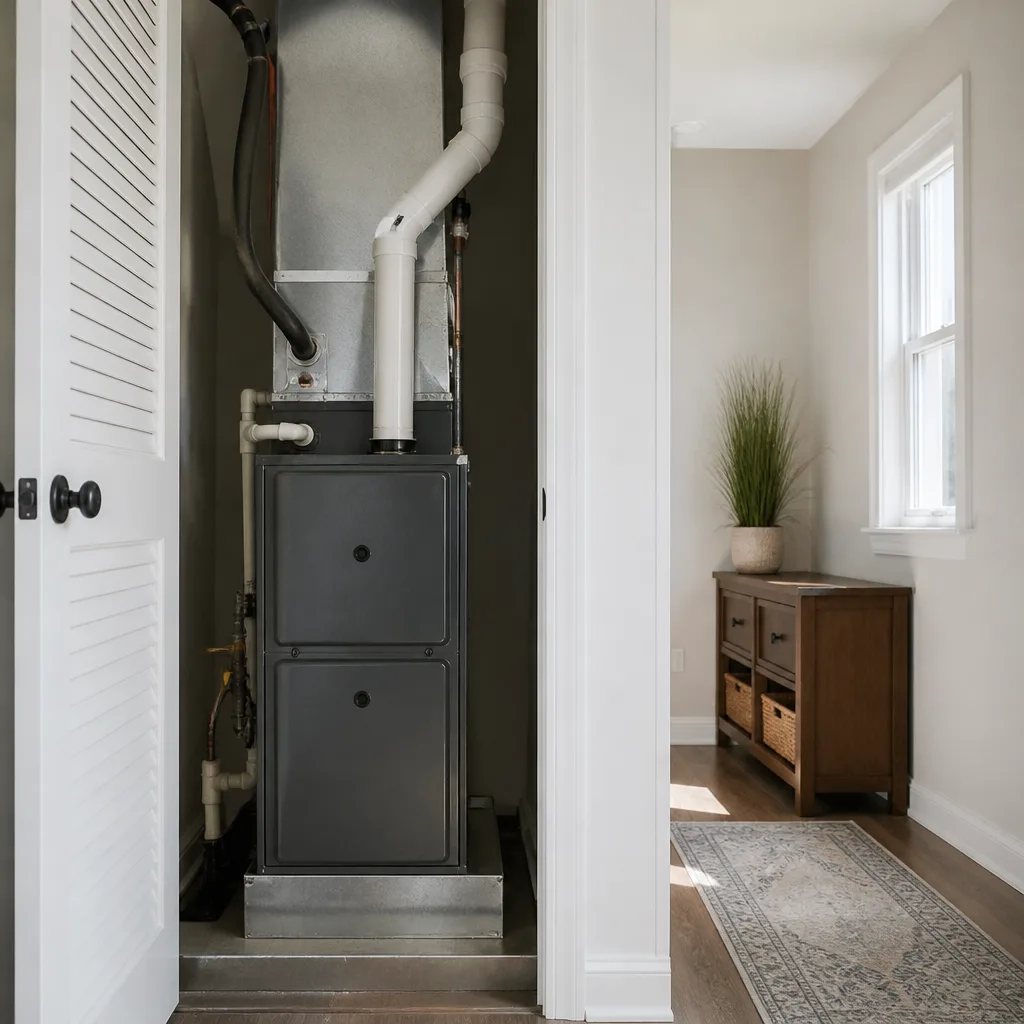 Furnace & heating
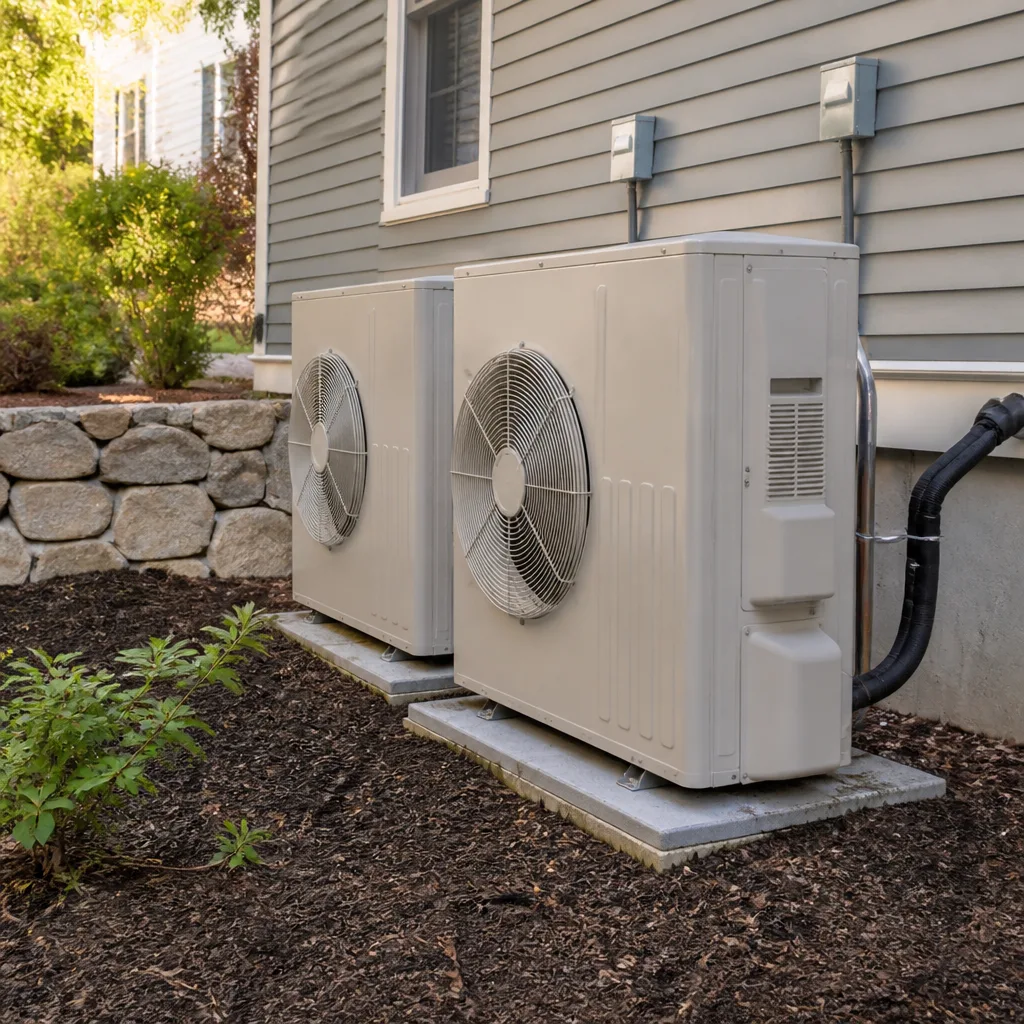 Heat pumps
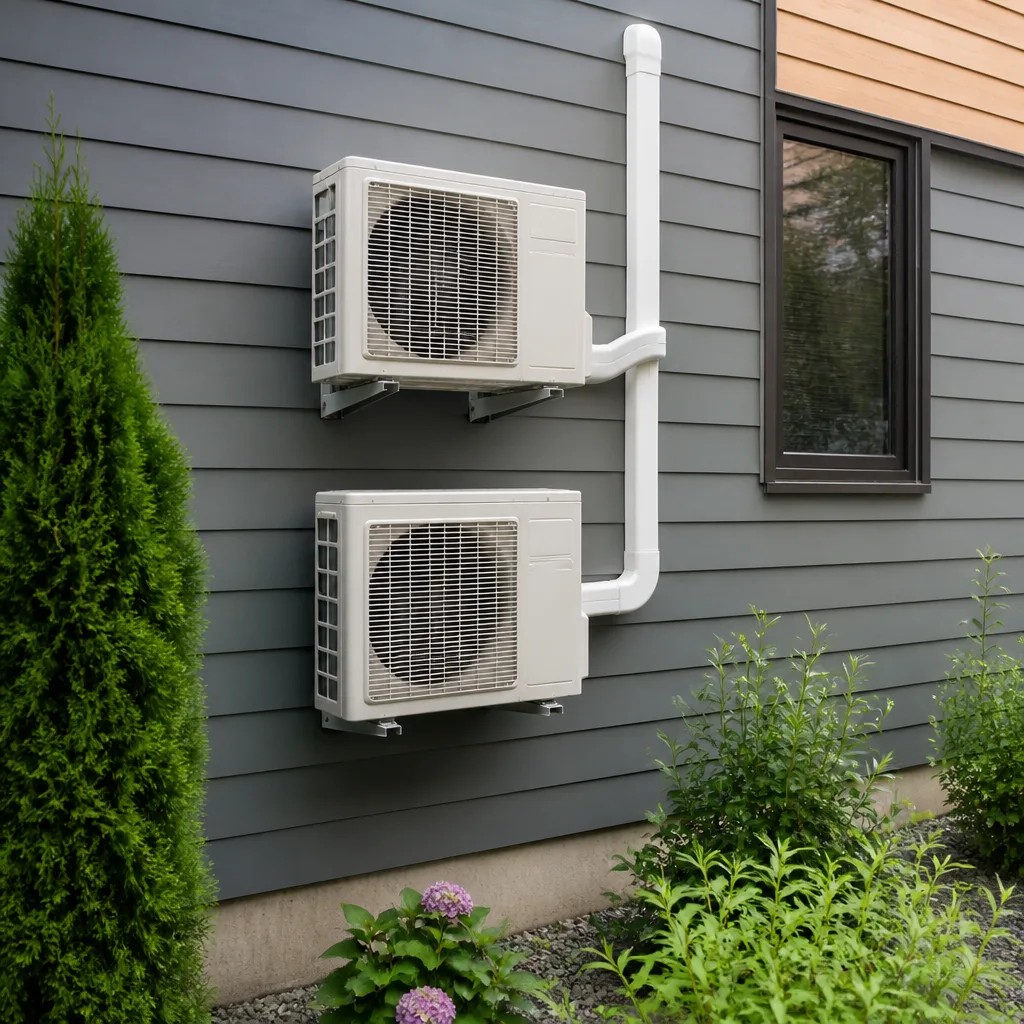 Ductless mini splits
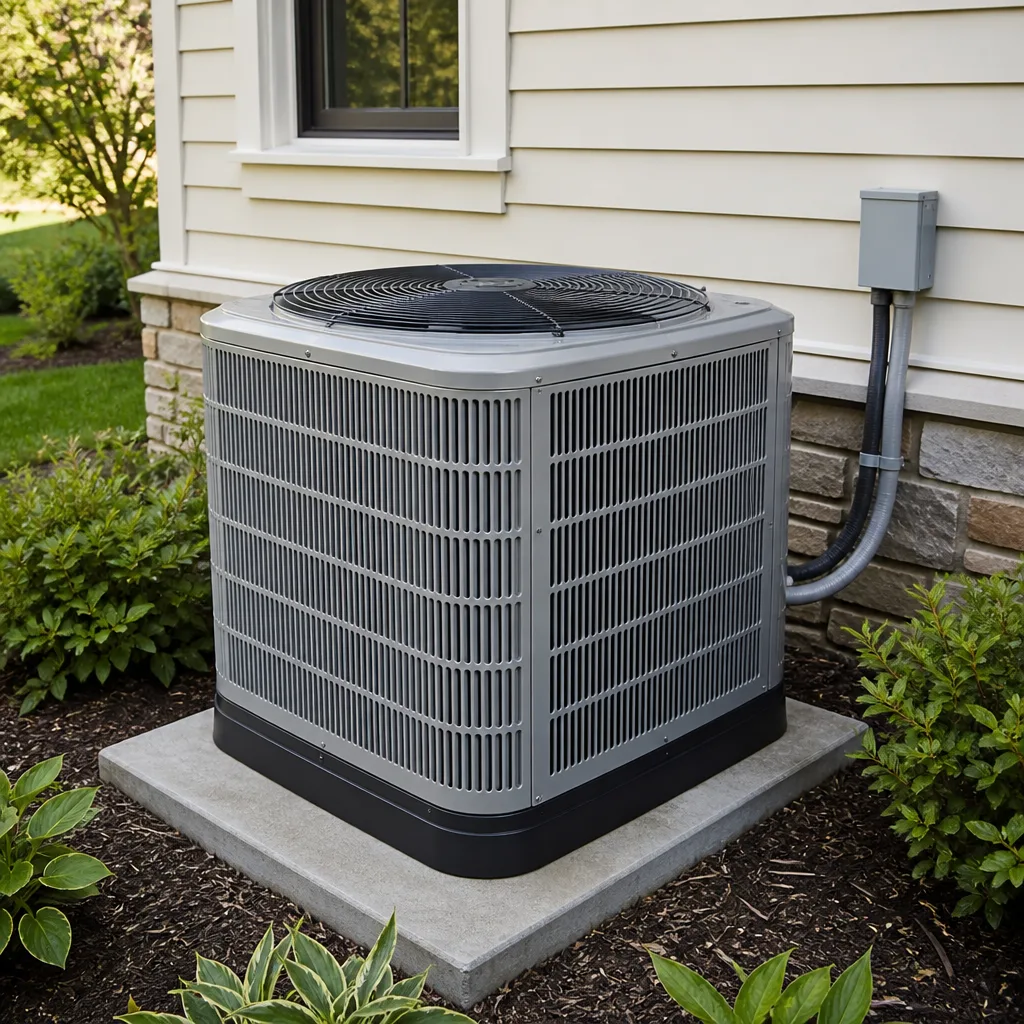 Carrier
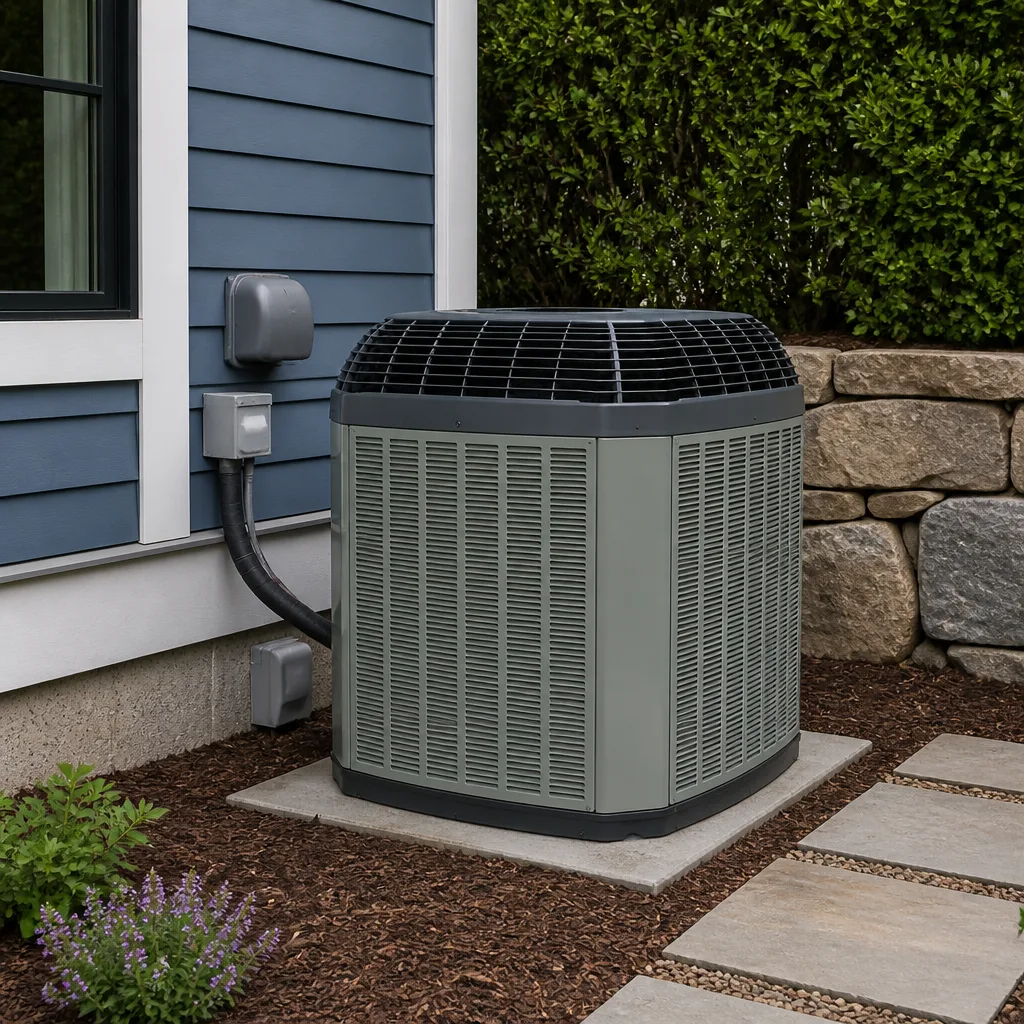 Trane
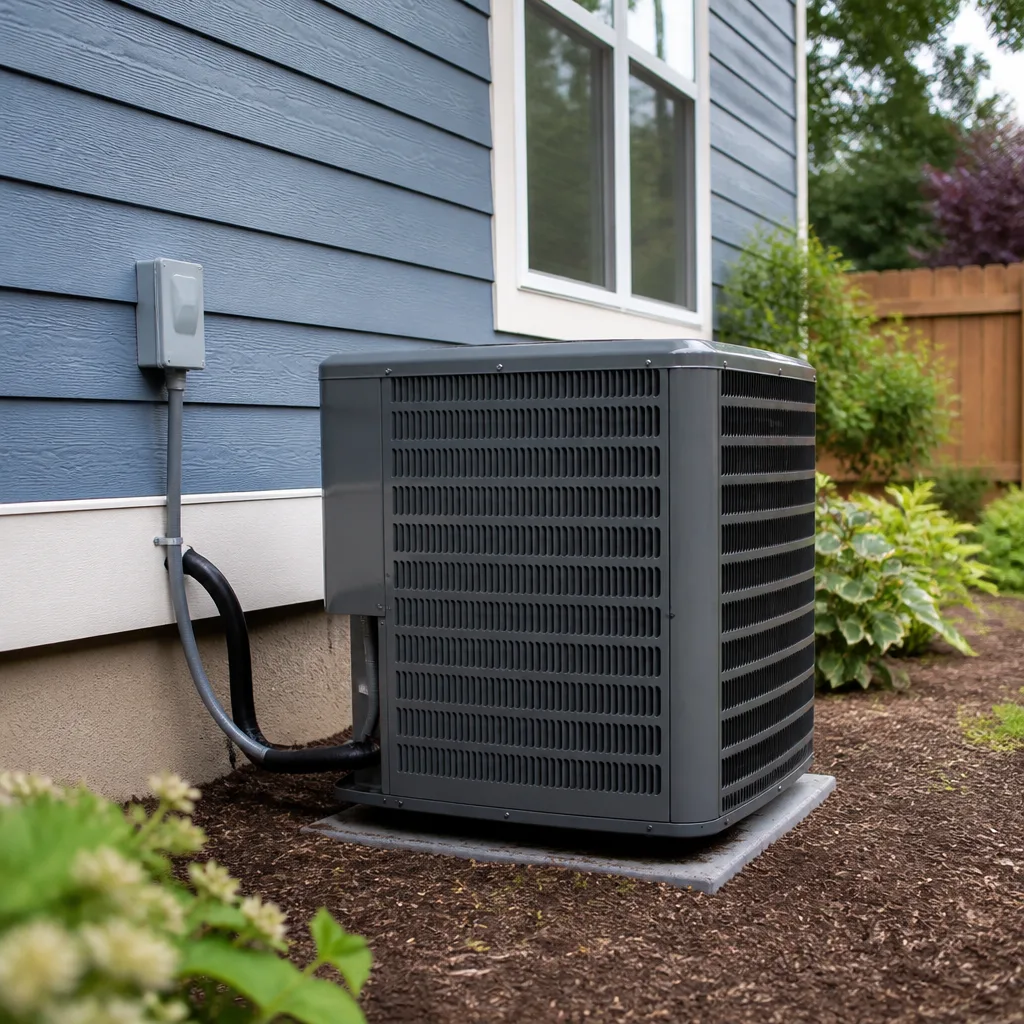 Goodman
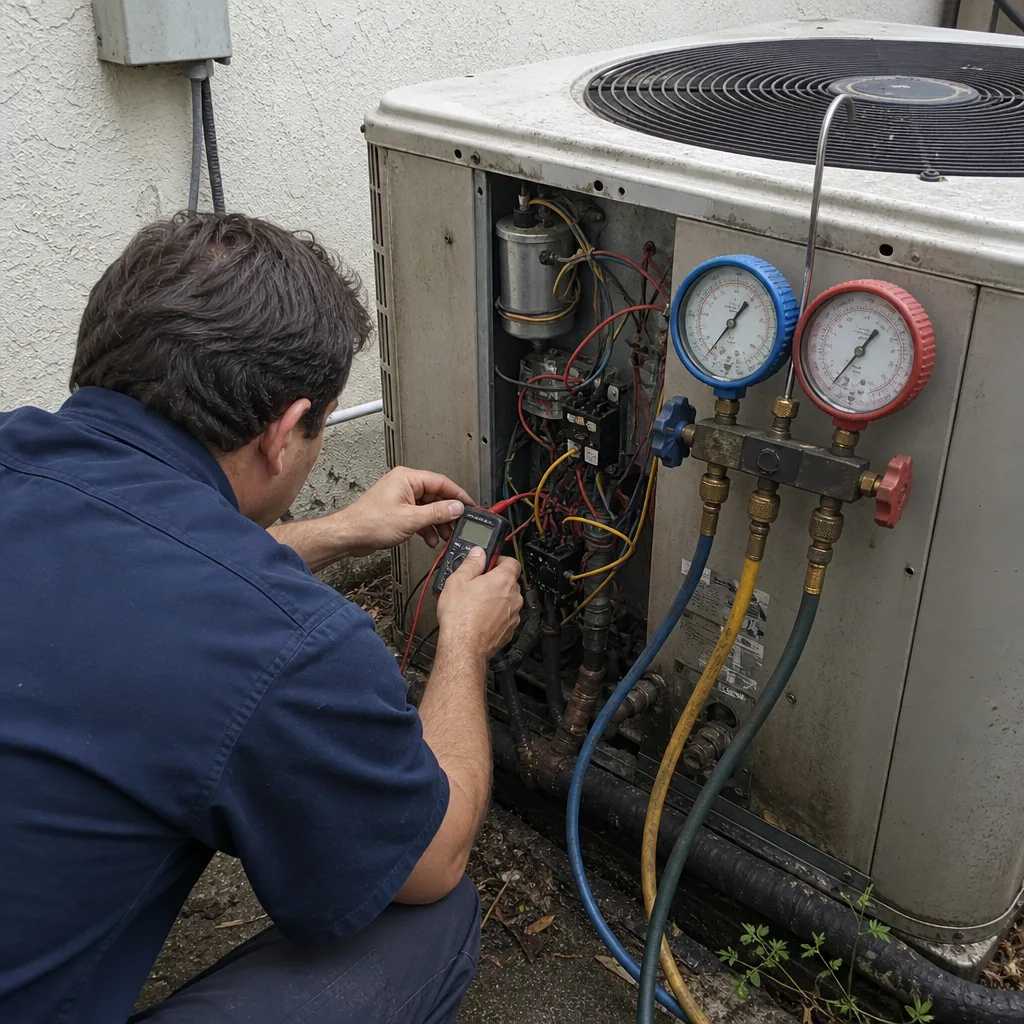
Seasonal tune-up and full diagnostic on your Carrier, Trane, or Goodman system - readings shown to you before any repair is proposed
Diagnosis first, numbers second - you approve the repair price before a single part goes in.
Get your free estimateHow to Hire an HVAC Contractor in Palm Bay: A Step-by-Step Guide
Most homeowners in Palm Bay think they’re comparing contractors when they’re really comparing licenses. Florida issues two very different HVAC credentials – a State Certified license that permits work across the entire state with unlimited scope, and a State Registered license that restricts a contractor to a specific county. Both are legal. Both can be held by someone knocking on your door after a summer storm. The difference shows up when a job goes wrong, when a permit gets pulled, or when the scope of work quietly outgrows what the holder is allowed to touch. This guide walks you through the exact vetting sequence – how to check a license in under a minute, how to read a scope of work before you sign, how to spot a brand-locked sales pitch, and what to ask about load calculations. By the end, you’ll know how to hire an HVAC contractor in Palm Bay with confidence.
Quick Answer
To hire an HVAC contractor in Palm Bay, verify the contractor’s Florida license type and status on the DBPR website before anything else, ask whether they’ll perform a Manual J load calculation before quoting a replacement, and read the written scope of work to identify what’s excluded. A State Certified license permits unlimited HVAC scope statewide; a State Registered license is restricted to a specific county. Confirm the license matches the job, get a written estimate, and don’t sign until the exclusions are clear.
Styles & brands we work with
- AC repair
- Furnace & heating
- Heat pumps
- Ductless mini splits
- Carrier
- Trane
- Goodman
Table of Contents
- Step 1: Verify the License – State Certified vs. State Registered
- Step 2: Spot a Brand-Locked Sales Pitch
- Step 3: Ask About Manual J Load Calculations
- Step 4: Read the Scope of Work Before You Sign
- Step 5: Watch for Post-Storm Red Flags in Brevard County
- Step 6: Questions to Ask on the Phone
- Step 7: Decide Between Repair and Replacement
- Common Mistakes to Avoid
Step 1: Verify the License – State Certified vs. State Registered
This is the single most important check you’ll make, and it takes about 60 seconds on the Florida Department of Business and Professional Regulation (DBPR) license lookup. Pull up the contractor’s license number – it should be printed on their business card, their estimate, and their vehicle. Then look at two things: the license type and the status.
What “State Certified” means
A State Certified HVAC license permits the holder to contract for HVAC work anywhere in Florida with unlimited scope. These contractors have passed a state-level exam, demonstrated experience, and carry the credential independently of any county. If the contractor holds this license, the scope of work isn’t restricted by geography or county lines.
What “State Registered” means
A State Registered HVAC license is issued through a specific county’s competency board. It permits work within that county’s jurisdiction – not statewide. A contractor registered in Brevard County may legally perform HVAC work in Palm Bay, but their registration doesn’t automatically authorize work in Indian River or St. Lucie counties. This distinction matters for two reasons: the accountability chain runs through the county rather than the state, and if a job moves outside county lines, the registration may not follow.
What to check in the 60-second lookup
- Search the DBPR license database by the contractor’s name or license number.
- Confirm the license reads “active” – not “null and void,” “suspended,” or “delinquent.”
- Confirm the license type is “Certified” or “Registered” for HVAC, not a general contractor or a handyman exemption.
- Check whether the license name matches the name on the estimate and the company name on the invoice.
- Note the expiration date and whether continuing education requirements appear current.
An unlicensed or expired-license contractor is not just a bad hire – in Florida it can void manufacturer warranties on equipment they install, and any permit they pull may be rejected. Our technicians have up to 10 years of experience working with licensed contractors across Palm Bay, and we’ve seen the aftermath of unlicensed installs more than once. If the license check is the only step you take from this guide, that alone will filter out most of the wrong choices.
Step 2: Spot a Brand-Locked Sales Pitch
When a contractor sells only one brand, every recommendation is filtered through that brand’s product line. That’s not a knock on the brand – Carrier, Trane, Lennox, and American Standard all make excellent equipment. It’s a structural observation about incentives. A single-brand dealer’s margin, training, marketing, and inventory are all tied to one manufacturer. When a homeowner’s home, ductwork, and budget would fit a different brand better, the single-brand dealer either recommends their own line anyway or loses the sale.
How to detect brand lock during a sales visit
- Ask: “What other brands do you install, and why would you recommend one over the other on my house?” A brand-agnostic contractor will name at least two or three and explain the differences in plain terms.
- Notice whether the recommendation arrives before the load calculation. A recommendation without a load calculation is a brand pitch, not an HVAC answer.
- Ask what happens if you’d prefer a different brand from the one quoted. A single-brand dealer will steer you back; a brand-agnostic contractor will quote the alternative.
- Check the truck and the estimate header – if 90% of the branding is one manufacturer, the incentive is clear.
We’re not a single-manufacturer dealer. We’re certified to work on nine major HVAC brands – Carrier, Trane, Lennox, Goodman, Rheem, York, Daikin, Bryant, and American Standard – which means the recommendation we make is based on what fits your home and your budget, not on a distributor relationship. That matters when you’re choosing between two brands for the same job: the right system for your home isn’t always the one with the biggest margin, and a brand-agnostic quote tells you what your options actually are.
Step 3: Ask About Manual J Load Calculations
A Manual J load calculation is the industry-standard method for sizing HVAC equipment to a specific home – square footage, window count and orientation, insulation, duct layout, and local design temperatures all factor in. Without it, a contractor is guessing based on rules of thumb like “1 ton per 500 square feet.” That rule of thumb was never accurate and is further out of date in a home with modern windows or added insulation.
The consequences of skipping the load calculation are real. Oversized equipment cools the air quickly but doesn’t run long enough to dehumidify properly, which leaves a Palm Bay home feeling clammy even with the thermostat set low. Undersized equipment runs continuously and struggles on the hottest days. Either way, you’ve paid for a system that doesn’t match the house.
What to ask the contractor directly
- “Will you perform a Manual J load calculation before quoting the system?” – yes is the right answer.
- “Will the calculation be included with the written estimate?” – a copy should be.
- “What design temperature are you using for Palm Bay?” – a knowledgeable contractor will reference the local summer design condition, not a national average.
- “Will you also check the ductwork with Manual D and the static pressure before you spec the new unit?” – duct loss and static pressure are what determine whether the new equipment actually performs.
A contractor who waves off the load calculation is telling you something: they don’t plan to size the system properly, and they’ll use the “same size as the old unit” short cut. That’s fine only if the old unit was sized correctly, which many weren’t. For a serious AC installation, the load calculation is non-negotiable, and we include it in the quote before any equipment is specified.
Step 4: Read the Scope of Work Before You Sign
A written estimate should read like a checklist of what happens, in what order, with materials named. Vague estimates (“remove and install HVAC system, $X,XXX”) hide the exclusions – and the exclusions are where the final bill grows. Before you sign anything, scan for the following line items in writing.
Line items that must be explicit
- Line set replacement. A new condenser needs a line set sized for the new equipment. If the estimate doesn’t say “new line set” or “line set reused after inspection,” ask which one applies.
- Electrical work. New equipment often needs a disconnect, breaker, or wire gauge upgrade. If the estimate says “electrical by others,” that cost is yours to cover separately.
- Permit fees. Most Florida cities require a permit for HVAC replacement, and the permit fee plus inspection are typically listed separately. “Permits by owner” means you’re pulling it and taking on the liability.
- Duct modifications. New equipment may need a plenum, transition, or duct modification to connect. If the estimate says “existing ductwork reused as is,” that’s the scope.
- Thermostat. Is the existing thermostat reused, or is a new one included? Is wiring included?
- Haul-away and refrigerant recovery. Remove and dispose of the old equipment, recover refrigerant legally – both should be stated.
- Start-up and commissioning. A responsible contractor includes refrigerant charge verification, airflow measurement, and a documented start-up sheet.
If the estimate is thin, ask for a written revision that names each item above. That one request separates a professional from a fast talker, and it moves the final price closer to the estimate.
Step 5: Watch for Post-Storm Red Flags in Brevard County
After a storm, high-demand periods, or a heat wave that knocks out AC systems across the county, the volume of HVAC calls spikes and unlicensed operators follow. The signs are recognizable if you know what to look for.
- Door-to-door solicitations without an appointment. Legitimate HVAC companies don’t knock on doors after a storm unless you called them. (No heat or AC after severe weather is urgent – call a licensed contractor; don’t wait for one to find you.)
- Cash-only or “today only” pricing. Pressure to pay in full before any written estimate appears is a red flag independent of the deal being offered.
- No license number on the estimate or the truck. Florida requires licensed contractors to display the license number on advertising, estimates, and vehicles. Its absence tells you the license check won’t come back clean.
- A “technician” with a clipboard and a financing form before they’ve looked at the equipment. A sales appointment and a technical consultation aren’t the same visit – spot the difference early.
- Estimates that quote a “same size” replacement with no load calculation, no duct check, and no written scope. A three-minute quote on a multi-thousand-dollar install is a signal.
- Refusal to give the license number in writing. There is no legitimate reason for this.
We work in the same market as every other Palm Bay contractor, and we’ve watched this pattern repeat after every demand spike. The right response is not to distrust the whole industry; it’s to insist on the license check, the written scope, and the load calculation – every time.
Step 6: Questions to Ask on the Phone
The first phone call tells you a lot. A dealer-incentivized contractor can’t answer these questions cleanly; an HVAC specialist can. Use these as a script.
- “What’s your license number, and is it State Certified or State Registered?” – they should know offhand, and the answer should match the DBPR lookup.
- “Which brands do you install and service?” – if the answer is a single brand, that’s the answer to how the recommendation will be shaped.
- “Do you do load calculations before quoting a replacement?” – yes is correct.
- “Are you covering this as a repair or an install – and do you do both, or just one?” – a contractor who does both AC and furnaces can see the whole system in one visit. Ours handles furnace repair and AC installation with the same technicians.
- “Is the estimate free, and is the price written before any work begins?” – yes to both is correct.
- “What’s included in the written scope – line set, electrical, permit, haul-away, start-up?” – they should be able to answer for each item.
- “Can I get the estimate in writing before I sign anything?” – non-negotiable.
As an HVAC-only specialist, our scope is narrow on purpose: AC installation, furnace repair, and furnace replacement. We don’t take on plumbing or electrical work as a sideline, which means our expertise isn’t spread across trades. Flagship AC Repair handles both sides of the heating and cooling equation, so one call covers it. If a contractor you’re vetting can’t share their license and their brand list clearly on that first call, that’s your answer.
Step 7: Decide Between Repair and Replacement
Once you’ve picked a contractor and had a proper diagnostic, the repair-or-replace decision usually answers itself. Four factors carry the most weight:
- Age of the equipment. Typical residential systems last roughly 12 to 15 years in Florida’s climate, with an honest caveat that maintenance, run hours, and install quality move the number. At the upper end, replacement often makes more sense than a major repair.
- Refrigerant type. Older R-22 systems face rising refrigerant costs and a shrinking supply; if the repair requires refrigerant, replacement usually wins on total cost.
- Repair cost vs. replacement cost. A common break-even benchmark is a repair costing more than a third of a new system – past that, replacement is typically the better call.
- Frequency of breakdowns. A system repaired three times in two summers is telling you what the next summer will look like.
None of those are hard rules; they’re the questions a qualified contractor will walk through with you honestly and without upselling. A contractor who can’t explain why replacement is the right call on your specific home isn’t giving you advice – they’re giving you a quote.
Common Mistakes to Avoid
- Hiring without checking the license type. A State Registered contractor is legal, but the registration is county-specific. Confirm the license type and the county before work starts. A quick DBPR lookup saves weeks of trouble later.
- Signing an estimate that hides the exclusions. Line set, electrical, permit, and haul-away are the four items most often left off a vague estimate. Insist on them in writing.
- Accepting a quote without a Manual J load calculation. “Same size as the old one” is not a sizing method. A contractor skipping the load calculation is guessing about the biggest purchase in your HVAC system.
- Treating a sales appointment as a technical consultation. If the first hour is spent on financing options and equipment brochures before anyone’s opened the air handler, you’re talking to sales, not HVAC.
- Choosing a single-brand dealer without asking why. A dealer whose entire product lineup is one manufacturer is structurally incentivized toward that brand. Ask what other brands they’d quote and why.
- Skipping the permit. Most Florida cities require a permit for HVAC replacement. If a contractor offers to “skip the permit” to save time, walk away – the permit isn’t optional, and skipping it can void the manufacturer’s warranty.
- Paying in full before the work is done. A reasonable deposit on equipment is normal; paying the entire invoice before the system runs isn’t.
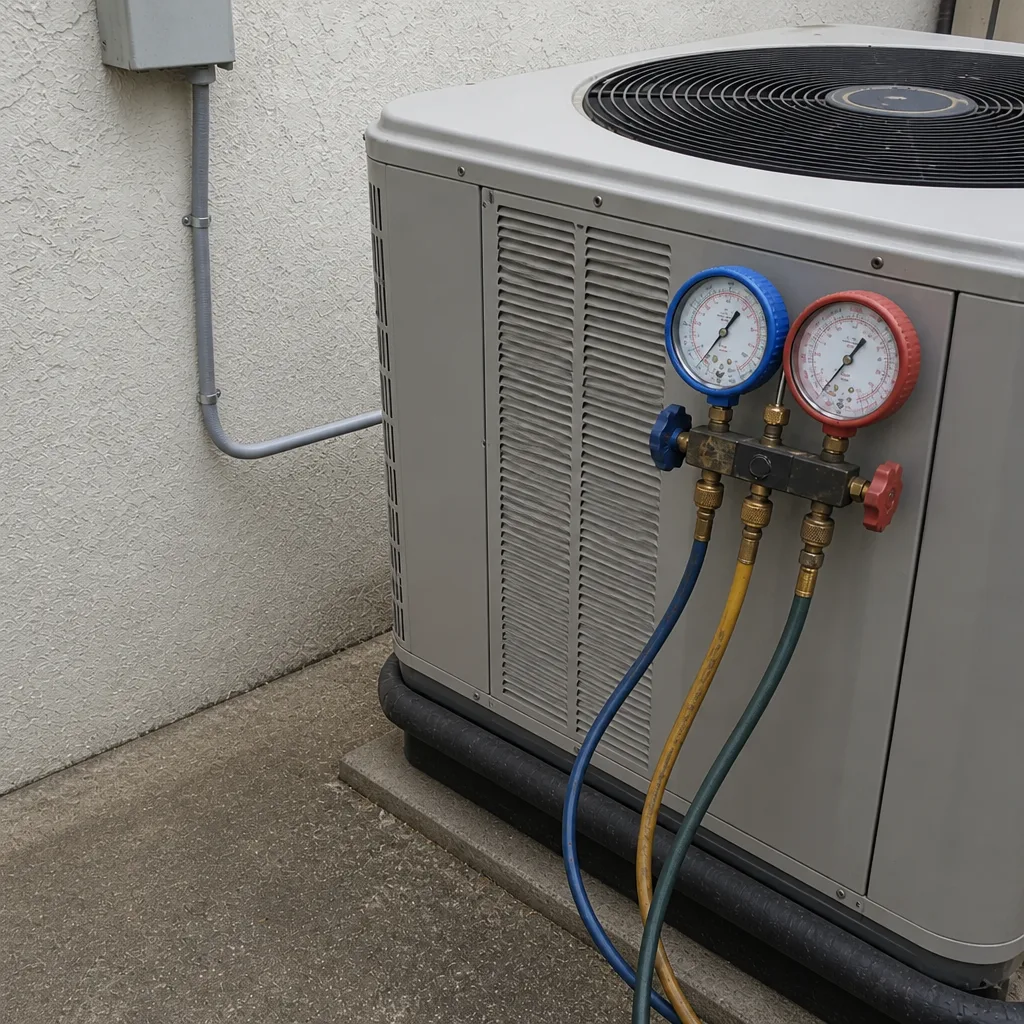
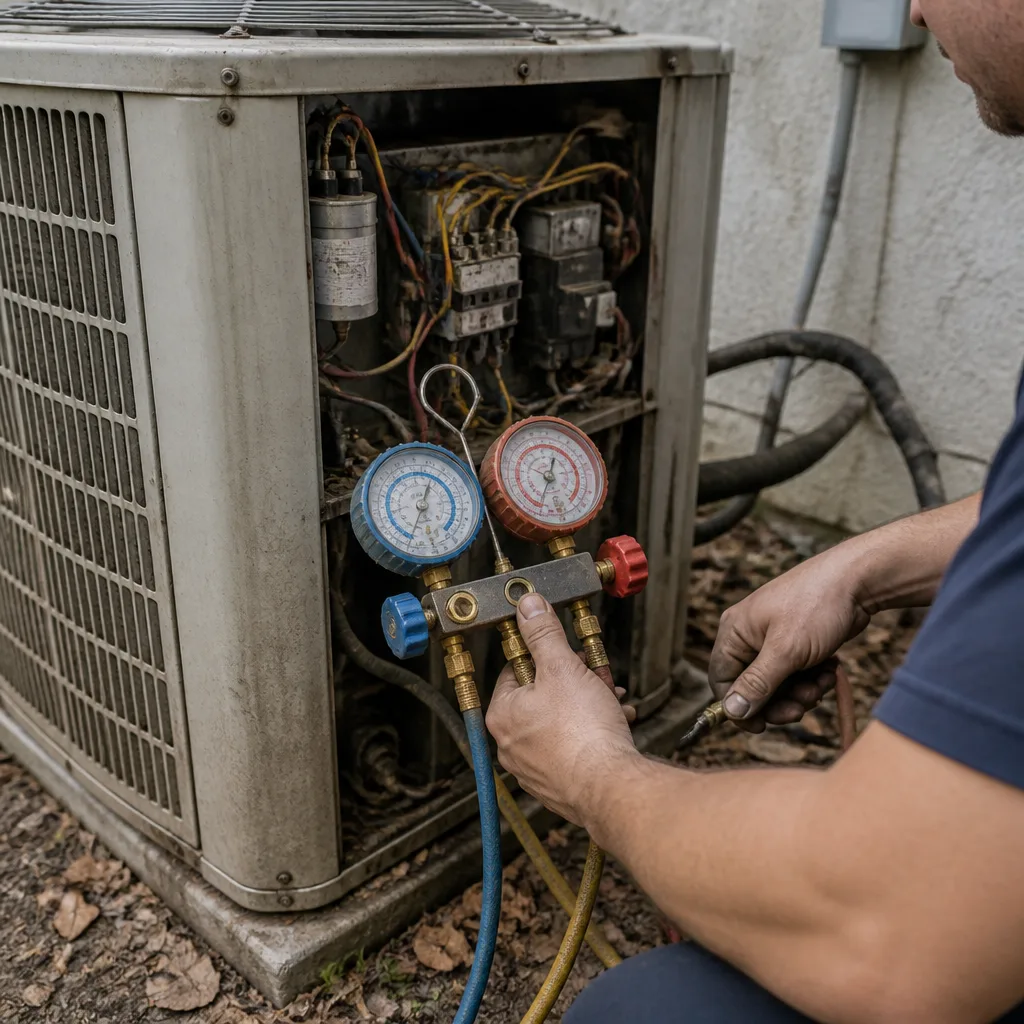
See the difference
 Before
 After
 Before
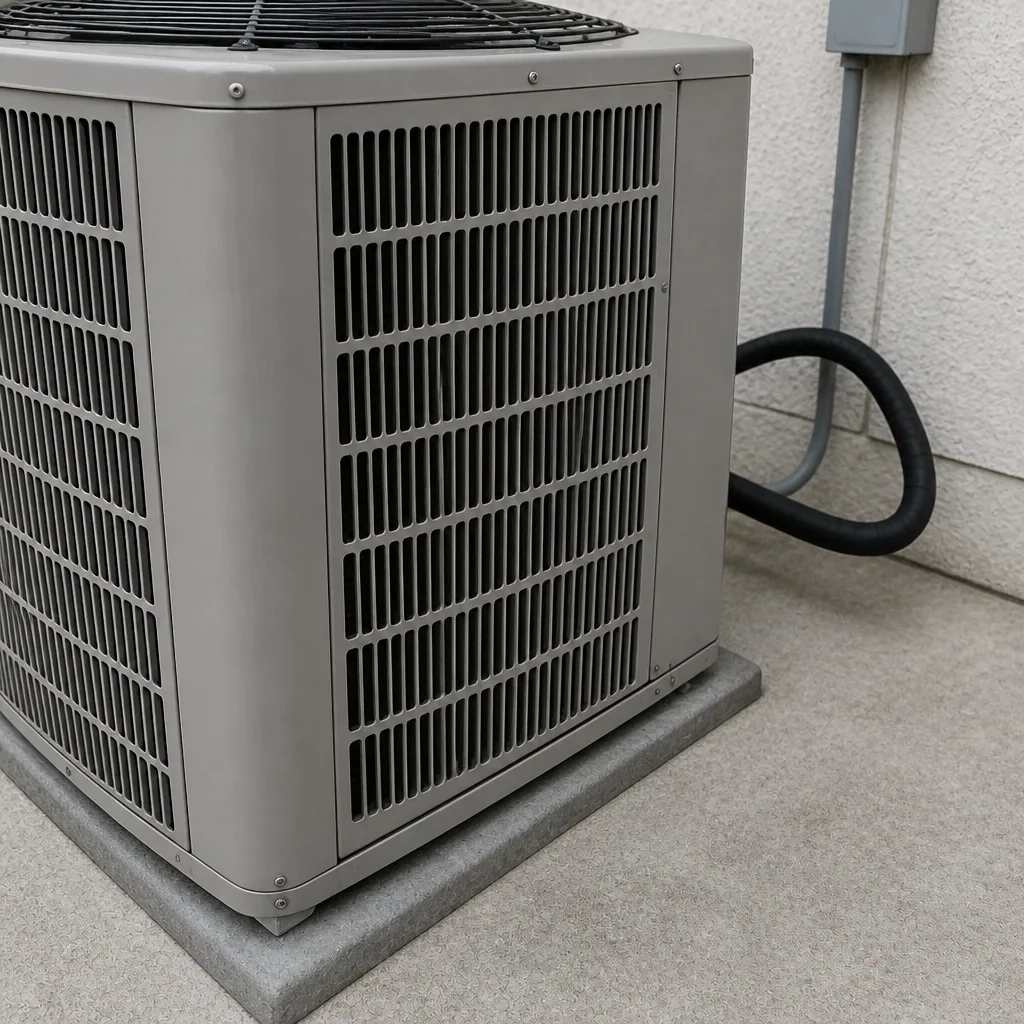 After
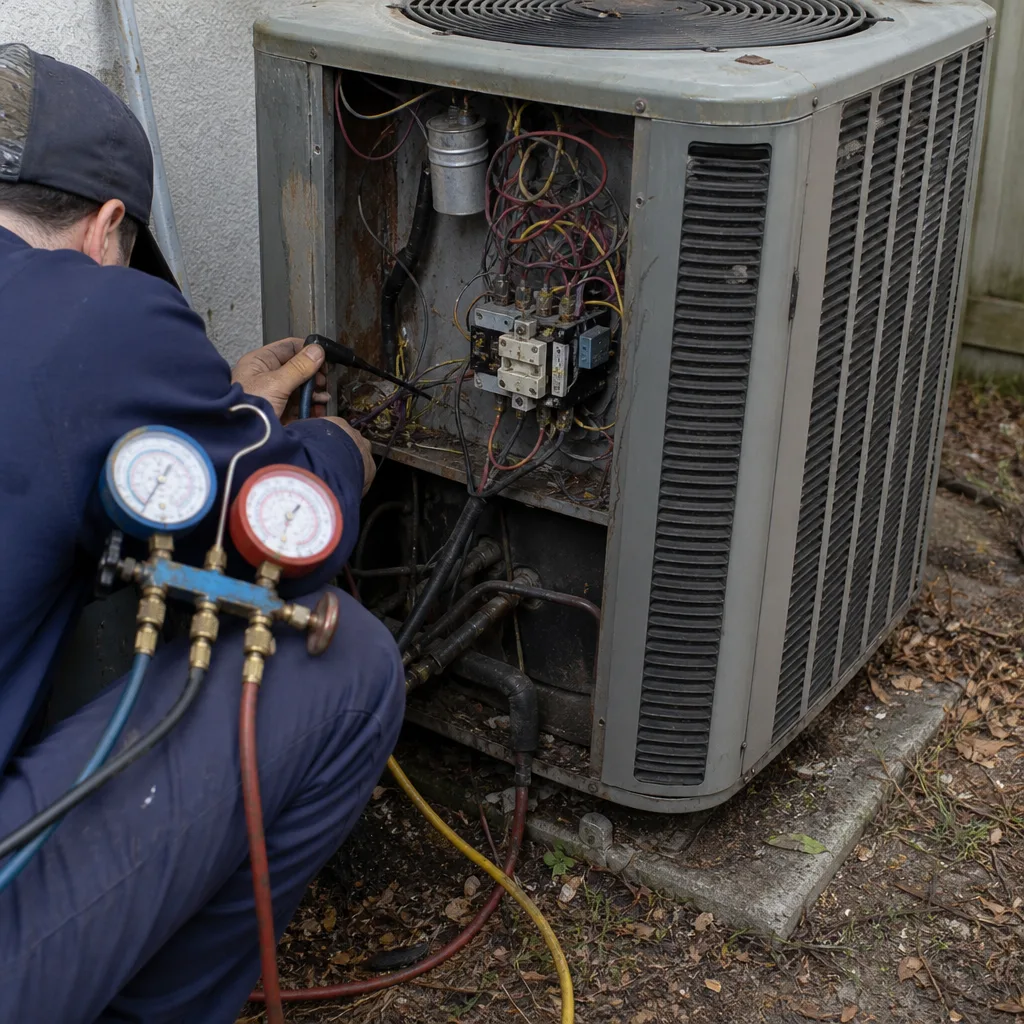 Before
 After
When to Call a Professional
Some HVAC situations don’t wait for a convenient week. If your system is blowing warm air on a hot palm-bay afternoon, tripping the breaker repeatedly, leaking refrigerant or water, or making a grinding or screeching noise you can’t place, stop running it and call. The same goes for any gas furnace issue – a gas smell, a flame that won’t stay lit, or soot around the burners – which is a safety call, not a DIY call. Any HVAC situation you’re not sure how to diagnose is also a call; a proper diagnosis beats a guess every time. Flagship AC Repair offers free estimates in Palm Bay – call (888) 374-9181. We answer 24/7. Fast dispatch from 7am to 7pm, Sunday through Friday.
Frequently Asked Questions
Go to the Florida DBPR license lookup, search by the contractor’s name or license number, and confirm the license reads “active” and identifies them as either State Certified (statewide, unlimited scope) or State Registered (county-restricted). The license number should appear on the estimate and the vehicle, and the name on the license should match the name on your paperwork. Call (888) 374-9181 if you’d like us to send our license details in writing before we quote.
A State Certified HVAC license permits the holder to contract for HVAC work anywhere in Florida with unlimited scope. A State Registered license is issued through a specific county’s competency board and is restricted to that county. Both are legal; the difference matters when the job crosses county lines or when the scope of work grows. If in doubt, check the DBPR record for the license type.
Because a single-brand dealer’s margin, training, marketing, and inventory are all tied to one manufacturer. The recommendation is structurally shaped toward the brand they sell – not necessarily toward the best fit for your home. A brand-agnostic contractor quotes multiple brands and can explain the difference honestly. We work on nine major brands, so the recommendation is based on fit and budget, not a distributor relationship.
A Manual J load calculation is the standard method for sizing HVAC equipment to a specific home, factoring in square footage, windows, insulation, ductwork, and local design temperatures. Without it, contractors size systems by rules of thumb and often oversize them, which leads to poor dehumidification and short cycling in Palm Bay’s summer heat. Every replacement quote from us includes a load calculation before equipment is specified.
A proper HVAC estimate should itemize the equipment model and size, line set replacement (or reuse after inspection), electrical work, permit and inspection fees, duct modifications if any, thermostat inclusion, haul-away, refrigerant recovery, and start-up commissioning. If any of those is missing or marked “by others,” ask for a written revision before signing. Our estimates list every item before the price is agreed.
Yes – demand spikes after storms and heat events, and unlicensed operators tend to follow the volume. The signs include door-to-door solicitations without an appointment, cash-only or “today only” pricing, and no license number on the estimate or vehicle. Check the DBPR record before letting anyone touch your system, and don’t sign anything before the scope is written. Call (888) 374-9181 for a free estimate from a licensed contractor – we answer 24/7. Fast dispatch from 7am to 7pm, Sunday through Friday.
The Bottom Line
Hiring an HVAC contractor in Palm Bay comes down to three non-negotiables: verify the license type and status on DBPR, insist on a Manual J load calculation before any replacement quote, and read the written scope of work line by line. Add a brand-agnostic recommendation to the mix – one that explains why Carrier vs. Trane vs. American Standard fits your home – and you’ve filtered out most of the wrong choices. Everything else (the phone script, the storm-time red flags, the repair-vs-replace factors) is there to make the rest of the process faster. Heating and cooling, handled – that’s the Flagship standard.
If you’d like an honest second opinion on a quote you’ve received, or if you’re ready to move forward, call (888) 374-9181 for a free estimate. We answer 24/7. Fast dispatch from 7am to 7pm, Sunday through Friday. No pressure, no upsell, and a written price before any work begins.
Written by the team at Flagship AC Repair.